Qobuz vs Spotify: qual é o melhor serviço de streaming de música em 2026?
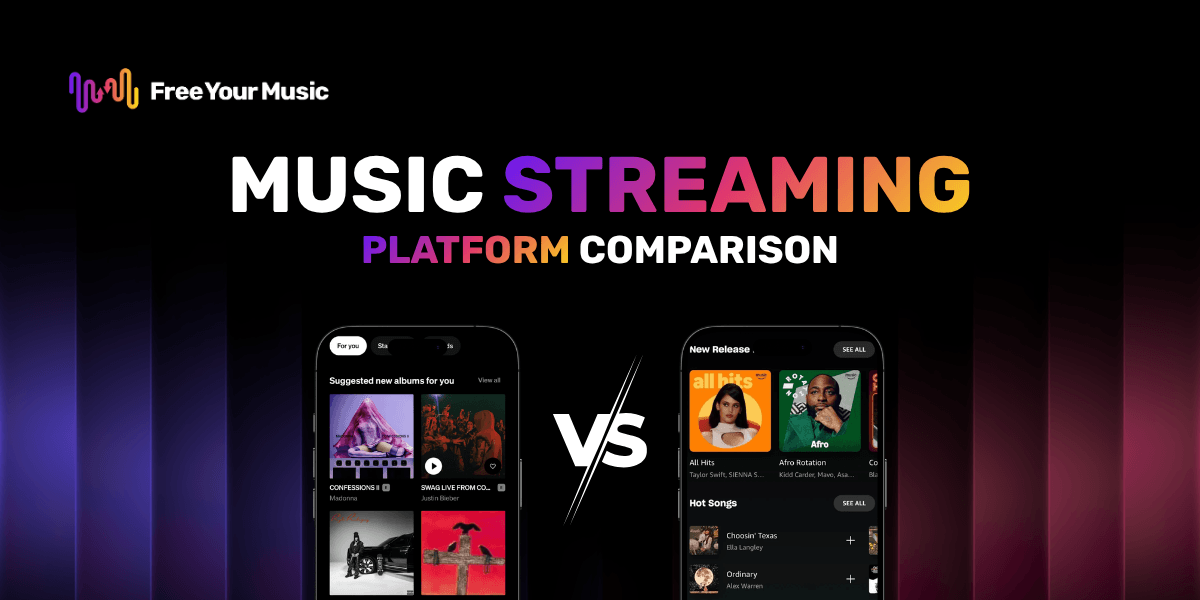
Este guia reúne tudo o que você precisa saber sobre Qobuz e Spotify em 2026, da qualidade de som e dos preços ao tamanho do catálogo e aos recursos, para escolher o serviço que melhor combina com a sua forma de ouvir música.
O que é o Qobuz? Uma breve apresentação
O Qobuz é um serviço francês de streaming de música criado para quem coloca a qualidade de som acima de tudo. Fundado em 2007, foi uma das primeiras plataformas a oferecer streaming de áudio em alta resolução de verdade, com faixas no formato FLAC sem perdas de até 24 bits/192 kHz.
Ao contrário da maioria das plataformas de streaming, o Qobuz também funciona como uma loja de música digital. Você pode ouvir músicas por streaming ou comprar álbuns em alta resolução. O serviço é popular entre audiófilos, colecionadores de vinil e quem quer que a música digital soe o mais próximo possível da gravação original de estúdio.
O Qobuz está disponível em mais de 25 países, com forte presença na Europa, na América do Norte e em partes da América Latina e da Ásia.
O Qobuz acaba de receber sua maior atualização em anos
Se você experimentou o Qobuz há algum tempo e acabou desistindo, vale a pena dar outra chance. O aplicativo passou por uma reformulação significativa que resolve algumas das reclamações que os usuários faziam havia anos.
A principal novidade: letras de músicas, finalmente. Em tempo real, linha por linha, com tradução quando você precisar. Parece um detalhe até lembrar que o Qobuz simplesmente não tinha esse recurso — todos os outros grandes aplicativos de streaming já ofereciam letras sincronizadas há muito tempo. A novidade preenche uma lacuna que persistia de forma curiosa em uma plataforma tão focada na experiência de ouvir música.
O restante da atualização é mais visual. O player agora adapta suas cores à capa do álbum que você está vendo, há um miniplayer que permanece na tela enquanto você navega e a fila de reprodução ganhou mais opções de controle. O Qobuz também adicionou uma aba Explorar — com artistas e álbuns semelhantes ao que você tem ouvido, que podem ser explorados por gênero ou gravadora — e uma página de créditos reformulada, onde é possível seguir artistas e gravadoras diretamente. Quem usa iPhone agora também conta com suporte à Siri.
Nada disso muda o principal dilema entre Qobuz e Spotify — o Qobuz continua sendo a escolha dos audiófilos, e o Spotify ainda leva vantagem na descoberta de músicas e no alcance —, mas faz o Qobuz parecer bem menos ultrapassado do que há um mês.
Qobuz vs Spotify: as principais diferenças em resumo
Tanto o Qobuz quanto o Spotify permitem ouvir milhões de músicas sob demanda, mas as semelhanças param por aí. Veja uma comparação rápida dos recursos mais importantes:
| Recurso | Qobuz | Spotify |
|---|---|---|
| Qualidade de áudio | Até 24 bits/192 kHz (FLAC em alta resolução) | Até 320 kbps (OGG Vorbis) |
| Tamanho do catálogo | Mais de 100 milhões de faixas | Mais de 100 milhões de faixas |
| Plano gratuito | Não (apenas período de teste gratuito) | Sim (com anúncios) |
| Modo offline | Sim (planos pagos) | Sim (apenas Premium) |
| Letras de músicas | Sim (em tempo real, sincronizadas e com tradução — adicionadas em julho de 2026) | Sim |
| Preço individual | US$ 12,99/mês | US$ 11,99/mês |
| Plano família | US$ 21,90/mês (até 6 pessoas) | US$ 19,99/mês (até 6 pessoas) |
| Plano para estudantes | Não | US$ 5,99/mês |
| Loja de música | Sim (compra de álbuns em alta resolução) | Não |
| Podcasts | Não | Sim |
| Dispositivos compatíveis | Computadores, dispositivos móveis, web e sistemas hi-fi | Computadores, dispositivos móveis, web, caixas de som inteligentes, carros e consoles |
| Descoberta por algoritmos | Em evolução (nova seção Explorar) | Referência no setor |
| Disponibilidade | Mais de 25 países | Mais de 180 países |
Qualidade de som: onde o Qobuz realmente se destaca
Se a qualidade de áudio é sua maior prioridade, é difícil superar o Qobuz. É nesse aspecto que os dois serviços mais se diferenciam.
Áudio em alta resolução do Qobuz vs som do Spotify Premium
O Qobuz transmite músicas no formato FLAC sem perdas, começando na qualidade de CD (16 bits/44,1 kHz) e chegando à qualidade da gravação original de estúdio (24 bits/192 kHz). Todas as faixas do Qobuz estão disponíveis, no mínimo, em qualidade de CD, e uma grande parte do catálogo oferece arquivos de alta resolução de verdade.
Já o Spotify usa compressão OGG Vorbis. Mesmo na configuração de maior qualidade (320 kbps no Premium), o áudio tem perdas. O Spotify anunciou o "Spotify HiFi" em 2021, prometendo streaming sem perdas, mas, em 2026, esse recurso ainda não foi lançado para a maioria dos usuários.
Veja o que isso significa na prática:
- Qobuz: áudio sem perdas e em alta resolução em todos os planos. Sem distorções causadas pela compressão. Você ouve o que o artista gravou.
- Spotify: áudio comprimido que soa bem na maioria dos dispositivos, mas deixa a desejar em fones e caixas de som de alto nível.
O áudio em alta resolução faz mesmo diferença?
A resposta sincera? Depende dos seus equipamentos e da sua percepção auditiva.
Se você usa fones básicos ou o alto-falante de um notebook, provavelmente não vai perceber diferença entre os 320 kbps do Spotify e o streaming sem perdas do Qobuz. O áudio comprimido soa perfeitamente bem nos equipamentos do dia a dia.
Mas, se você tem fones de qualidade, como o Sennheiser HD 660S ou o Audeze LCD-X, ou um conjunto dedicado de DAC e amplificador, a diferença existe. O áudio em alta resolução oferece mais detalhes nos agudos, um palco sonoro mais amplo e melhor separação dos instrumentos. Música acústica, jazz e gravações de música clássica são os que mais se beneficiam.
O Qobuz vale a pena se você tem equipamentos capazes de revelar essa diferença. Se costuma ouvir música fora de casa com fones sem fio, a qualidade do Spotify é mais do que suficiente.
Catálogo musical e descoberta de músicas
As duas plataformas dão acesso a mais de 100 milhões de faixas, então o tamanho dos catálogos é praticamente o mesmo. A verdadeira diferença está na forma como cada serviço ajuda você a encontrar e aproveitar a música.
Comparação do tamanho dos catálogos
Qobuz e Spotify oferecem catálogos enormes que abrangem sucessos populares, música independente e gêneros de nicho. Você encontra a maioria dos grandes lançamentos nas duas plataformas.
O Qobuz se destaca pela riqueza do conteúdo editorial. O serviço inclui encartes detalhados, resenhas de álbuns e biografias de artistas escritas por jornalistas de música. Se você gosta de ler sobre o que está ouvindo, o Qobuz lembra mais uma loja de discos com uma seleção cuidadosa do que um aplicativo de streaming.
O catálogo do Spotify leva uma pequena vantagem em algumas áreas, como música regional, podcasts e audiolivros. O Spotify também tem podcasts exclusivos que você não encontra no Qobuz nem na maioria dos outros serviços de streaming.
Playlists, rádios e recomendações
O Spotify ainda vence nesse quesito, e com folga. Discover Weekly, Release Radar, Daily Mixes, AI DJ — tudo isso se apoia em anos de aprendizado de máquina e bilhões de sessões de escuta, e o resultado é evidente. A maioria das pessoas nem precisa pensar em procurar músicas novas no Spotify: elas simplesmente aparecem.
O Qobuz costumava depender inteiramente de editores humanos, o que lhe dava um charme diferente — como receber recomendações de alguém que trabalha em uma loja de discos. Isso continua valendo. Mas a atualização de julho adicionou a seção Explorar, que também usa algoritmos para sugerir álbuns, artistas e playlists semelhantes ao que você tem ouvido. O recurso é novo e ainda não alcançou a vantagem de mais de uma década do Spotify, mas já não é justo chamar a descoberta de músicas do Qobuz de "limitada". Ela ainda está amadurecendo.
Se descobrir músicas é o mais importante para você, o Spotify continua sendo a aposta mais segura. Se prefere uma seleção editorial com uma camada de recomendações por algoritmo, o Qobuz ficou muito mais interessante.
Preços e planos em detalhes
Os dois serviços funcionam com assinaturas mensais, mas suas estruturas de preços refletem prioridades diferentes.
| Plano | Qobuz | Spotify |
|---|---|---|
| Individual | US$ 12,99/mês | US$ 11,99/mês |
| Família (até 6 pessoas) | US$ 21,90/mês | US$ 19,99/mês |
| Estudantes | Não disponível | US$ 5,99/mês |
| Individual anual | US$ 129,99/ano (economia de cerca de US$ 26) | US$ 119,99/ano |
| Plano gratuito | Não | Sim (com anúncios e reprodução aleatória) |
O plano individual do Qobuz custa cerca de um dólar a mais por mês. Esse dólar extra dá acesso a áudio em alta resolução em qualquer plano, sem precisar pagar por uma modalidade "HiFi" adicional. Todos os planos do Qobuz incluem o catálogo completo em alta resolução.
O plano gratuito do Spotify é um grande atrativo para quem ouve música de forma casual. Você tem acesso ao catálogo completo com anúncios, reprodução apenas aleatória no celular e recursos básicos. Para quem tem um orçamento apertado ou é estudante e procura um bom desconto, os preços do Spotify são difíceis de superar.
O Qobuz não oferece um plano para estudantes, o que pode afastar o público mais jovem. Por outro lado, seu plano anual garante uma boa economia para quem pretende continuar usando o serviço.
Compatibilidade com dispositivos
Onde e como você ouve música importa tanto quanto o que você escuta. Os dois serviços funcionam em celulares, tablets e computadores, mas há diferenças importantes entre os dispositivos compatíveis com cada um.
Dispositivos compatíveis com o Qobuz
O Qobuz funciona nas principais plataformas:
- Celulares e tablets iOS e Android
- Aplicativos para computadores Windows e macOS
- Player web (pelo navegador)
- Players de áudio em rede hi-fi (Sonos, Bluesound, Cambridge Audio, NAD e outros)
- CarPlay e Android Auto
O Qobuz dá bastante atenção à integração com equipamentos hi-fi dedicados. Se você tem um player de áudio em rede ou um DAC, é provável que o Qobuz permita reproduzir músicas diretamente pelo seu equipamento. Isso é uma grande vantagem para quem quer áudio sem perdas diretamente no sistema hi-fi, sem etapas extras. Quem usa iOS agora também conta com integração à Siri para controle por voz, incluída na atualização de julho de 2026.
Dispositivos compatíveis com o Spotify
O Spotify funciona em praticamente tudo:
- Celulares e tablets iOS e Android
- Aplicativos para computadores Windows, macOS e Linux
- Player web (pelo navegador)
- Caixas de som inteligentes (Amazon Echo, Google Nest, Sonos)
- Smart TVs e dispositivos de streaming (Roku, Fire TV, Chromecast)
- Consoles de videogame (PlayStation, Xbox)
- Carros (integrações de fábrica e CarPlay/Android Auto)
- Dispositivos vestíveis (Apple Watch, Wear OS, Garmin)
O Spotify Connect também permite controlar a reprodução entre dispositivos com facilidade. Comece uma música no celular, passe para a caixa de som inteligente e depois continue no notebook sem perder o ritmo. Essa integração entre vários dispositivos é um dos pontos fortes do Spotify.
Veredito sobre a compatibilidade com dispositivos
O Spotify é compatível com mais dispositivos e oferece uma experiência mais fluida ao alternar entre eles com o Spotify Connect. O Qobuz cobre o essencial e se destaca nos equipamentos hi-fi. Se você ouve música em vários aparelhos ao longo do dia, o Spotify é a opção mais flexível.
Qual serviço é melhor para você?
O melhor serviço de streaming depende do que você mais valoriza. Veja uma comparação rápida por perfil de ouvinte:
Escolha o Qobuz se você:
- Tem fones de alto nível ou um sistema de áudio dedicado
- Dá muita importância à qualidade de som e quer streaming sem perdas ou em alta resolução
- Prefere conteúdo editorial, encartes e resenhas de álbuns
- Quer comprar e ter seus próprios álbuns digitais em alta resolução
- Ouve principalmente música acústica, jazz, música clássica ou gêneros com produção cuidadosa
Escolha o Spotify se você:
- Quer os melhores recursos para descobrir músicas e playlists personalizadas
- Ouve música em vários dispositivos, como caixas de som inteligentes, carros e consoles
- Gosta de podcasts e audiolivros, além de música
- Precisa de um plano gratuito ou para estudantes
- Viaja para outros países e precisa de disponibilidade em mais de 180 países
E usar os dois? Muitos audiófilos mantêm o Spotify para descobrir músicas e o Qobuz para ouvir com atenção aos detalhes. Se seguir esse caminho, vai querer suas playlists nas duas plataformas.
Seja qual for sua escolha, o Free Your Music facilita a mudança. Transfira suas playlists entre Qobuz, Spotify e mais de 20 outros serviços em poucos minutos.
É possível mudar entre Qobuz e Spotify sem perder suas músicas?
Sim, e é mais fácil do que você imagina. A maior preocupação ao mudar de serviço de streaming é perder suas playlists cuidadosamente selecionadas, músicas curtidas e álbuns. Ninguém quer começar tudo do zero.
O Free Your Music resolve esse problema. Ele transfere suas playlists, músicas curtidas e álbuns entre Qobuz, Spotify e mais de 20 outros serviços de música. O processo leva apenas alguns minutos:
- Baixe o Free Your Music no celular ou computador
- Conecte o serviço de origem, como o Spotify
- Selecione as playlists que quer transferir
- Escolha o destino, como o Qobuz
- Inicie a transferência e pronto
O Free Your Music encontra as músicas correspondentes entre as plataformas com alta precisão, para que você não perca suas faixas favoritas. Você também pode usá-lo para manter dois serviços sincronizados se decidir usar Qobuz e Spotify.
Quer conhecer suas opções? Confira todos os serviços de música disponíveis compatíveis com o Free Your Music.
Perguntas frequentes
O Qobuz tem qualidade de som melhor que a do Spotify?
Sim. O Qobuz transmite em FLAC sem perdas de até 24 bits/192 kHz, enquanto o Spotify chega a, no máximo, 320 kbps em OGG Vorbis. Se você tem fones de qualidade ou um sistema hi-fi, vai perceber uma diferença com o Qobuz.
O Qobuz tem um plano gratuito?
Não. O Qobuz só oferece planos pagos, mas novos usuários podem aproveitar um período de teste gratuito. Se você quer streaming de música gratuito com anúncios, o plano gratuito do Spotify ou outras opções de música gratuita são escolhas melhores.
O Qobuz já tem letras de músicas?
Sim, desde o fim de julho de 2026. As letras são sincronizadas, linha por linha, e têm traduções disponíveis. Essa era uma das últimas grandes lacunas do Qobuz em relação ao Spotify, e agora foi resolvida.
Posso transferir minhas playlists do Spotify para o Qobuz?
Com certeza. Use o Free Your Music para transferir suas playlists, músicas curtidas e álbuns do Spotify para o Qobuz em minutos. O aplicativo encontra automaticamente as faixas correspondentes entre as plataformas.
O Qobuz está disponível no mundo todo?
Ainda não. O Qobuz está disponível em mais de 25 países, principalmente na Europa, na América do Norte e em algumas regiões da América Latina e da Ásia. O Spotify tem uma presença muito maior, abrangendo mais de 180 países. Consulte o site do Qobuz para saber se o serviço está disponível no seu país.
Qual serviço oferece mais recursos para podcasts?
O Spotify vence essa categoria com folga. Ele oferece milhões de podcasts, programas exclusivos e podcasts em vídeo diretamente no aplicativo. O Qobuz não oferece podcasts. É uma plataforma dedicada exclusivamente à música.
Posso usar Qobuz e Spotify ao mesmo tempo?
Sim. Muitas pessoas usam o Spotify para descobrir músicas e ouvir no dia a dia, depois passam para o Qobuz para ouvir com mais atenção aos detalhes em equipamentos melhores. O Free Your Music pode manter suas playlists sincronizadas entre os dois serviços.
O Qobuz vale a pena se eu não tenho fones caros?
Se você ouve música com fones básicos ou pelos alto-falantes do notebook, provavelmente não vai perceber uma grande diferença em relação ao Spotify. O Qobuz faz mais sentido quando usado com equipamentos de áudio de qualidade. Para quem ouve música de forma casual, o Spotify oferece melhor custo-benefício graças aos recursos de descoberta e ao preço mais baixo.
Tudo pronto para mudar? Transfira sua biblioteca inteira entre Qobuz, Spotify e mais de 20 outros serviços com o Free Your Music. Experimente grátis.
As suas playlists pertencem-lhe.
Pare de reconstruir à mão. Mova tudo em minutos e leve a sua música para onde quer que vá.
Descarregar grátis →SongsBrew — a nossa newsletter de música gratuita
Uma vantagem gratuita para os utilizadores do FYM. Dicas, playlists, sem spam.