Comprendre l’accès à la musique sur plusieurs plateformes : transférer ses playlists en toute simplicité

Changer de plateforme de streaming semble souvent risqué lorsqu’on a passé des années à créer des playlists uniques et à dénicher des titres rares. Partout dans le monde, les passionnés de musique et les DJ professionnels comptent sur l’accès à plusieurs plateformes pour protéger leurs collections et garder la maîtrise de leurs choix musicaux sur tous leurs appareils et services. Alors que le streaming fait passer la musique de la possession à l’exploration sans limites, de nouvelles solutions offrent davantage de souplesse et préservent vos playlists lorsque vous passez de Spotify à Apple Music ou à un autre grand service. Ce guide vous explique tout ce qu’il faut savoir pour transférer votre musique sans effort.
Sommaire
- Qu’est-ce que l’accès à la musique sur plusieurs plateformes ?
- Les différents types de solutions d’accès multiplateforme
- Comment fonctionnent les outils de transfert de playlists ?
- Les fonctionnalités essentielles pour une transition fluide
- Confidentialité des données et aspects juridiques
Les points à retenir
| Point | Détails |
|---|---|
| Accès multiplateforme | Cette approche permet d’écouter de la musique sur différents appareils et services, tout en offrant davantage de souplesse et en préservant les playlists personnalisées. |
| Rôle de la technologie | Des algorithmes sophistiqués et des technologies cloud facilitent les transitions et améliorent l’expérience d’écoute. |
| Outils de transfert de playlists | Ces outils utilisent des techniques avancées d’apprentissage automatique pour transférer fidèlement les collections musicales tout en préservant l’intégrité des playlists d’origine. |
| Aspects juridiques | Les utilisateurs doivent connaître les réglementations sur la protection des données et la vie privée qui encadrent leurs usages musicaux et les transferts de leurs collections. |
Qu’est-ce que l’accès à la musique sur plusieurs plateformes ?
L’accès à la musique sur plusieurs plateformes transforme notre façon d’écouter de la musique à l’ère numérique : il permet de profiter du streaming sur différents appareils et services. Ce modèle change en profondeur la manière dont les passionnés écoutent leurs titres préférés, avec une souplesse et une simplicité inédites.
Le principe est simple : permettre aux utilisateurs d’explorer de vastes catalogues musicaux sans rester liés à un seul service de streaming. Ses principales caractéristiques sont les suivantes :
- Accès à la musique sur plusieurs appareils : smartphones, tablettes et ordinateurs
- Passage fluide d’une plateforme de streaming à une autre
- Conservation des playlists personnalisées d’un service à l’autre
- Accès aux collections musicales partout dans le monde
L’évolution de l’accès à la musique sur plusieurs plateformes répond aux nouvelles attentes des utilisateurs et aux progrès technologiques. Aujourd’hui, les auditeurs veulent pouvoir changer de service sans perdre les bibliothèques musicales qu’ils ont soigneusement constituées. Cette approche démocratise l’écoute musicale en réduisant les obstacles liés aux frontières géographiques et aux limites propres à chaque plateforme.
L’accès à la musique sur plusieurs plateformes fait passer la musique d’un bien que l’on possède à un service d’exploration sans limites.
L’infrastructure technologique joue un rôle essentiel dans cette expérience fluide. Des algorithmes sophistiqués et des technologies cloud permettent désormais de transférer instantanément des playlists, d’identifier les titres correspondants et de synchroniser l’écoute entre différentes plateformes.
Conseil pratique : Conservez toujours des copies de sauvegarde de vos playlists pour faciliter le passage d’un service de streaming musical à un autre.
Les différents types de solutions d’accès multiplateforme
Les solutions d’accès à la musique sur plusieurs plateformes ont considérablement évolué. Elles proposent différentes façons de gérer et d’écouter les collections musicales numériques. Elles répondent à des besoins variés, de ceux des auditeurs occasionnels à ceux des professionnels de la sélection musicale, qui ont besoin d’outils avancés pour gérer leurs playlists.
Une première grande catégorie regroupe les plateformes qui intègrent plusieurs modes d’accès à la musique. Ces solutions comprennent généralement :
- Des applications de transfert entre plateformes de streaming
- Des outils de synchronisation des playlists entre plateformes
- Des services de gestion de bibliothèques musicales dans le cloud
- Des systèmes de sauvegarde universelle des collections musicales
Une autre catégorie importante englobe différents modèles d’accès, notamment les plateformes par abonnement et les services de distribution alternatifs. Ces solutions offrent davantage de souplesse aux utilisateurs qui souhaitent profiter pleinement de leur musique sur plusieurs services et appareils.
Les solutions d’accès multiplateforme démocratisent l’écoute musicale en supprimant les barrières traditionnelles entre plateformes.
Les modèles d’accès hybrides se distinguent par leur capacité à combiner les fonctionnalités de plusieurs plateformes. Ces solutions intègrent souvent :
- Des services de streaming grand public
- Des plateformes musicales indépendantes
- Des outils de gestion de bibliothèques musicales personnelles
- Des fonctionnalités de partage musical sur les réseaux sociaux
Les technologies continuent d’évoluer : les développeurs créent des formats de prise en charge de la musique sur plusieurs plateformes toujours plus avancés, pour faciliter la découverte de titres et la gestion des collections.
Conseil pratique : Renseignez-vous sur plusieurs solutions d’accès multiplateforme et testez-les pour trouver celle qui correspond le mieux à vos habitudes d’écoute.
Voici un aperçu des principaux types de solutions d’accès multiplateforme et de leurs avantages :
| Type de solution | Principal avantage | Profil d’utilisateur type |
|---|---|---|
| Applications de transfert entre services de streaming | Transfert de playlists sans effort | Auditeurs occasionnels |
| Outils de synchronisation des playlists | Accès unifié sur plusieurs appareils | Créateurs de sélections musicales |
| Gestion de bibliothèques dans le cloud | Stockage sécurisé, partage facile | Utilisateurs avancés |
| Systèmes de sauvegarde universelle | Prévention des pertes, mobilité | Voyageurs fréquents |
Comment fonctionnent les outils de transfert de playlists ?
Les outils de transfert de playlists sont des solutions technologiques avancées conçues pour déplacer facilement des collections musicales entre différentes plateformes de streaming. Grâce à des algorithmes d’apprentissage automatique, ils traitent avec une grande précision les nombreuses métadonnées musicales et les préférences des utilisateurs.
Le fonctionnement de ces outils repose sur plusieurs processus essentiels :
- Mise en correspondance des métadonnées des titres entre plateformes
- Conservation de l’ordre des titres dans les playlists d’origine
- Gestion des différences de disponibilité entre catalogues musicaux
- Maintien de la cohérence des playlists et de la fluidité des enchaînements
En coulisses, ces outils utilisent des techniques de correspondance complexes qui ne se limitent pas au nom des morceaux. Pour transférer les bons titres, ils analysent plusieurs éléments, notamment :
- La durée du morceau
- Les informations sur l’artiste
- Les détails de l’album
- L’empreinte audio
Réussir un transfert de playlists ne consiste pas seulement à recopier des noms de titres : il s’agit de préserver l’expérience musicale.
La concordance des métadonnées joue un rôle essentiel dans le transfert. Les algorithmes chargés de préserver la cohérence des playlists cherchent à comprendre les caractéristiques musicales et l’intention de l’utilisateur derrière chaque sélection. Ils veillent ainsi à ce que la collection transférée conserve son esprit et son expérience d’écoute d’origine.

Ces outils continuent de se perfectionner : les développeurs améliorent sans cesse la précision des correspondances entre titres et étendent la compatibilité entre plateformes. Ces innovations permettent aux passionnés de gérer facilement leurs collections dans un paysage musical numérique de plus en plus fragmenté.
Conseil pratique : Vérifiez toujours votre playlist après le transfert pour vous assurer que tous les morceaux ont été correctement transférés, et effectuez des corrections manuelles si nécessaire.
Les fonctionnalités essentielles pour une transition fluide
Un transfert de playlists fluide exige un ensemble complet de fonctionnalités avancées. Elles permettent aux passionnés de déplacer leurs collections soigneusement constituées sans compromettre la qualité ni l’expérience d’écoute. Comprendre les avantages du transfert de playlists permet de mieux cerner les capacités technologiques indispensables pour passer facilement d’une plateforme musicale à une autre.
Les fonctionnalités essentielles à un transfert de playlists réussi comprennent :
- Une mise en correspondance complète des métadonnées
- Des algorithmes intelligents de remplacement des morceaux
- La conservation de l’ordre et de la structure des playlists
- La prise en charge de plusieurs plateformes de streaming
- Une technologie avancée de reconnaissance par empreinte audio
- La gestion de la disponibilité des titres selon les régions
La compatibilité technologique est à la base d’un transfert de playlists efficace. Les outils actuels doivent relever des défis complexes, notamment :
- Les différences de taille entre catalogues musicaux
- Les normes de métadonnées propres à chaque plateforme
- Les restrictions de licence régionales
- Les particularités d’encodage musical de chaque plateforme
La réussite d’un transfert de playlists repose sur la précision, bien au-delà d’une simple copie des noms de titres.
La concordance des métadonnées est essentielle pour que les playlists transférées conservent leur identité musicale d’origine. Elle repose sur des techniques sophistiquées qui vont au-delà de la comparaison des noms de morceaux et prennent en compte des éléments plus subtils, comme les liens entre artistes, les caractéristiques des genres et les habitudes d’écoute.
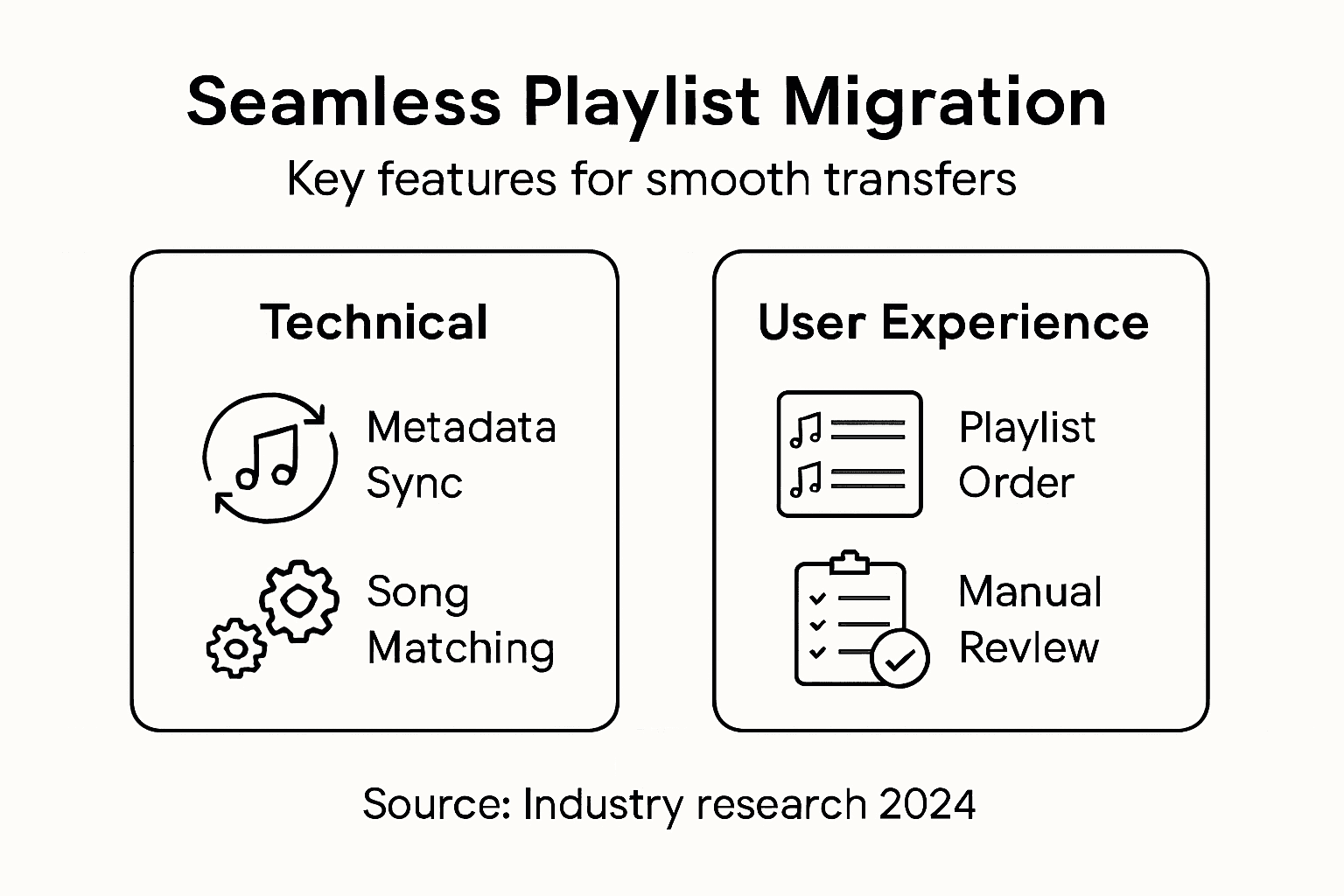
Les outils de transfert de playlists les plus avancés intègrent des algorithmes d’apprentissage automatique qui améliorent continuellement la précision des correspondances entre titres. Ils s’adaptent aux évolutions des écosystèmes musicaux et aux nouvelles exigences des plateformes. Lorsqu’aucune correspondance exacte n’est disponible, ces systèmes intelligents peuvent anticiper et suggérer des morceaux de remplacement tout en préservant l’esprit musical de la playlist d’origine.
Conseil pratique : Vérifiez toujours manuellement votre playlist après le transfert pour confirmer que les bons morceaux ont été sélectionnés et effectuer les ajustements nécessaires.
Comparez les fonctionnalités essentielles à un transfert de playlists fluide :
| Fonctionnalité | Objectif | Impact pour le service |
|---|---|---|
| Remplacement intelligent des morceaux | Gérer les titres indisponibles | Maintenir l’engagement des utilisateurs |
| Reconnaissance par empreinte audio | Identifier précisément les morceaux | Améliorer la qualité du transfert |
| Gestion des catalogues régionaux | Tenir compte des contraintes de licence | Étendre l’utilisation à l’international |
| Concordance des métadonnées | Préserver l’identité des playlists | Renforcer la confiance dans la plateforme |
Confidentialité des données et aspects juridiques
L’accès à la musique sur plusieurs plateformes soulève des enjeux complexes en matière de droit et de confidentialité. Les fournisseurs de services comme les utilisateurs doivent les prendre en compte avec soin. Les réglementations sur la protection des données définissent un cadre essentiel pour gérer les informations des utilisateurs lors des transferts de playlists et de l’écoute de musique numérique.
Les principaux aspects juridiques de l’accès à la musique sur plusieurs plateformes comprennent :
- Le consentement des utilisateurs et la transparence sur les données
- La protection des informations personnelles
- Les règles encadrant les transferts transfrontaliers de données
- Les droits de propriété intellectuelle des artistes
- Les conditions d’utilisation propres à chaque plateforme
- Le respect des lois sur la protection de la vie privée à l’international
Les cadres juridiques imposent une attention rigoureuse à plusieurs dimensions des usages musicaux numériques. Les outils de transfert de musique actuels doivent répondre à des exigences réglementaires complexes, notamment :
- Obtenir l’autorisation explicite des utilisateurs
- Mettre en place une anonymisation rigoureuse des données
- Maintenir des protocoles de sécurité complets
- Proposer des mécanismes permettant aux utilisateurs de contrôler leurs données
Les plateformes musicales numériques doivent concilier innovation technologique et respect strict des obligations légales.
La transparence des algorithmes est essentielle pour protéger les droits des utilisateurs et garantir un traitement équitable des données. Pour assurer cette équité dans les écosystèmes musicaux numériques, les plateformes doivent adopter des méthodes claires et compréhensibles de traitement des données et de gestion des informations personnelles.
L’évolution du cadre juridique redéfinit continuellement la manière dont les services de streaming musical traitent les données des utilisateurs. Elle exige une adaptation constante et une démarche proactive de mise en conformité. Les plateformes doivent rester attentives aux nouvelles réglementations sur la vie privée et aux évolutions technologiques qui influent sur la protection des informations personnelles.
Conseil pratique : Consultez régulièrement les politiques de confidentialité des services de streaming musical pour comprendre comment vos données personnelles sont collectées, utilisées et protégées.
Simplifiez votre expérience musicale sur plusieurs plateformes avec FreeYourMusic.com
Transférer vos playlists entre plateformes de streaming sans perdre vos collections soigneusement constituées peut sembler compliqué. Comme le souligne cet article, préserver l’ordre des playlists, assurer la concordance des métadonnées et gérer la disponibilité régionale des titres sont indispensables pour une transition vraiment fluide. FreeYourMusic.com répond précisément à ces besoins grâce à des algorithmes avancés de correspondance entre morceaux et à des options de sauvegarde dans le cloud, pour rendre vos transferts de playlists simples et fiables.
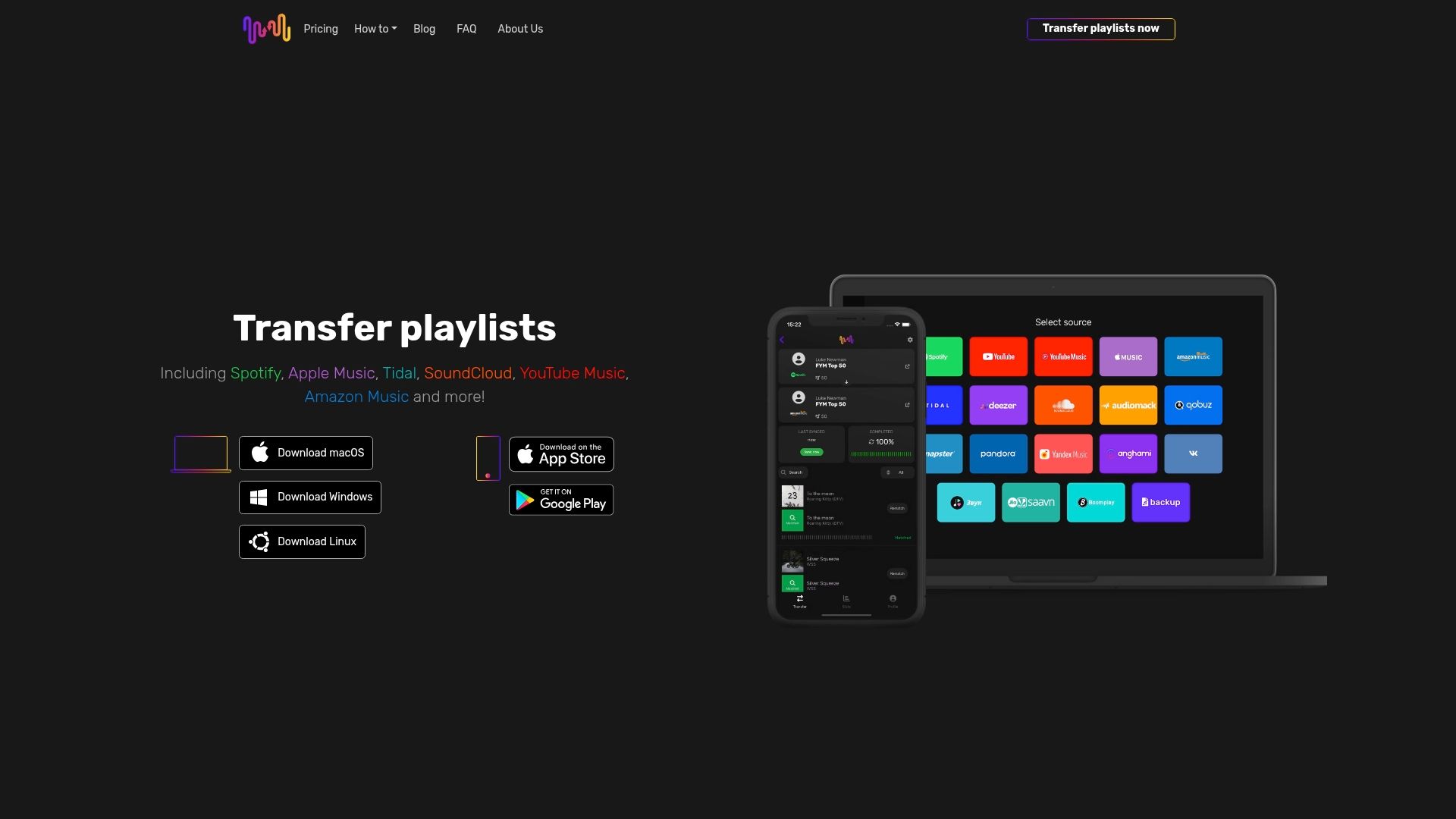
Prenez dès aujourd’hui le contrôle de votre expérience musicale en vous rendant sur FreeYourMusic.com. Que vous souhaitiez transférer des playlists entre Spotify, Apple Music ou un autre grand service, ou gérer votre bibliothèque musicale personnelle grâce à la synchronisation automatique, notre plateforme propose une solution intuitive et sécurisée, conçue pour les passionnés comme pour les professionnels. N’attendez plus pour profiter pleinement de votre musique lorsque vous changez de service de streaming. Lancez dès maintenant votre transfert sur FreeYourMusic.com et retrouvez la liberté d’écouter votre musique sur plusieurs plateformes.
Questions fréquentes
Qu’est-ce que l’accès à la musique sur plusieurs plateformes ?
L’accès à la musique sur plusieurs plateformes permet d’écouter de la musique en streaming sur différents appareils et services. Il offre la liberté d’explorer de vastes catalogues musicaux sans dépendre d’une seule plateforme.
Comment fonctionnent les outils de transfert de playlists ?
Les outils de transfert de playlists utilisent des algorithmes avancés pour faire correspondre les métadonnées des morceaux. Ils conservent l’ordre et la cohérence des playlists d’origine tout en transférant les collections musicales entre différentes plateformes de streaming.
Quelles fonctionnalités rechercher dans un outil de transfert de playlists ?
Les fonctionnalités clés comprennent une mise en correspondance complète des métadonnées, le remplacement intelligent des morceaux, la conservation de l’ordre des playlists et la prise en charge de plusieurs plateformes de streaming, pour assurer une transition fluide.
Quels aspects juridiques faut-il prendre en compte pour accéder à la musique sur plusieurs plateformes ?
Les principaux aspects juridiques concernent le consentement des utilisateurs, la protection des données, les règles encadrant les transferts transfrontaliers de données et le respect de la propriété intellectuelle. Ils visent à protéger à la fois les informations des utilisateurs et les droits des artistes.
À lire aussi
- Free Your Music - Qu’est-ce qu’un transfert de playlists fluide ? Guide complet
- Free Your Music - Comprendre les avantages du transfert de playlists
- Free Your Music - Comprendre les bonnes pratiques du transfert de playlists pour les utilisateurs
- Free Your Music - Les avantages du transfert de playlists : consentement et explications
Vos listes de lecture vous appartiennent.
Arrêtez de tout reconstruire à la main. Déplacez tout en quelques minutes et emportez votre musique partout avec vous.
Télécharger gratuitement →SongsBrew — notre newsletter musicale gratuite
Un avantage gratuit pour les utilisateurs FYM. Astuces, playlists, zéro spam.