 Qobuz→
 Tidal
TidalQobuz zu Tidal übertragen
Übertrage Playlists, gelikte Songs, gespeicherte Alben und gefolgte Künstler von Qobuz zu Tidal, ohne etwas von Hand neu anzulegen. Verbinde beide Konten, wähle aus, was du übertragen willst, und FreeYourMusic legt alles auf Tidal mit denselben Namen und derselben Songreihenfolge neu an.
★★★★★ 4,7 · über 12 Mio. Downloads · Passwort wird nie geteilt


Warum von Qobuz zu Tidal wechseln?
FreeYourMusic überträgt Playlists, gelikte Songs, gespeicherte Alben und gefolgte Künstler von Qobuz zu Tidal. Die Songs werden einzeln zugeordnet, und alles, was es auf Tidal nicht gibt, wird aufgelistet – so kannst du es vor dem Wechsel korrigieren.
Unterstützte Übertragungen
Playlists (mit Originalnamen + Reihenfolge), Gelikete Songs / Favoriten, Gespeicherte Alben und Gefolgte Künstler
Fehlende Titel prüfen
Die Musikkataloge unterscheiden sich. Prüfe die Übertragungsergebnisse auf Titel, für die beim Zieldienst keine Übereinstimmung gefunden wurde.
So überträgst du Playlists von Qobuz zu Tidal
Vier Schritte. Gleich auf iPhone, Android, Mac, Windows und Linux.
Kurze Antwort
Um Qobuz zu Tidal zu übertragen, installiere FreeYourMusic, wähle Qobuz als Quelle und Tidal als Ziel, wähle die gewünschten Playlists aus und starte die Übertragung. Die App sucht jeden Song auf Tidal und listet alle Titel auf, die sie nicht zuordnen konnte.
- 1
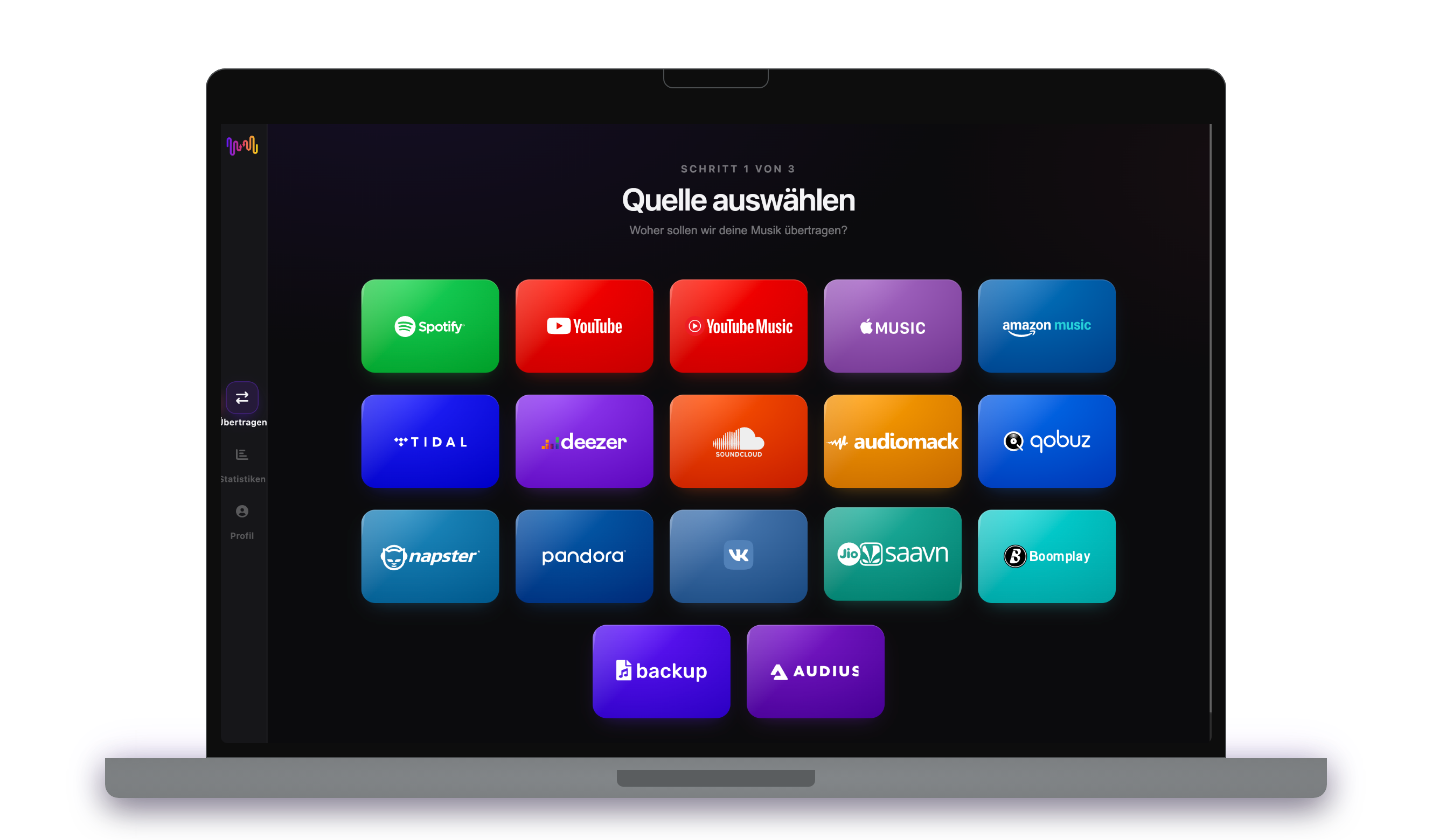
Qobuz als Quelle verbinden
Öffne FreeYourMusic, tippe im Bildschirm „Quelle auswählen“ auf die Kachel Qobuz und melde dich auf der Anmeldeseite von Qobuz an. FreeYourMusic speichert dein Qobuz-Passwort nicht.
- 2
Tidal als Ziel wählen
Tippe im Bildschirm „Ziel auswählen“ auf Tidal und melde dich an. FreeYourMusic braucht Zugriff auf deine Tidal-Bibliothek, um dort die Playlists zu erstellen.
- 3
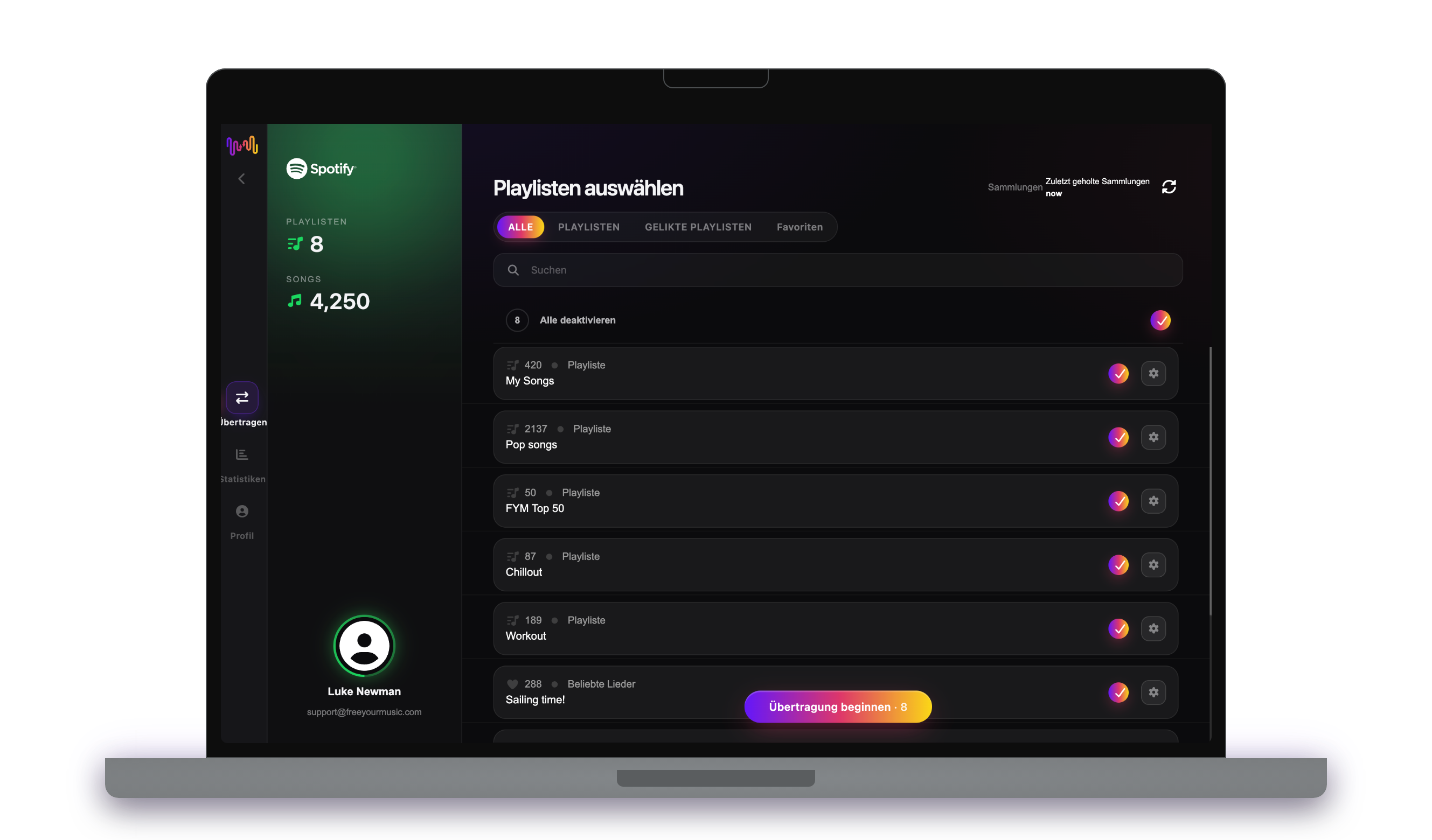
Auswählen, was übertragen wird
Markiere die Playlists, die du auf Tidal haben möchtest. Nutze die Filter und das Suchfeld, um sie zu finden, oder wähle alles aus, um deine gesamte Qobuz-Bibliothek auf einmal zu übertragen.
- 4
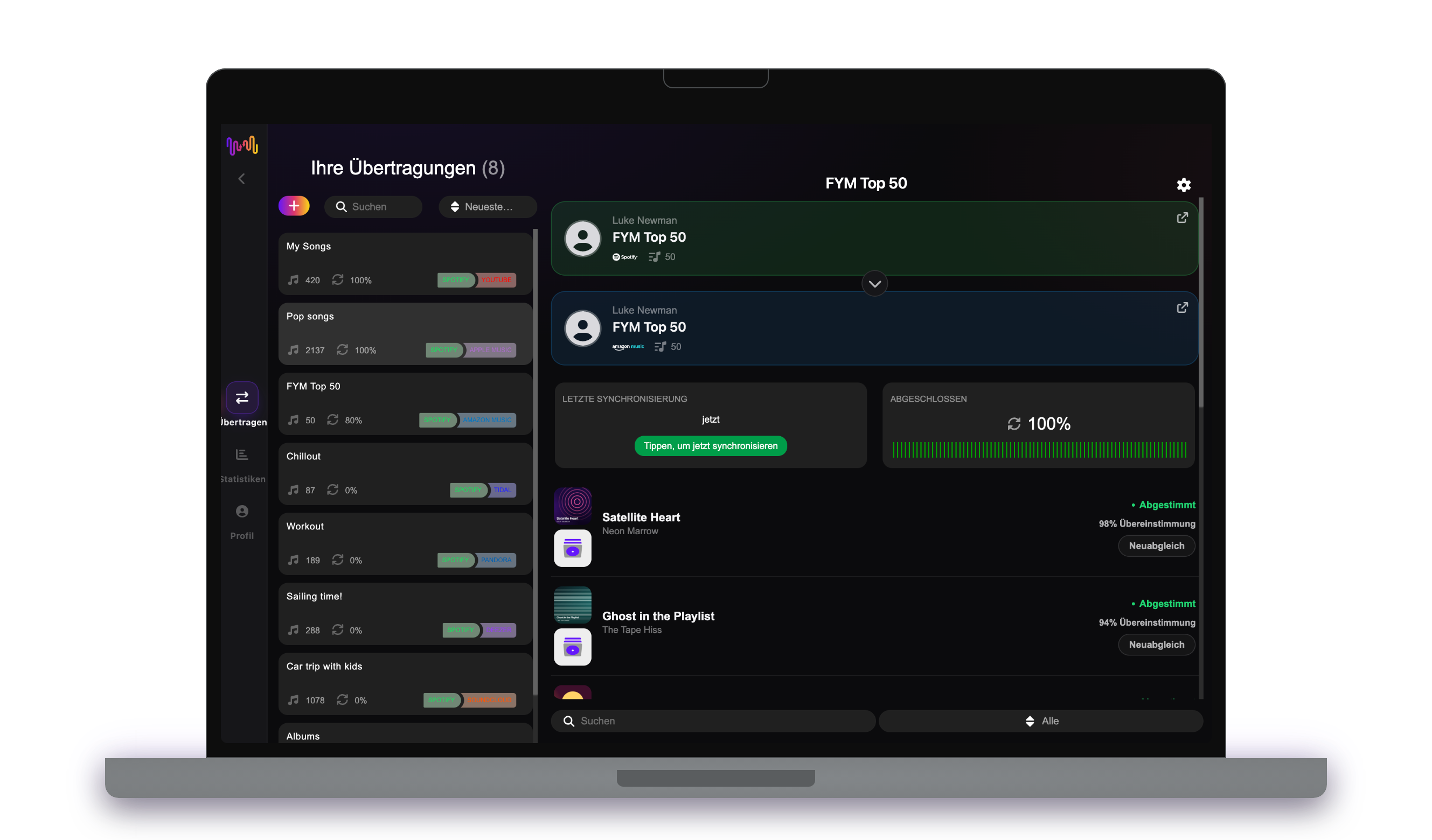
Übertragung starten und Ergebnisse prüfen
Tippe auf „Übertragung beginnen“. FreeYourMusic ordnet jeden Song auf Tidal zu, behält Playlist-Namen und Songreihenfolge bei und zeigt für jede Zuordnung einen Konfidenzwert an. Mit Rematch korrigierst du Songs, die nicht gefunden wurden.
Gut zu wissen, bevor du von Qobuz zu Tidal wechselst
Qobuz als Quelle
Aus Qobuz lassen sich Playlists, Lieblingstitel, gespeicherte Alben und gefolgte Künstler übertragen.
Tidal als Ziel
Tidal erlaubt Apps nicht, Songs in einer Playlist zu entfernen oder neu anzuordnen, daher fügt Auto-Sync bei Tidal nur neue Songs hinzu.
Was von Qobuz zu Tidal übertragen wird
Auf jedem Gerät
Übertragen, umwandeln oder importieren: eine Übertragung von Qobuz zu Tidal
Egal, wie du es nennst – es ist dieselbe Aufgabe. Du kannst deine Qobuz-Playlists zu Tidal übertragen, eine Qobuz-Playlist in eine Tidal-Playlist umwandeln oder deine Qobuz-Bibliothek in Tidal importieren. FreeYourMusic erledigt alle drei in einer Übertragung, für eine einzelne Playlist oder eine Bibliothek mit Tausenden Songs.
Qobuz und Tidal synchron halten
Fügst du auf Qobuz noch Songs hinzu? Mit Premium prüft Auto-Sync deine übertragenen Playlists und fügt neue Songs automatisch zu Tidal hinzu, damit beide Bibliotheken gleich bleiben. Preise →
Qobuz zu einem anderen Dienst übertragen


Alle Qobuz-Übertragungen ansehen →
Von einem anderen Dienst zu Tidal übertragen
Häufig gestellte Fragen
Wie übertrage ich meine Qobuz-Playlist zu Tidal?
Um Qobuz zu Tidal zu übertragen, installiere FreeYourMusic, wähle Qobuz als Quelle und Tidal als Ziel, wähle die gewünschten Playlists aus und starte die Übertragung. Die App sucht jeden Song auf Tidal und listet alle Titel auf, die sie nicht zuordnen konnte.
Was genau wird von Qobuz zu Tidal übertragen?
FreeYourMusic überträgt Playlists, gelikte Songs, gespeicherte Alben und gefolgte Künstler von Qobuz zu Tidal. Die Songs werden einzeln zugeordnet, und alles, was es auf Tidal nicht gibt, wird aufgelistet – so kannst du es vor dem Wechsel korrigieren.
Kann ich Qobuz-Playlists kostenlos zu Tidal übertragen?
Ja — die kostenlose Stufe überträgt 300 Songs ohne Kreditkarte, und nach einer kostenlosen E-Mail-Anmeldung bekommst du 300 weitere. Upgrade für unbegrenzte Übertragungen, Auto-Sync und Cloud-Backup.
Was passiert mit Songs, die es auf Tidal nicht gibt?
Die Kataloge unterscheiden sich je nach Dienst und Region. FreeYourMusic listet jeden Song auf, den es auf Tidal nicht zuordnen konnte. So kannst du mit Rematch eine andere Version wählen oder den Song überspringen. Nichts fällt weg, ohne dass du es siehst.
Werden meine Qobuz-Playlists gelöscht?
Nein. FreeYourMusic kopiert deine Musik zu Tidal und lässt deine Qobuz-Bibliothek unverändert. Ob du dein Qobuz-Konto behältst oder kündigst, entscheidest du später.
Wie lange dauert eine Übertragung von Qobuz zu Tidal?
Die meisten Playlists sind in wenigen Minuten übertragen. Große Bibliotheken dauern länger, denn die Zeit hängt von der Anzahl der Songs und von den Limits von Qobuz und Tidal ab. Du kannst dein Gerät weiter nutzen, während die Übertragung läuft.
Kann ich Qobuz auf dem Smartphone zu Tidal übertragen?
Ja. FreeYourMusic läuft auf iPhone, iPad und Android sowie auf Mac-, Windows- und Linux-Computern. Die Schritte sind auf jedem Gerät gleich.
Bereit für den Wechsel zu Tidal?
Lade FreeYourMusic herunter und verschiebe deine gesamte Bibliothek in Minuten.
Kostenlos herunterladen →