7 Examples of Music Streaming Platforms You Should Know
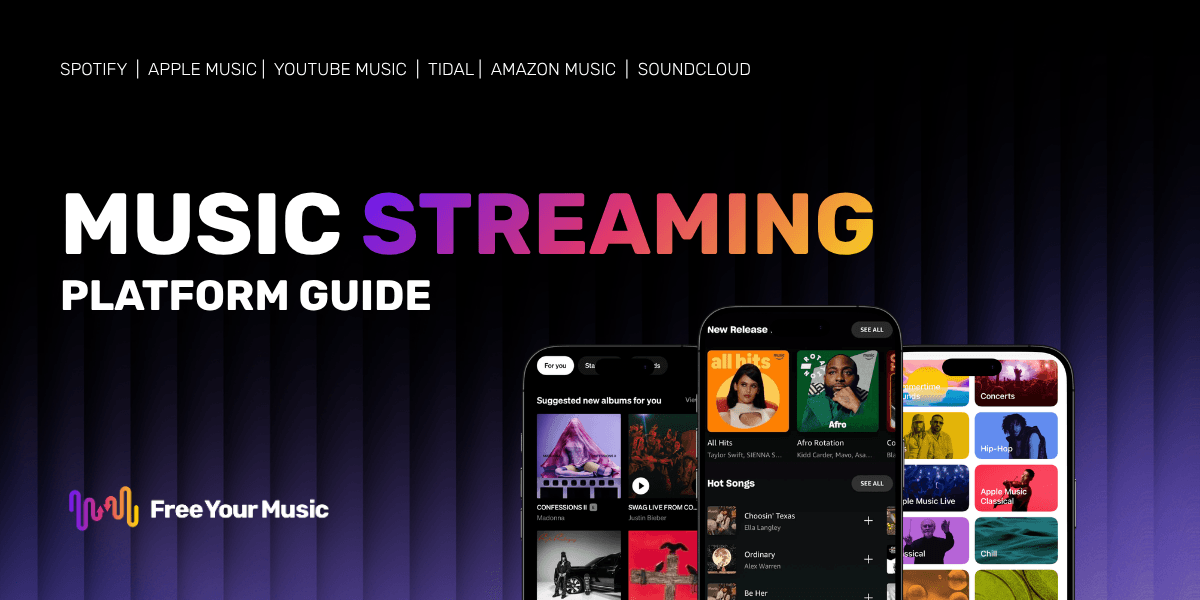
7 Examples of Music Streaming Platforms You Should Know
Music streaming platforms have completely changed the way we listen. Old CD racks turned into millions of songs, instantly available on any device.
You might expect physical music to still hold some ground, but the numbers say otherwise. Streaming now makes up over 65 percent of all global music industry revenue. That shift means you don't just listen differently now. You discover and explore music in ways that would have seemed impossible a decade ago.
Table of Contents
- 1. Introduction to Music Streaming Platforms
- 2. Popular Global Platforms: Spotify and Apple Music
- 3. Niche Platforms for Specific Genres: SoundCloud and Bandcamp
- 4. Video Integration Music Services: YouTube Music and Tidal
- 5. Affordable Options: Amazon Music and Deezer
- 6. Local Platforms Worth Exploring: Anghami and JioSaavn
- 7. Choosing the Right Platform for Your Needs
Quick Summary
| Takeaway | What It Means |
|---|---|
| Streaming dominates music today | Over 65% of global music revenue now comes from streaming. |
| Personalization drives engagement | Algorithms tailor recommendations, keeping listeners satisfied. |
| Niche platforms support independent artists | SoundCloud and Bandcamp offer direct uploads and better payouts. |
| Compare features before choosing | Check library size, audio quality, and pricing before you commit. |
| Try free trials first | Most platforms let you test features before you pay. |
1. Introduction to Music Streaming Platforms
Music streaming has transformed how people experience music, giving instant access to millions of songs in nearly any genre. These platforms replaced traditional ownership with easy, on-demand listening.
Before streaming, music lovers were stuck with CDs, vinyl, and digital downloads. Now, a few taps unlock a global music library. Streaming now accounts for over 65% of global music industry revenue.
What defines a good streaming platform:
- Massive catalogs across genres and global artists
- Personalized recommendation algorithms
- Offline listening
- Cross-device sync
Whether you're a casual listener or someone building complex playlists, today's platforms fit a wide range of needs. Our guide to transferring playlists between services can help you manage your collection across platforms.
The market keeps growing fast. High-fidelity audio, social sharing, and collaborative playlists are quickly becoming standard, not extras.
2. Popular Global Platforms: Spotify and Apple Music
Spotify and Apple Music are the two biggest names in streaming, and they've set the standard the rest of the industry follows.
Spotify, launched in 2008, pioneered modern streaming. It now has over 551 million monthly active users, with about 226 million paid subscribers. Its strengths include:
- Advanced recommendation algorithms
- Deep podcast integration
- Collaborative playlists
- Social sharing
Apple Music, launched in 2015, leans on Apple's ecosystem for a seamless experience. It has around 80 million subscribers worldwide, with deep device integration, high-quality audio, and exclusive content.
Both platforms offer huge libraries spanning countless genres. Our playlist transfer guide helps you move between them without losing a thing.
Their rivalry keeps pushing the whole industry forward, from smarter discovery tools to better playlist features.
3. Niche Platforms for Specific Genres: SoundCloud and Bandcamp
SoundCloud and Bandcamp serve independent artists and niche communities directly, offering something mainstream platforms don't.
SoundCloud, founded in 2007, is the home of underground and independent music. It has over 100 million monthly active users, with strong roots in electronic, hip-hop, and indie genres. It offers:
- Direct artist uploads, no label needed
- Strong commenting and social features
- A culture built around remixes and sampling
- Free and paid tiers
Bandcamp takes a different approach, focused on artist payouts. It has facilitated over $1 billion in direct artist earnings. Musicians set their own prices and keep a much bigger cut than on traditional streaming.
Our playlist transfer guide helps you move your collection between these platforms easily. Both prove streaming can support independent artists, not just major labels.
4. Video Integration Music Services: YouTube Music and Tidal
YouTube Music and Tidal take very different approaches: one leans into video, the other into audio quality.
YouTube Music uses Google's video platform to blend audio and video seamlessly. It has surpassed 80 million subscribers. It offers:
- Unlimited music video streaming
- Algorithmic recommendations
- Background playback on mobile
- A huge library of user-generated content
Tidal, founded by artists, focuses on high-fidelity audio and artist pay. It has around 6 million subscribers, mostly audiophiles who care deeply about sound quality.
Our playlist transfer guide helps you move smoothly between the two. YouTube Music leans visual and content-rich, while Tidal stays premium and audio-focused.
5. Affordable Options: Amazon Music and Deezer
Amazon Music and Deezer offer strong value for budget-conscious listeners, without giving up much on quality.
Amazon Music ties in closely with Amazon's ecosystem and offers several subscription tiers. It has around 55 million subscribers. It offers:
- Direct Alexa integration
- Bundling with Prime
- Affordable pricing
- A wide catalog across genres
Deezer, based in France, focuses on music discovery at a competitive price. It has around 16 million subscribers, with strong reach across Europe and developing markets.
Our playlist transfer guide helps you switch between platforms without losing your playlists. Both prove good streaming doesn't have to cost a premium.
6. Local Platforms Worth Exploring: Anghami and JioSaavn
Anghami and JioSaavn focus on regional music cultures that global platforms often overlook.
Anghami, founded in the Middle East, leads Arabic music streaming. It went public on NASDAQ in 2021. It offers:
- Deep Arabic and Middle Eastern catalogs
- Local artist promotion
- Culturally tailored recommendations
- Offline listening
JioSaavn, based in India, is deeply tied to the Indian digital ecosystem. It has over 100 million monthly active users, spanning many Indian languages and genres.
Our playlist transfer guide helps you move between these platforms easily. Both show how regional platforms can offer something global services can't.
7. Choosing the Right Platform for Your Needs
Picking the right platform comes down to your own habits and priorities, not what's most popular.
Things worth checking:
- Library size
- Audio quality
- Pricing
- Device compatibility
- Recommendation quality
Budget matters for most people. Premium services offer more features, but affordable options can still deliver a great experience. If sound quality is your priority, Tidal is worth a look. If you're a casual listener, a cheaper option might suit you just fine.
Consider your existing tech setup too. If you're deep in the Apple or Amazon ecosystem, their music services will likely feel the most convenient.
There's no single best platform. The right one depends on your habits, your budget, and what you value most. Try a free trial before committing, and use a playlist transfer tool to explore risk-free.
Here's a quick summary of the platform types covered.
| Platform Type | Key Examples | Distinct Features | Primary Benefits |
|---|---|---|---|
| Global Mainstream | Spotify, Apple Music | Large catalogs, strong recommendations, cross-device | Extensive content, personalization |
| Niche/Independent | SoundCloud, Bandcamp | Direct uploads, artist-first model | Discover underground music, support artists |
| Video and Premium Audio | YouTube Music, Tidal | Video streaming, high-fidelity audio | Blended experience, superior sound |
| Affordable Alternatives | Amazon Music, Deezer | Budget tiers, ecosystem tie-ins | Cost-effective, flexible plans |
| Regional Platforms | Anghami, JioSaavn | Culturally tailored content | Local music focus, language support |
Take Control of Your Music Playlists Across All Streaming Platforms
Switching platforms is a big decision. Spotify, Apple Music, Tidal, and the rest all have real advantages, but you shouldn't have to sacrifice your playlists to try something new.
Rebuilding a collection by hand is slow and frustrating. Nobody wants to lose their musical history over a platform switch.
Free Your Music makes the move stress-free. Start transferring your playlists in a few clicks, with unlimited movement between all your favorite streaming services.
Frequently Asked Questions
What are music streaming platforms?
They're digital services that let you access and listen to huge music libraries on demand. Most offer personalized recommendations, offline listening, and cross-device sync.
How do I choose the right platform for my needs?
Compare library size, audio quality, pricing, device compatibility, and recommendation quality. Try a free trial to see what actually fits your listening habits.
What are the benefits of niche platforms like SoundCloud and Bandcamp?
They support independent artists directly, offer better payouts, and help you discover underground music you won't find on mainstream services.
How can I transfer my playlists between streaming services?
Use a dedicated playlist transfer tool. It moves your playlists automatically, so you don't lose your curated collection when you switch.
Your playlists belong to you.
Stop rebuilding by hand. Move everything in minutes and take your music wherever you go.
Download free →SongsBrew — our free music newsletter
A free perk for FYM users. Tips, playlists, no spam.