Syncing Playlists Across Streaming Platforms: Essential Steps

Nearly 60 percent of American music listeners use more than one streaming service. Keeping playlists in sync across platforms is now a real concern for anyone building a digital collection. The ability to smoothly transfer and maintain your favorite tracks impacts how you discover, share, and remember music. Understanding playlist syncing helps American users avoid losing carefully curated playlists while enjoying flexibility and true musical freedom no matter which service they choose next.
Table of Contents
- What Playlist Syncing Means For Users
- Types Of Playlist Transfers And Sync Scenarios
- How Cross-Platform Syncing Works Technically
- Features To Expect In Playlist Migration Tools
- Risks, Limitations, And Common Pitfalls
Key Takeaways
| Point | Details |
|---|---|
| Playlist Syncing Enhances User Experience | It allows music lovers to transfer their playlists seamlessly across different streaming platforms, preserving their music library integrity. |
| Key Features of Migration Tools | Advanced algorithms for metadata matching and personalized recommendations are essential for successful playlist transfers. |
| Risks in Migration | Users may encounter issues such as incomplete transfers, metadata inconsistencies, and potential loss of curated playlist ordering. |
| Growing User Expectations | As music streaming evolves, users increasingly demand tools that respect their listening preferences and maintain the quality of their music collections. |
What Playlist Syncing Means for Users
Playlist syncing represents a revolutionary approach for music listeners to seamlessly transfer and manage their digital music collections across different streaming platforms. It transforms how users interact with their personal music libraries, breaking down traditional platform barriers and enabling unprecedented flexibility.
At its core, playlist syncing allows music enthusiasts to preserve their carefully curated playlists when switching between streaming services. Collaborative research highlights that these digital music collections are more than just song lists - they are personal narratives and social connections. Studies demonstrate that collaborative playlists enable users to share and discover music through co-curation, facilitating meaningful social interactions across different cultural contexts.
The significance of playlist syncing extends beyond mere technical convenience. Music library portability has become a critical user expectation in the streaming era. Users now demand tools that respect their time and musical investments, allowing them to move seamlessly between platforms without losing meticulously assembled playlists. Digital music platforms increasingly recognize that shared listening experiences are fundamental to user engagement, making playlist transfer capabilities a key competitive differentiator.
Key benefits of playlist syncing include:
- Instant transfer of entire music collections
- Preservation of playlist order and structure
- Elimination of manual song re-adding
- Support for multiple streaming platforms
- Maintenance of personalized music discovery algorithms
By embracing playlist syncing, music lovers can truly own their musical journey, unbound by the limitations of individual streaming services.
Types of Playlist Transfers and Sync Scenarios
Playlist transfers represent a complex ecosystem of digital music management, with multiple scenarios designed to meet diverse user needs and technological constraints. Understanding these transfer types is crucial for music enthusiasts seeking seamless audio experience across different platforms and devices.
One primary sync scenario involves cross-platform playlist migration, where users move entire music collections between streaming services. Windows Media Player demonstrates how synchronization can work across devices, offering both automatic and manual sync options based on storage capacity and user preferences. This flexibility allows music lovers to customize their transfer experience according to specific requirements.

Device synchronization represents another critical playlist transfer scenario. Modern music platforms recognize the need for consistent library access across multiple devices. Apple Music enables users to access their music library universally by activating 'Sync Library', ensuring playlists and songs remain consistently available on all signed-in devices. This approach eliminates the frustration of fragmented music libraries and provides a unified listening experience.
Key playlist transfer scenarios include:
- Cross-platform migration
- Device-to-device synchronization
- Cloud library backup
- Collaborative playlist sharing
- Automated music library updates
By understanding these transfer types, users can strategically manage their digital music collections, ensuring maximum accessibility and minimal disruption to their listening habits.
How Cross-Platform Syncing Works Technically
Cross-platform playlist syncing represents a sophisticated technological process that enables seamless music library transfer across different streaming services and devices. This intricate mechanism involves multiple complex steps designed to preserve the integrity of users' musical collections while navigating the technical challenges of disparate digital ecosystems.
Windows Media Player demonstrates the foundational principles of playlist synchronization, revealing the core technical strategies involved in transferring media libraries. The synchronization process typically involves advanced metadata matching, where each song's unique identifiers are cross-referenced across platforms to ensure accurate transfer. This means that beyond simple file transfer, the system must intelligently map tracks between different streaming services' databases, accounting for potential variations in song metadata, album art, and track information.
Metadata translation represents the most critical technical challenge in cross-platform syncing. Modern synchronization technologies employ sophisticated algorithms that can identify songs through multiple parameters - including track name, artist, album, duration, and acoustic fingerprinting. Music library synchronization techniques have evolved to handle complex scenarios like partial matches, regional music variations, and platform-specific encoding differences.
Key technical components of cross-platform syncing include:
- Metadata matching algorithms
- Acoustic fingerprint recognition
- Cloud-based synchronization infrastructure
- Encryption and security protocols
- Real-time playlist update mechanisms
By leveraging advanced technological approaches, cross-platform syncing transforms what was once a manual, time-consuming process into a seamless, intelligent music management experience.
Features to Expect in Playlist Migration Tools
Playlist migration tools have evolved into sophisticated platforms designed to simplify the complex process of transferring music collections across different streaming services. These tools must address the intricate challenges of maintaining playlist integrity, musical preference continuity, and user experience throughout the migration process.
Effective playlist migration requires advanced recommendation algorithms that go beyond simple track transfer. Research demonstrates that hybrid models combining collaborative filtering and content-based methods can significantly enhance playlist continuation and user satisfaction. These sophisticated approaches ensure that migrated playlists not only transfer tracks accurately but also preserve the underlying musical essence and listening experience.
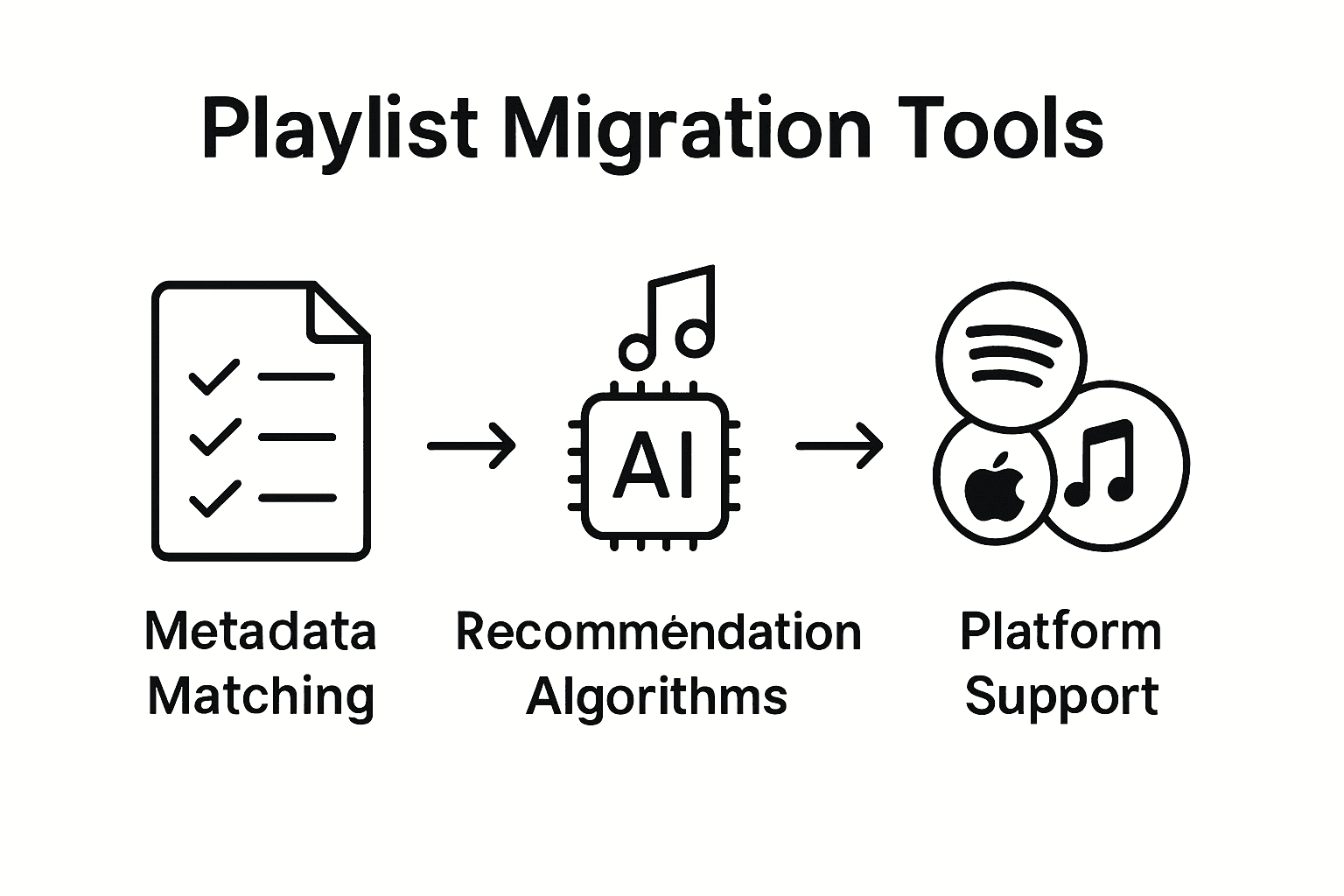
Intelligent matching technologies represent the cornerstone of modern playlist migration tools. These systems employ complex algorithms that analyze multiple dimensions of musical metadata, including genre patterns, listening history, track relationships, and user preferences. Understanding the benefits of playlist migration reveals how advanced tools can seamlessly translate musical collections across different platform ecosystems.
Key features to expect in top-tier playlist migration tools include:
- Sophisticated metadata matching algorithms
- Acoustic fingerprint recognition
- Cross-platform genre and mood preservation
- Personalized music recommendation integration
- Secure and private data transfer protocols
- Comprehensive playlist structure maintenance
- Real-time synchronization capabilities
By leveraging cutting-edge technological approaches, playlist migration tools transform what was once a manual, frustrating process into an intelligent, user-centric musical journey.
Risks, Limitations, and Common Pitfalls
Playlist migration, while transformative, involves complex technical and user experience challenges that can significantly impact the music transfer process. Users must approach these tools with a nuanced understanding of potential limitations and potential disruptions to their musical collections.
Collaborative filtering models demonstrate inherent challenges in playlist continuation, particularly when handling songs that appear infrequently in user libraries. Pure collaborative filtering approaches can only extend playlists profiled during their training period, creating potential blind spots in music recommendation and transfer accuracy. These limitations mean that not every track will seamlessly migrate, potentially leaving gaps in carefully curated playlists.
Metadata inconsistency represents another significant risk in cross-platform playlist migration. Different streaming services maintain unique metadata standards, which can lead to track mismatches, duplicate entries, or complete song omissions. Understanding playlist migration challenges reveals the complex ecosystem of music platform differences that can compromise playlist integrity.
Common pitfalls in playlist migration include:
- Incomplete track transfers
- Metadata translation errors
- Loss of playlist ordering
- Duplicate song entries
- Unexpected genre or mood shifts
- Licensing and regional music restrictions
- Potential loss of personalized recommendations
By anticipating these challenges, users can approach playlist migration with realistic expectations and proactive strategies to preserve their musical collections.
Take Full Control of Your Music with Effortless Playlist Syncing
Syncing playlists across streaming platforms can be confusing and time-consuming. The article highlights common challenges such as metadata inconsistencies, lost playlist order, and incomplete transfers that frustrate users wanting to preserve their curated collections. If you want to avoid these pitfalls and maintain your playlists' structure and personalized touch, you need a reliable, intelligent solution that handles complex cross-platform syncing seamlessly.
At FreeYourMusic.com, we specialize in solving these exact issues. Our user-friendly platform supports multiple streaming services like Spotify, Apple Music, and more, ensuring accurate song matching, full playlist preservation, and automated syncing without stress. Whether you are switching providers or managing multiple devices, our secure software offers unlimited transfers, cloud backup, and real-time updates to keep your music journey uninterrupted.
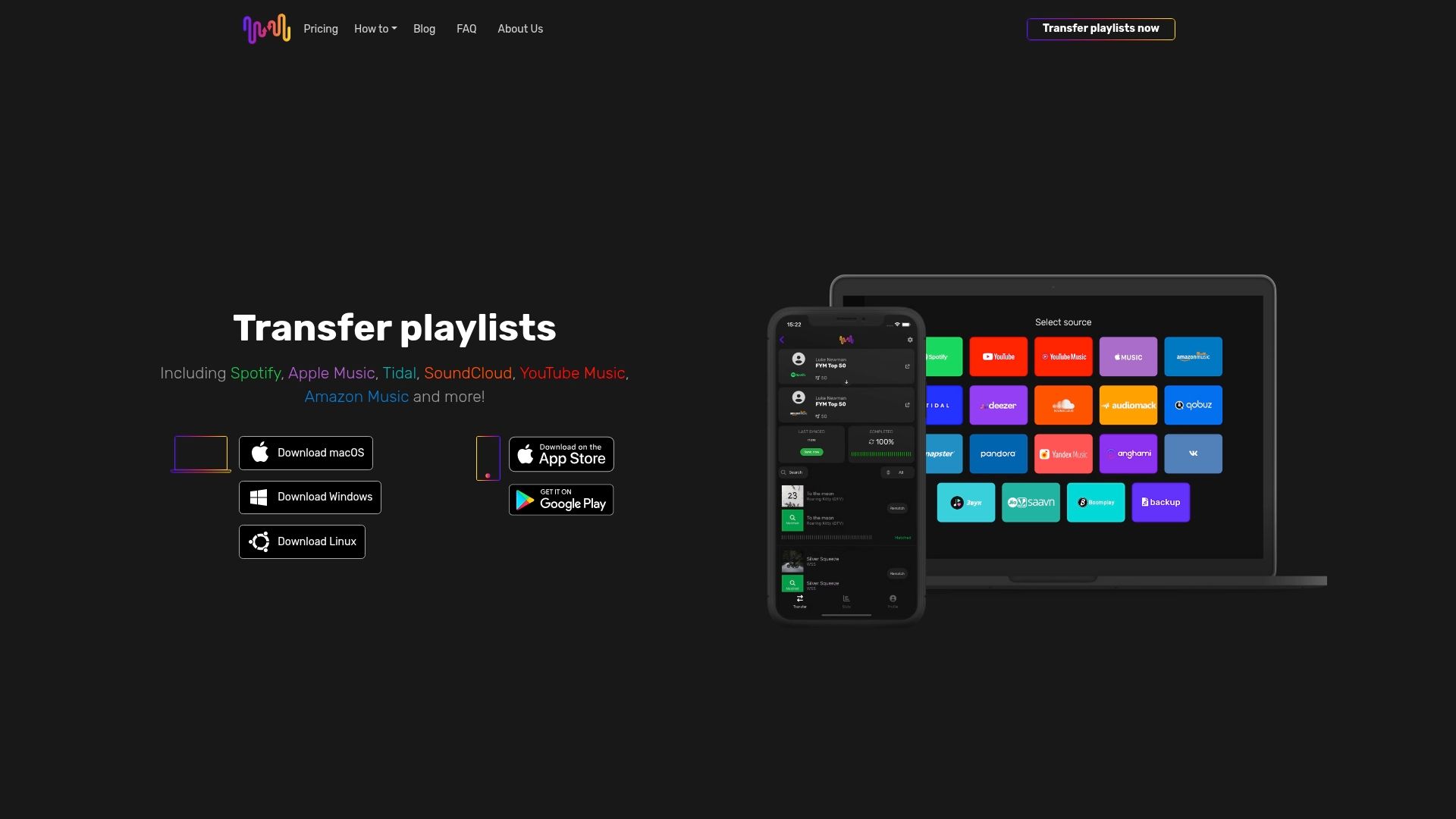
Start your effortless playlist migration today and never worry about losing your favorite songs or playlist arrangements again. Visit FreeYourMusic.com to explore how easy playlist transfer can be and take control of your music across all your platforms now.
Frequently Asked Questions
What is playlist syncing?
Playlist syncing allows users to transfer and manage their music collections across different streaming platforms, preserving curated playlists and maintaining their music discovery algorithms.
How does cross-platform playlist migration work?
Cross-platform playlist migration involves advanced metadata matching and algorithms that identify songs and ensures their accurate transfer across different streaming services, preserving playlists' structure and integrity.
What are the key features to look for in playlist migration tools?
Key features include sophisticated metadata matching algorithms, acoustic fingerprint recognition, cross-platform genre preservation, secure data transfer protocols, and real-time synchronization capabilities.
What challenges or limitations should I anticipate when migrating playlists?
Common challenges include incomplete track transfers, metadata inconsistencies, potential loss of playlist ordering, duplicate song entries, and licensing or regional music restrictions.
Recommended
- Free Your Music - 7 Smart Music Sharing Methods for Playlist Management
- Free Your Music - What Is Playlist Sharing? Complete User Guide
- Free Your Music - Understanding Playlist Transfer Best Practices for Users
- Free Your Music - What Is Seamless Playlist Transfer? Complete Overview
- Warum DJ Statt Spotify Hochzeit: Komplettleitfaden

Your playlists belong to you.
Stop rebuilding by hand. Move everything in minutes and take your music wherever you go.
Download free →SongsBrew — our free music newsletter
A free perk for FYM users. Tips, playlists, no spam.