Music Library Automation: Saving DJs Hours
Managing playlists across Spotify, Apple Music, and YouTube Music often feels overwhelming for DJs and music curators. Every transition risks lost track order or wasted hours manually rebuilding arrangements. With the rise of intelligent platforms for music library automation, you can transfer entire collections efficiently while maintaining the integrity of your curated playlists. Discover how these tools keep your song arrangements intact and save valuable time during streaming service migrations.
Table of Contents
- Defining Music Library Automation Platforms
- Types Of Playlist Migration Solutions
- How Automation Manages Playlist Transfers
- Key Features: Syncing, Metadata, And Backup
- Risks To Avoid In Automated Migration
- Comparing Manual Versus Automated Playlist Transfer
Key Takeaways
| Point | Details |
|---|---|
| Music Library Automation Platforms Enhance Efficiency | These platforms allow DJs and music curators to automate the tedious task of managing playlists, freeing them to focus on creating musical experiences. |
| Advanced Matching Algorithms Improve Accuracy | Automation tools use sophisticated algorithms to ensure accurate track matching and maintain playlist integrity during transfers. |
| Backup and Data Integrity Are Crucial | It's essential to create manual backups and verify automated transfers to avoid potential data loss and ensure music collections remain organized. |
| Hybrid Transfer Approaches May Offer Optimal Solutions | Combining automated initial transfers with manual reviews can maximize both speed and precision in playlist management. |
Defining music library automation platforms
Music library automation platforms are sophisticated digital solutions designed to simplify and streamline the complex process of managing, organizing, and transferring music collections across multiple streaming services. These intelligent platforms help DJs and music curators efficiently manage their extensive music libraries without manually recreating playlists or losing carefully curated song arrangements.
At their core, these platforms offer several critical functionalities:
- Seamless playlist migration between different streaming services
- Preservation of playlist order and song sequence
- Automated matching of tracks across multiple platforms
- Support for unlimited playlist transfers
- Multi-account management capabilities
The key differentiator of modern music library management systems is their ability to solve the complex problem of platform-to-platform music transfers. Unlike manual methods that require hours of tedious reconstruction, these platforms use advanced algorithms to map songs accurately across different streaming service catalogs.
For professional DJs and music curators, automation platforms represent more than just a convenience—they are essential tools for maintaining workflow efficiency. By eliminating the time-consuming task of manually rebuilding playlists, these platforms allow music professionals to focus on what truly matters: creating and sharing exceptional musical experiences.
Pro tip: Always verify your platform supports the specific streaming services you use before committing to a music library automation solution.
Types of playlist migration solutions
Playlist migration solutions have evolved to address the complex needs of music enthusiasts and professional DJs navigating the fragmented streaming platform landscape. These solutions range from simple web-based tools to sophisticated software applications designed to transfer music collections with minimal user intervention.
The primary types of playlist migration platforms include:
- Web-based transfer tools: Online platforms that allow immediate playlist transfers between services
- Desktop application solutions: Downloadable software with advanced synchronization features
- Mobile app migration services: Smartphone applications enabling on-the-go playlist transfers
- Batch transfer platforms: Systems supporting multiple playlist migrations simultaneously
- API-integrated migration services: Advanced solutions with direct streaming platform connections
Playlist transfer tools like Wondershare MobileTrans, Playlisty, TuneMyMusic, and SongShift represent the most common migration solutions available in the current market. These platforms typically support major streaming services and offer unique features tailored to different user requirements.
Professional DJs and music curators often require more robust solutions that preserve playlist integrity, including exact song ordering, metadata preservation, and cross-platform compatibility. Advanced migration platforms distinguish themselves by offering comprehensive features like automatic track matching, duplicate elimination, and seamless synchronization across multiple streaming accounts.
Pro tip: Always test migration tools with a small playlist first to ensure complete data transfer accuracy before migrating your entire music collection.
How automation manages playlist transfers
Playlist transfer automation represents a sophisticated technological solution that transforms the complex process of migrating music collections across different streaming platforms. By leveraging advanced algorithms and intelligent matching systems, these tools eliminate the traditionally time-consuming manual transfer methods that DJs and music curators have long struggled with.
The automated playlist transfer process typically involves several critical steps:
- Metadata extraction from source platform tracks
- Comprehensive song matching across different streaming services
- Intelligent handling of track variations and potential mismatches
- Preservation of original playlist sequence and organization
- Automated error detection and resolution mechanisms
Automatic playlist transfer techniques utilize sophisticated API interactions to fetch tracks, search for equivalent songs, and programmatically recreate playlists with minimal user intervention. These systems employ complex algorithms that analyze song metadata such as artist name, track title, duration, and acoustic fingerprinting to ensure maximum accuracy during transfers.

Under the hood, automation platforms use advanced matching algorithms that go beyond simple title comparisons. They consider multiple data points to identify the most probable match, including acoustic analysis, artist verification, and release year. This multi-dimensional approach ensures that DJs can transfer playlists with unprecedented precision, maintaining the integrity of their carefully curated music collections across different streaming ecosystems.
Pro tip: Always maintain a local backup of your playlists before initiating an automated transfer to protect against potential data inconsistencies.
Key features: syncing, metadata, and backup
Music library automation platforms have revolutionized how DJs and music curators manage their digital collections by introducing sophisticated synchronization technologies that go far beyond simple playlist transfers. These advanced systems provide comprehensive solutions for maintaining, protecting, and optimizing music libraries across multiple streaming platforms.
The core features of modern music library automation include:
- Real-time metadata synchronization
- Cross-platform playlist preservation
- Automatic duplicate track elimination
- Comprehensive cloud backup capabilities
- Intelligent metadata enrichment
- Multi-account library management
Music metadata automation represents a critical breakthrough in digital music management, leveraging artificial intelligence and API integrations to capture, organize, and standardize track information with unprecedented accuracy. These systems reduce manual entry errors and create a more streamlined, searchable music ecosystem for professionals who rely on precise track details.
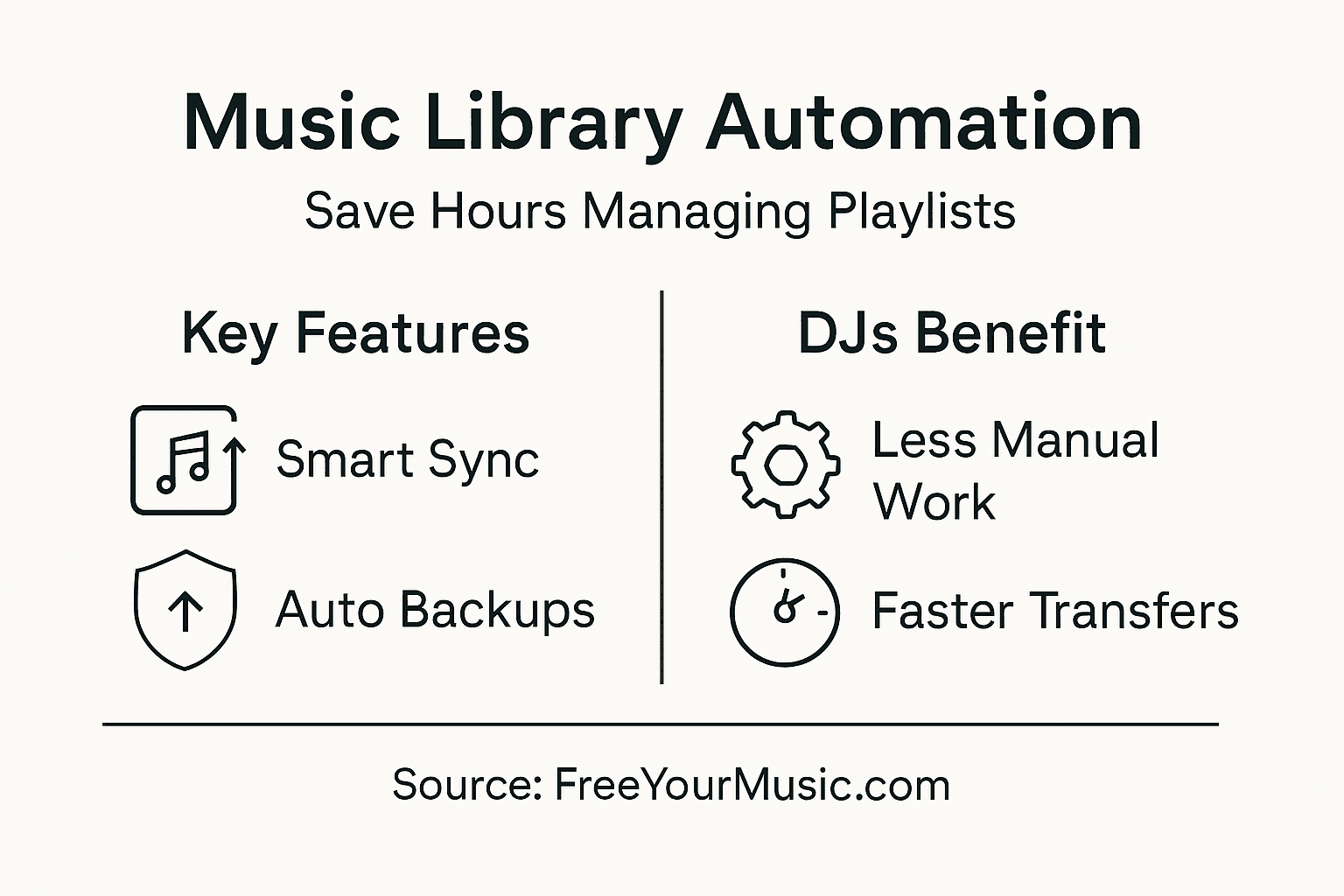
Backup and synchronization technologies are particularly crucial for DJs and music curators who frequently work across multiple platforms. Advanced automation platforms offer multi-layered protection strategies, including incremental cloud backups, version history tracking, and seamless metadata preservation. These features ensure that music collections remain intact, organized, and easily recoverable, even when transitioning between different streaming services or managing complex, multi-account libraries.
Here’s an overview of key automation platform features and their benefits:
| Feature | Business Impact | User Benefit |
|---|---|---|
| Real-time metadata sync | Ensures consistent library information | Minimizes manual corrections |
| Multi-account management | Simplifies workflows across services | Centralizes playlist control |
| Automatic duplicate elimination | Maintains data integrity | Prevents cluttered collections |
| Cloud backup capability | Protects against data loss | Offers easy recovery of playlists |
Pro tip: Configure automatic backup schedules and verify your metadata sync settings quarterly to maintain optimal library integrity.
Risks to avoid in automated migration
Automated music library migrations present several critical risks that DJs and music curators must carefully navigate to protect their meticulously curated collections. Understanding these potential pitfalls is essential for ensuring a smooth and accurate transfer of music libraries across different streaming platforms.
The primary risks in automated playlist migration include:
- Metadata corruption or loss
- Incomplete track matching
- Unintended playlist reordering
- Duplicate track generation
- Unexpected account permission changes
- Potential loss of unique or rare tracks
Algorithmic music platform risks reveal significant concerns about the opaque nature of automated systems. These platforms can introduce unintended biases and limitations that may compromise the integrity and diversity of music collections, potentially reducing the nuanced musical selections that professional DJs carefully cultivate.
Technical vulnerabilities pose substantial threats during migration processes. Automated transfer mechanisms can inadvertently modify playlist structures, misinterpret track metadata, or fail to accurately match songs across different streaming platforms. This can result in fragmented playlists, missing tracks, or altered song sequences that fundamentally disrupt the original musical narrative carefully constructed by the DJ.
Pro tip: Always create a manual backup of your original playlist and verify the automated transfer by cross-checking track listings immediately after migration.
Comparing manual versus automated playlist transfer
The landscape of music playlist management has dramatically transformed with the emergence of sophisticated automation technologies, creating a complex ecosystem where manual and automated approaches coexist and compete. Professional DJs and music curators must carefully evaluate the strengths and limitations of each method to optimize their music library workflows.
Key differences between manual and automated playlist transfers include:
- Time investment: Manual transfers require extensive personal time
- Precision of track matching
- Customization capabilities
- Risk of human error
- Complexity of multi-platform migrations
- Scalability of transfer process
Playlist creation research demonstrates that automated methods significantly increase efficiency and encourage musical exploration, while manual approaches provide superior control and personalization. Hybrid techniques are emerging as a promising compromise, blending algorithmic speed with human curation intelligence.
Manual transfers offer unparalleled granular control, allowing DJs to meticulously verify each track's placement, handle rare or remixed versions, and maintain intricate playlist nuances. Conversely, automated systems excel at rapidly transferring large collections, handling complex multi-platform migrations, and reducing the repetitive administrative burden that often exhausts music professionals.
Here's a side-by-side comparison of manual and automated playlist transfer methods:
| Aspect | Manual Transfer | Automated Transfer | Hybrid Approach |
|---|---|---|---|
| Control | Full control over song selection | Relies on platform algorithms | Combines algorithm speed with human review |
| Efficiency | Time-consuming for large libraries | Fast transfer of extensive playlists | Balances speed and accuracy |
| Error Risk | Human mistakes during manual entry | Potential for metadata mismatches | Reduces errors with manual checking |
| Scalability | Challenging with multiple platforms | Easily manages several accounts | Scalable with curated oversight |
Pro tip: Consider using automated tools for initial transfers, then manually review and refine your playlist to ensure optimal musical flow and accuracy.
Save Hours Managing Your Music Library With Automation
The article highlights how music library automation platforms can save DJs and music curators countless hours by streamlining the complex process of transferring playlists between streaming services. The core challenge is avoiding manual playlist rebuilding, preserving metadata, and keeping playlist order intact—all while managing large, multi-platform music collections efficiently. If your goal is to eliminate tedious manual transfers, maintain playlist integrity, and protect your precious music metadata, automation is your answer.
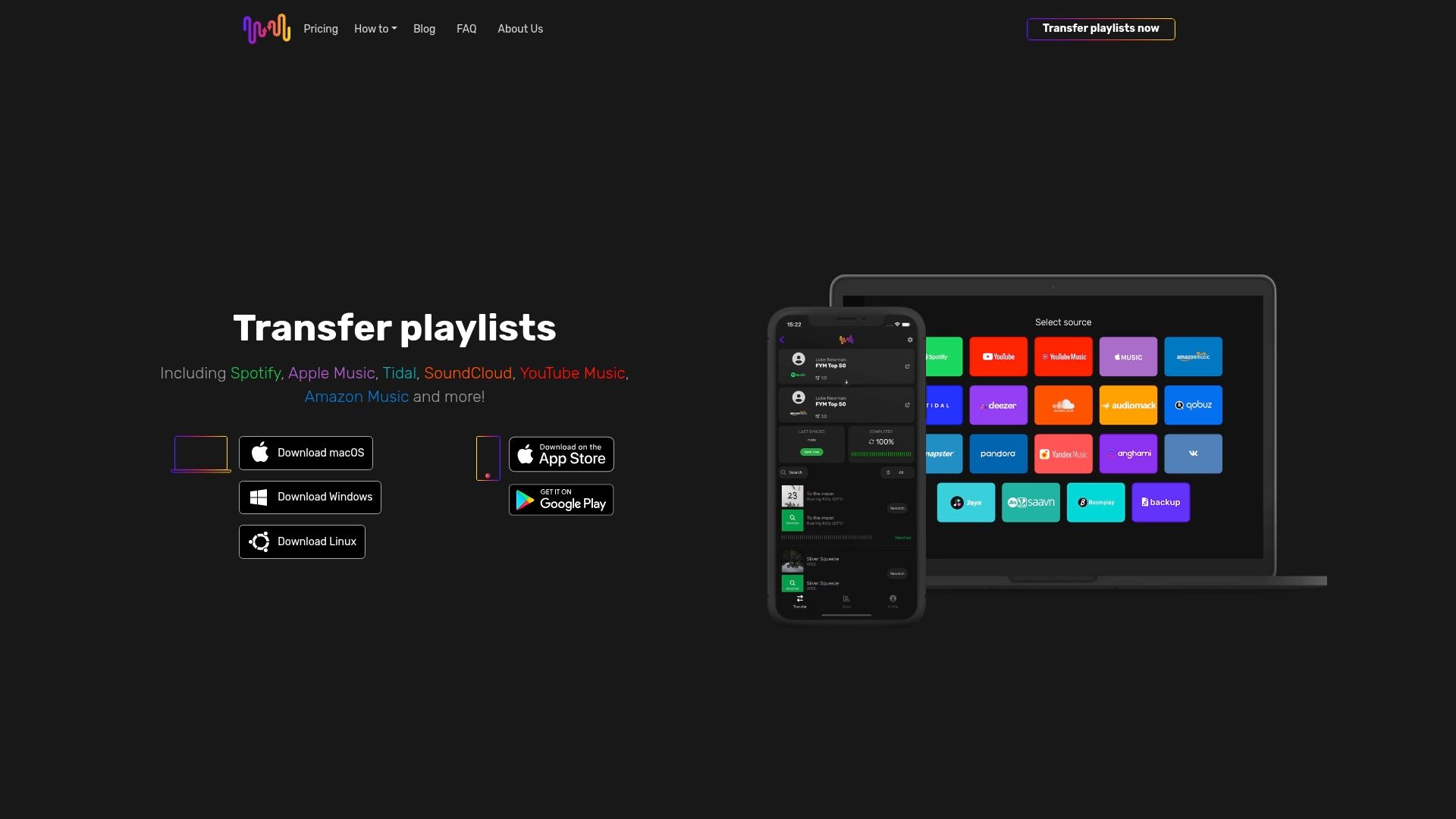
At FreeYourMusic.com, we specialize in solving these exact pain points. Our intelligent platform offers seamless playlist migration across Spotify, Apple Music, Tidal, YouTube Music, Amazon Music, and more. With features like automated song matching, cloud backup, unlimited playlist transfers, and multi-account support, you can trust us to maintain your playlist structure and metadata accuracy without any hassle. Plus, our user-friendly app works on macOS, Windows, Linux, Android, and iOS to fit your lifestyle.
Start migrating your music today and regain hours of your valuable time.
Experience the freedom and precision of automated playlist transfers. Visit FreeYourMusic.com now to take control of your music library management and avoid the errors and frustration of manual rebuilding.
Frequently Asked Questions
What are music library automation platforms?
Music library automation platforms are digital solutions designed to manage and transfer music collections across multiple streaming services, simplifying the organization process for DJs and music curators.
How do automated playlist transfers work?
Automated playlist transfers utilize advanced algorithms to match and migrate songs between different streaming platforms, preserving playlist order and original song sequencing.
What risks should I be aware of when using automated migration tools?
When using automated migration tools, risks include metadata corruption, incomplete track matching, unintended playlist reordering, and potential loss of unique tracks. It's important to create backups and verify transfers for accuracy.
How does automated playlist transfer compare to manual transfer methods?
Automated transfers are faster and reduce repetitive tasks, while manual methods offer more control and precision for song placements. A hybrid approach can balance efficiency with the need for curation accuracy.
Recommended
Your playlists belong to you.
Stop rebuilding by hand. Move everything in minutes and take your music wherever you go.
Download free →SongsBrew — our free music newsletter
A free perk for FYM users. Tips, playlists, no spam.