Home · Trasferimenti · DeezerYouTube

DeezerYouTube

Trasferisci le playlist da Deezer a YouTube

Sposta i brani preferiti, le playlist e gli album preferiti da Deezer a YouTube.

Avvia il trasferimento →Gratis per 600 brani · nessuna carta

★★★★★ 4,8 · oltre 9,2 milioni di download · Password mai condivisa

Selezione di YouTube come destinazione in FreeYourMusicFreeYourMusic mobile — selezione della destinazione

Perché passare da Deezer a YouTube?

Cambia servizio senza lasciarti indietro la libreria. FreeYourMusic trova la corrispondenza di ogni brano e lo sposta per te — playlist, brani preferiti, album e artisti seguiti.

Si trasferisce tutto

Playlist, brani preferiti, album e artisti.

Ordine mantenuto

Le playlist arrivano nello stesso ordine in cui le hai create.

Niente va perso

Le corrispondenze imperfette vengono segnalate per il Rematch con un tocco.

Come trasferire le playlist da Deezer a YouTube

1

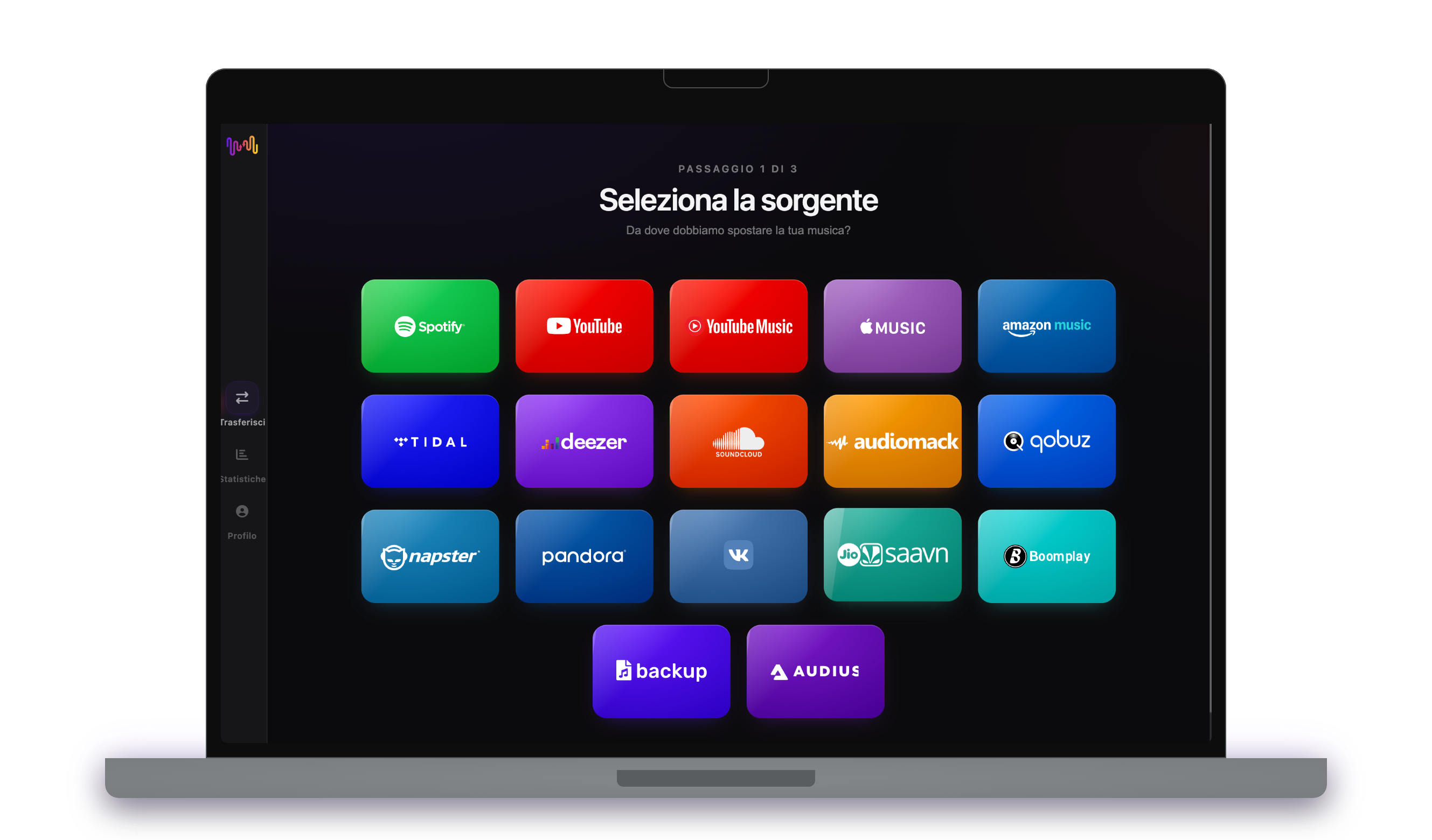
Seleziona Deezer come fonte

Usa la tua attuale piattaforma Deezer come fonte e inizia a trasferire la musica delle playlist con Free Your Music.

2

Selezionare YouTube come destinazione

Selezionare YouTube come piattaforma in cui si desidera creare una nuova playlist. Tutto quello che devi fare è cliccare un solo pulsante!

3

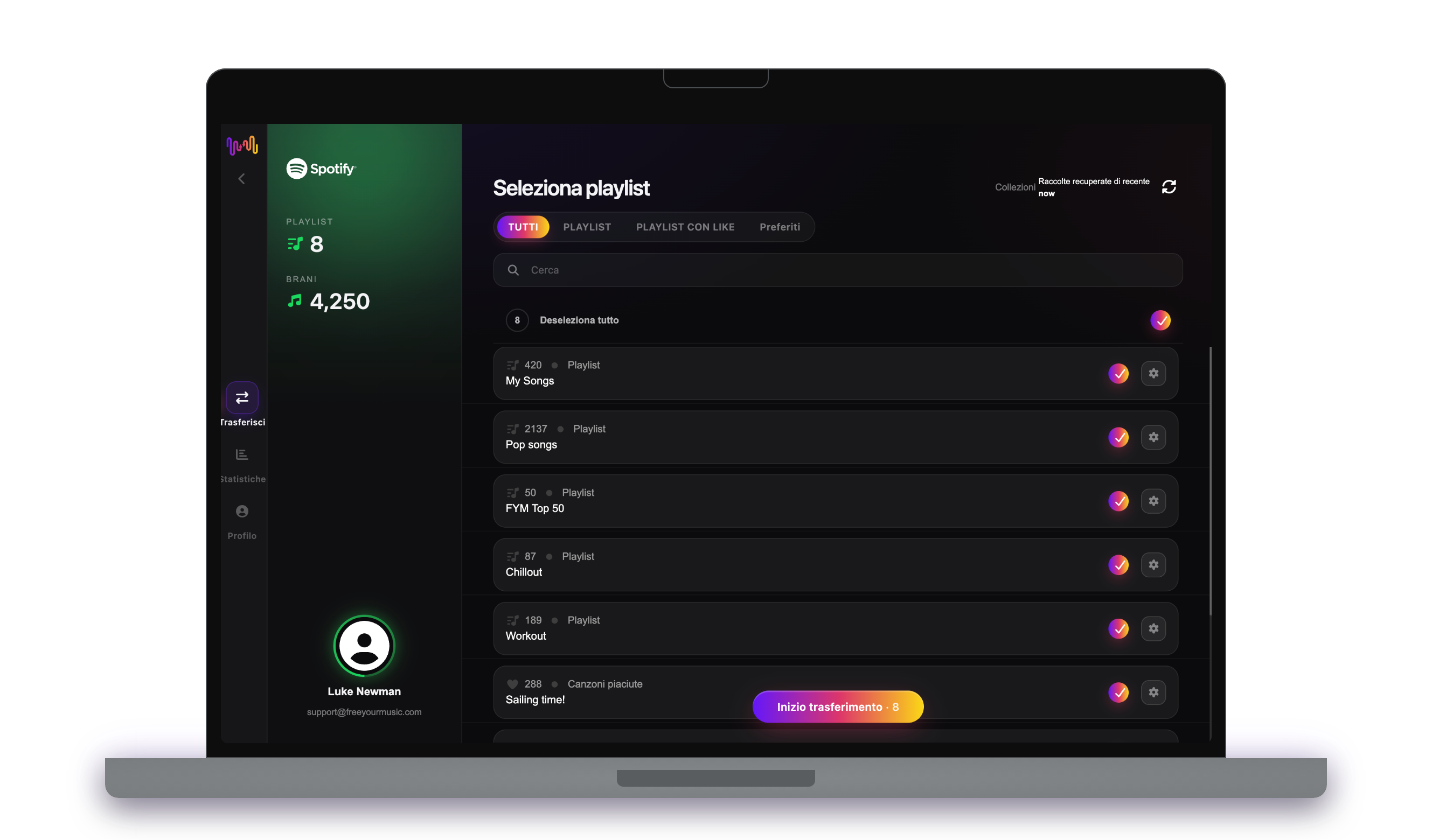
Seleziona le playlist per un trasferimento

Trovare le playlist che si desidera trasferire dal servizio Deezer a YouTube e selezionare tutte le playlist che si desidera spostare.

4

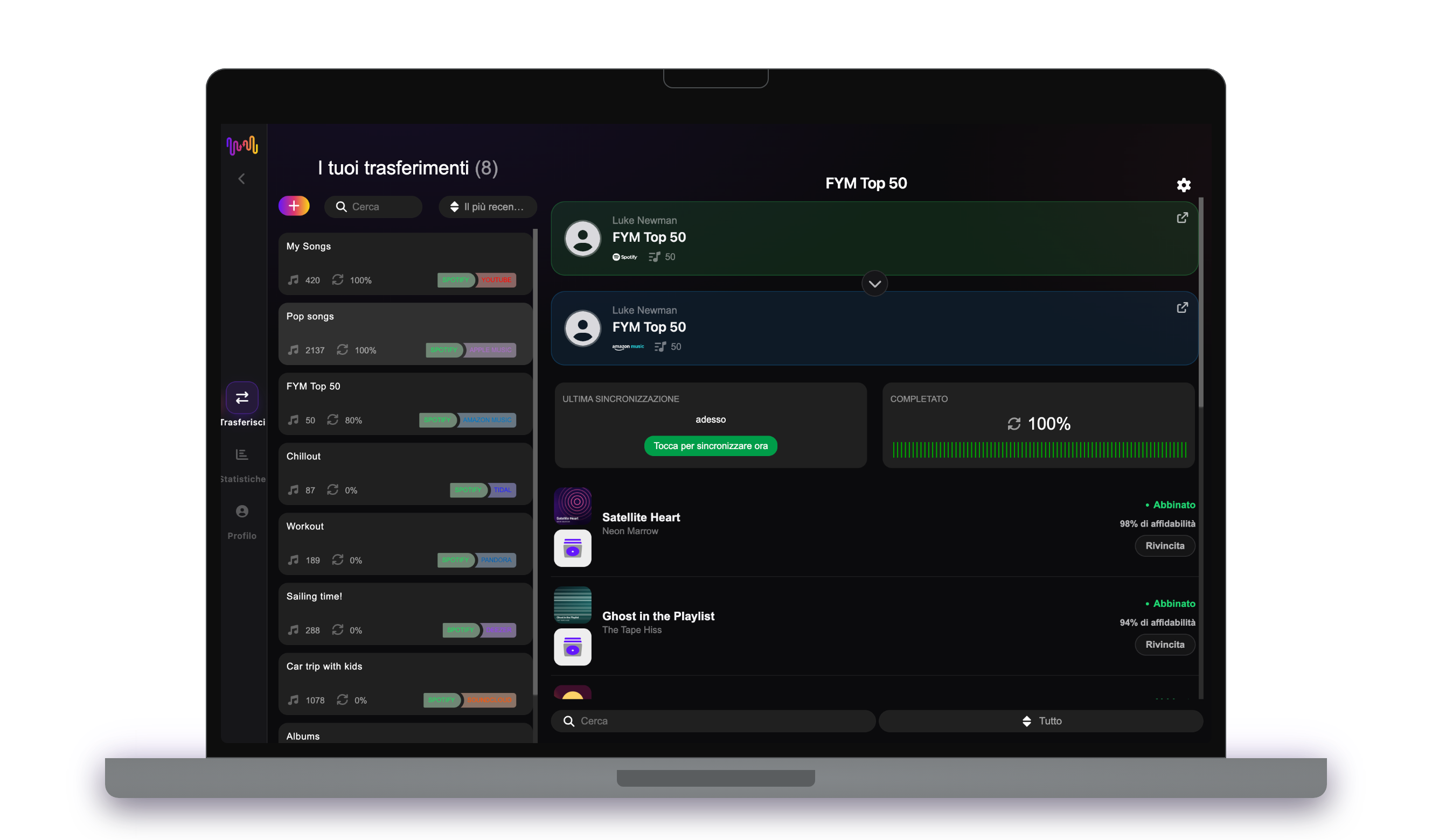
Conferma la tua azione ed è fatto!

Il trasferimento è terminato. Le playlist Deezer sono state spostate su YouTube e si può iniziare a usufruire del nuovo servizio di streaming musicale.

Cosa viene trasferito

Playlist

Brani preferiti

Album salvati

Artisti seguiti

Su ogni dispositivo

iPhoneiPadAndroidMacWindowsLinux

Le persone cercano anche

how to transfer Deezer playlist to YouTubetransfer Deezer playlist to YouTubemove Deezer playlist to YouTubecan you transfer Deezer playlist to YouTubeDeezer to YouTube converterimport Deezer playlist to YouTubeDeezer to YouTube playlist transferfree playlist transferplaylist transfer app

Cosa viene trasferito da Deezer a YouTube

Tutto quello che FreeYourMusic sposta per te con un clic — niente ricostruzioni manuali.

Playlist (con nomi e ordine originali)
Supportato
Brani preferiti
Non disponibile
Album salvati
Non disponibile
Artisti seguiti
Non disponibile
Abbinamento esatto dei brani basato su ISRC
Non disponibile
Fallback su abbinamento titolo + artista

Apprezzato da milioni di utenti per trasferire playlist da Deezer a YouTube

4.70 stelle

Media delle valutazioni

32,5000 valutazioni

Su iOS e Android

12M0 download

Su tutte le piattaforme

Moving from Deezer to YouTube, explained

Moving from Deezer to YouTube turns your audio collection into something you can watch as well as hear — YouTube is a video platform first, so your library arrives as playlists of music videos, official uploads and live performances. FreeYourMusic reads your Deezer library through Deezer’s official sign-in and recreates your playlists and favourites on YouTube.

This guide explains what transfers, what cannot, how each song is matched, how long it takes, and how the two really differ. If you just want to begin, install FreeYourMusic, connect both accounts and choose what to move — the detail is below.

What transfers to YouTube, and what does not

Your Deezer playlists become YouTube playlists, keeping their names and order, and favourites can arrive as playable entries. Move everything or pick playlists individually, with counts shown before you commit.

Some things do not translate. Deezer’s Flow is unique to Deezer, uploaded MP3s have no YouTube equivalent, and podcasts do not cross over. Because YouTube is video-first, some audio-only tracks appear as official art-track videos rather than traditional songs.

How FreeYourMusic matches your tracks

For each Deezer song, FreeYourMusic finds the closest corresponding video or track on YouTube, preferring the ISRC recording code where possible and otherwise comparing title, artist, album and duration. That is how your playlists arrive pointing at the right songs rather than unrelated clips.

YouTube is vast and sometimes messy, so FreeYourMusic favours official sources and flags anything ambiguous for one-tap Rematch, letting you swap in the exact video you had in mind.

How long does a Deezer to YouTube transfer take?

Most transfers finish in minutes. With both accounts connected, around 1,000 tracks usually completes in under ten minutes. Larger libraries take longer, but the transfer runs on its own — start it and get on with your day.

FreeYourMusic runs natively on iPhone, iPad, Android, Mac, Windows and Linux, so the move is not tied to one device. Start it on your laptop and check progress on your phone; it is the same account and the same transfer.

Deezer vs YouTube: what actually changes

This is a shift from a dedicated audio service to a video platform. Deezer gives you a music-first library with Flow and lossless HiFi. YouTube gives you music as videos and live performances, free with ads, mixed in with everything else you watch.

What you give up is Deezer’s focus, Flow and lossless option. What you gain is the video itself, live footage and zero cost. Many people convert Deezer playlists into YouTube libraries precisely for that video and live side.

Do you need to keep Deezer while you transfer?

Yes — keep Deezer active until the transfer is finished and checked. FreeYourMusic reads your Deezer library while building your YouTube playlists, and keeping both live means you never lose access mid-move.

YouTube is free, so nothing needs paying to receive the transfer, though YouTube Premium removes ads and adds background play. Both connect through their own official sign-in, and your password is never shared with FreeYourMusic.

Tips for a clean migration

Trim your Deezer playlists first so you are not converting dead ones into YouTube clutter. Move a couple of playlists and check them on YouTube — because it is video-first, confirm the matched entries are the official songs you wanted rather than covers or clips.

When it is done, run through the Rematch list and swap out any wrong videos. For background listening on mobile, consider YouTube Premium, and save your key playlists for offline viewing.

Keeping Deezer and YouTube in sync afterwards

A one-time move is not your only option. If you want both, FreeYourMusic’s Auto-Sync mirrors the libraries on a schedule so a track you like on Deezer becomes a new entry in your YouTube playlists automatically.

And the transfer runs the other way too, from YouTube back to Deezer, if you change your mind. Your collection stays portable. Download FreeYourMusic, connect Deezer and YouTube, and see how much comes across — the free tier lets you try first.

Pronto a passare a YouTube?

Scarica FreeYourMusic e sposta l'intera libreria in pochi minuti.

Scarica gratis →

Domande frequenti

Come trasferisco la mia playlist da Deezer a YouTube?

Installa FreeYourMusic, accedi a Deezer e poi a YouTube usando i rispettivi login ufficiali, scegli le playlist che vuoi e avvia il trasferimento. La corrispondenza intelligente dei brani sposta le canzoni mantenendo l'ordine intatto — una playlist di 1.000 brani si completa in genere in meno di 10 minuti.

Posso trasferire le playlist da Deezer a YouTube gratuitamente?

Sì — il piano gratuito sposta fino a 600 brani e una playlist senza bisogno di carta. Passa a Premium per trasferimenti illimitati, Auto-Sync e Cloud Backup.

Esiste un'app per trasferire le playlist da Deezer a YouTube?

FreeYourMusic è un'app per il trasferimento di playlist per iPhone, iPad, Android, Mac, Windows e Linux che sposta playlist, brani preferiti, album salvati e artisti seguiti da Deezer a YouTube.

Posso trasferire le mie playlist da Deezer a YouTube gratis?

Sì — FreeYourMusic trasferisce gratuitamente i tuoi primi 600 brani da Deezer a YouTube, playlist incluse. Le librerie più grandi richiedono Premium, e ogni trasferimento avviene direttamente tra i tuoi account Deezer e YouTube.

Cosa viene trasferito esattamente da Deezer a YouTube?

Playlist (con il loro ordine), brani che ti piacciono, album e artisti seguiti. I brani vengono abbinati traccia per traccia usando i codici ISRC dove Deezer e YouTube li forniscono, con l'abbinamento per titolo e artista come alternativa: consulta la tabella di compatibilità qui sopra per l'elenco esatto delle funzioni di questa coppia.

Che cos'è il trasferimento di una playlist?

Il trasferimento di una playlist è il processo di spostamento delle playlist musicali da un servizio di streaming a un altro. Invece di ricostruire manualmente le playlist, strumenti come FreeYourMusic consentono di trasferirle automaticamente, risparmiando tempo e fatica.

Posso trasferire le playlist tra i vari servizi di streaming musicale?

Sì! Con FreeYourMusic è possibile trasferire le playlist tra i principali servizi come Spotify, Apple Music, YouTube Music, Amazon Music, TIDAL, Deezer e altri ancora.

Devo creare un nuovo account per trasferire le playlist?

No, non è necessario un nuovo account. È sufficiente collegare gli account di streaming esistenti nell'app FreeYourMusic per iniziare subito il trasferimento delle playlist.

Tutte le canzoni saranno trasferite perfettamente?

Nella maggior parte dei casi, sì. FreeYourMusic utilizza un sistema di corrispondenza intelligente per trovare brani uguali o simili tra le varie piattaforme. È raro che alcuni brani non siano disponibili sul nuovo servizio e non vengano trasferiti.

FreeYourMusic conserva i nomi e l'ordine delle mie playlist?

Assolutamente sì. Quando trasferite le playlist, FreeYourMusic conserva i titoli delle playlist, l'ordine dei brani e persino più playlist contemporaneamente.

Quanto tempo richiede il trasferimento di una playlist?

Dipende dalle dimensioni delle playlist e dalla velocità della connessione a Internet, ma la maggior parte dei trasferimenti di playlist richiede solo pochi minuti.

Posso trasferire le playlist da un account gratuito?

Sì! È possibile trasferire le playlist sia dagli account gratuiti che da quelli premium, anche se alcuni servizi di streaming possono avere limitazioni di accesso.