Playlist Synchronization: Seamless Transfers Explained
Switching between music streaming platforms can feel like risking your entire curated collection, especially when seamless playlist synchronization is critical during live performances or meticulous library management. For tech-savvy DJs and collectors, keeping playlists aligned across services such as Spotify, Apple Music, and Tidal is more than file copying. It relies on intricate data coordination and advanced algorithmic techniques to preserve order and metadata integrity. Smooth playlist synchronization means uninterrupted creativity, accurate track transfers, and sustained musical flow wherever you play.
Table of Contents
- Defining Playlist Synchronization and Key Myths
- Types of Synchronization Methods and Workflows
- How Automated Syncing Works Across Platforms
- Advantages for Music Collectors and Djs
- Common Challenges and Data Privacy Risks
- Tips for Reliable, Error-Free Syncing
Key Takeaways
| Point | Details |
|---|---|
| Understanding Playlist Synchronization | Playlist synchronization is a complex process that ensures seamless transfer of music collections across platforms, involving metadata matching and advanced algorithms. |
| Common Misconceptions | Misunderstandings about track matching and transfer capabilities can lead to user frustration; recognizing these can enhance the synchronization experience. |
| Data Privacy Considerations | Users must be mindful of potential data privacy risks while transferring music, emphasizing the importance of reviewing security settings and data policies. |
| Best Practices for Successful Syncing | Pre-sync preparation and utilizing reputable tools are crucial for achieving reliable, error-free playlist synchronization. |
Defining Playlist Synchronization and Key Myths
Playlist synchronization represents a sophisticated digital music management process enabling seamless transfer and alignment of music collections across multiple streaming platforms. This technique goes beyond simple file copying, involving complex metadata matching, track identification, and preservation of playlist structures.
At its core, playlist synchronization involves intricate data coordination mechanisms that ensure users can maintain their carefully curated music collections when transitioning between different streaming services. The process requires advanced algorithmic approaches to match tracks accurately, preserve original playlist ordering, and handle potential variations in music catalog databases.
Common misconceptions about playlist synchronization include:
- Believing all tracks will transfer exactly as they appear
- Assuming synchronization works identically across all music platforms
- Thinking manual recreation of playlists is faster than automated transfers
- Expecting 100% perfect track matching every single time
Understanding these nuanced challenges is crucial for music enthusiasts seeking smooth playlist migrations. Professional-grade synchronization tools employ sophisticated matching techniques that consider multiple track attributes like artist name, song title, album information, and audio fingerprinting to maximize transfer accuracy.
Pro tip: Always verify your synchronized playlist after transfer to ensure complete and accurate track preservation.
Types of Synchronization Methods and Workflows
Playlist synchronization encompasses several sophisticated data transfer methodologies designed to address the complex challenges of music library migration. Media synchronization techniques provide a framework for understanding how digital music collections can be seamlessly transferred across different platforms.
The primary synchronization methods can be categorized into three fundamental approaches:
- Inter-Device Synchronization: Transfers playlists between user devices like smartphones, tablets, and computers
- Platform-to-Platform Synchronization: Migrates entire music libraries between different streaming services
- Hybrid Synchronization: Combines multiple transfer techniques to ensure maximum playlist preservation
Each synchronization workflow involves intricate processes that go beyond simple file copying. Advanced algorithms analyze track metadata, audio fingerprints, and contextual information to match songs accurately across different music platforms. This approach ensures that users can maintain the integrity of their carefully curated playlists during service transitions.
Successful synchronization depends on minimizing data transfer delays and maintaining consistent user experience across different platforms.
Professional synchronization tools employ complex matching techniques that consider multiple attributes such as track duration, artist name, album information, and acoustic characteristics. These sophisticated methods help overcome challenges like regional music catalog differences and variations in track metadata.

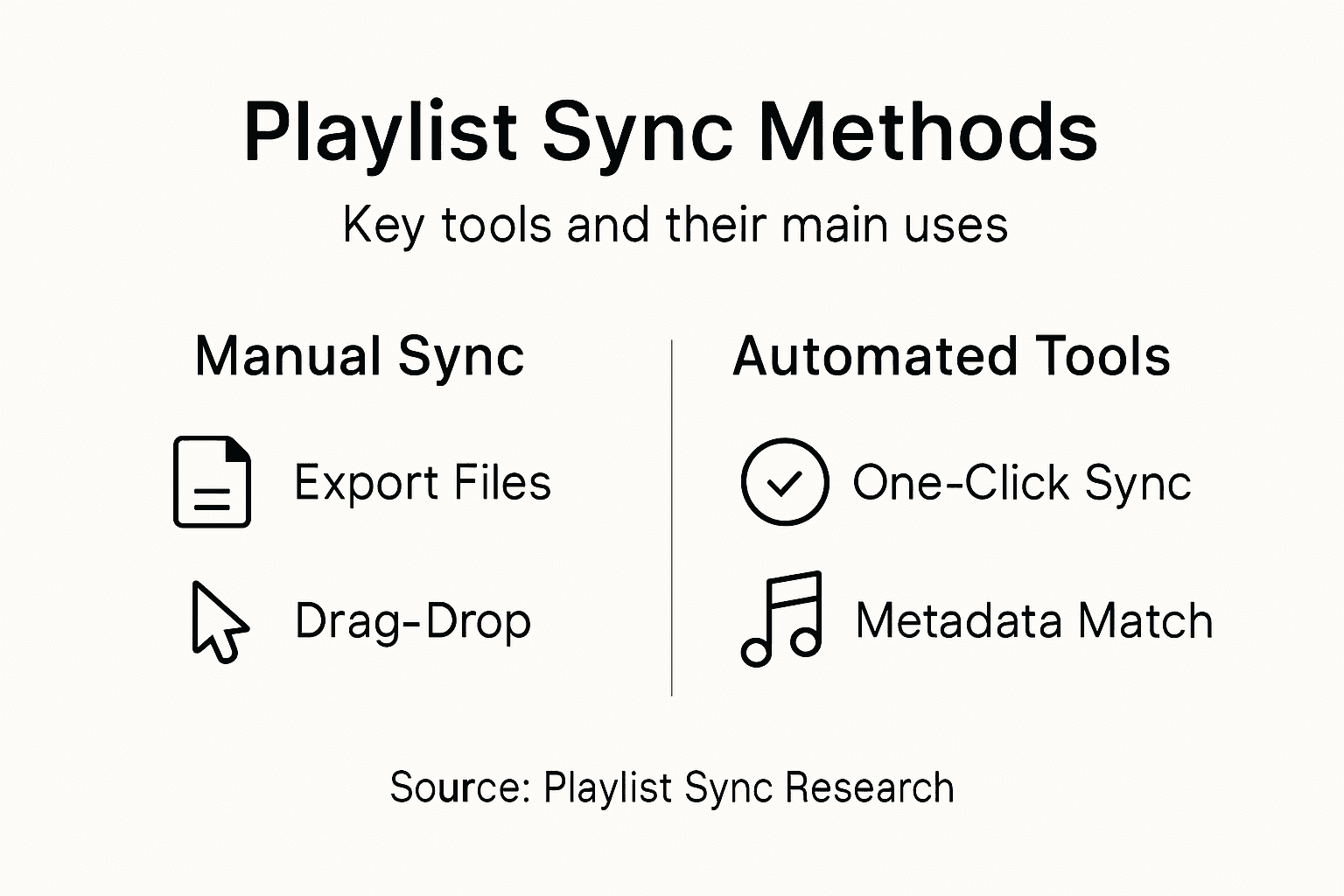
Here's a comparison of playlist synchronization methods and their technical strengths:
| Sync Method | Main Use Case | Technical Advantage | Typical Complexity Level |
|---|---|---|---|
| Inter-Device Synchronization | Sync playlists across user devices | Preserves local playlist order | Moderate (depends on devices) |
| Platform-to-Platform | Migrate libraries between services | Matches metadata, catalogs | High (cross-service matching) |
| Hybrid Synchronization | Combines multiple techniques | Maximizes transfer accuracy | Very High (multi-process) |
Pro tip: Select synchronization tools that offer preview capabilities, allowing you to review and modify playlist transfers before final confirmation.
How Automated Syncing Works Across Platforms
Automated playlist synchronization represents a complex technological process that transforms music library management across digital platforms. Music library syncing techniques enable users to seamlessly transfer their curated collections without manual intervention, leveraging advanced algorithmic matching and metadata processing.
The automated synchronization workflow typically involves several critical stages:
- Metadata Extraction: Collecting comprehensive track information
- Catalog Mapping: Identifying equivalent tracks across different platforms
- Verification Algorithm: Cross-referencing track attributes for accurate matching
- Intelligent Replacement: Substituting unavailable tracks with closest alternatives
Under the hood, sophisticated algorithms perform intricate comparisons using multiple track identifiers. These include unique audio fingerprints, artist names, track durations, album information, and release years. By analyzing these multiple data points simultaneously, sync technologies can achieve remarkably high accuracy in playlist transfers.
Successful automated synchronization hinges on the precision of track matching and the comprehensiveness of music catalog databases.
Professional synchronization platforms deploy machine learning techniques that continuously improve matching accuracy. These systems learn from user interactions, feedback, and global music catalog updates, creating increasingly intelligent transfer mechanisms that minimize manual intervention and maximize playlist preservation.
Pro tip: Always maintain a local backup of your original playlists before initiating automated synchronization processes.
Advantages for Music Collectors and DJs
Playlist synchronization offers transformative benefits for passionate music collectors and professional DJs, revolutionizing how digital music libraries are managed and accessed. DJ music organization strategies have dramatically evolved, enabling seamless workflow integration across multiple platforms and devices.
Key advantages for different user segments include:
-
For Music Collectors:
- Preserve entire music library history
- Eliminate manual playlist recreation
- Protect rare or hard-to-find track collections
- Maintain playlist chronology and order
-
For Professional DJs:
- Rapid set preparation across devices
- Consistent music library access
- Simplified cross-platform track management
- Immediate backup and recovery options
Professional music management requires precision and flexibility. Synchronization technologies provide musicians and collectors unprecedented control over their digital music ecosystems, allowing instantaneous transfers that maintain original playlist structures, track metadata, and user-created organization.
Effective playlist synchronization transforms music management from a complex challenge into a streamlined, user-friendly experience.
Advanced synchronization platforms leverage machine learning and intelligent matching algorithms to ensure maximum compatibility. These systems analyze multiple track attributes, including acoustic fingerprints, release metadata, and user listening patterns, creating a robust framework for seamless music library transfers.
Pro tip: Periodically verify your synchronized playlists to ensure complete and accurate track preservation across different platforms.
Common Challenges and Data Privacy Risks
Playlist synchronization introduces complex technological and privacy challenges that users must carefully navigate. While seamless music library transfers offer unprecedented convenience, they simultaneously expose users to potential data security and privacy vulnerabilities that demand proactive management.
Key privacy and synchronization challenges include:
-
Technical Challenges:
- Incomplete track matching across platforms
- Metadata inconsistencies
- Platform-specific licensing restrictions
- Potential loss of custom playlist metadata
-
Data Privacy Risks:
- Unauthorized data sharing
- Potential third-party tracking
- Exposure of listening history
- Potential algorithmic profiling
- Unintended personal information leakage
The intricate landscape of digital music transfer requires users to understand the nuanced risks associated with playlist synchronization. Advanced platforms implement encryption protocols and user consent mechanisms to mitigate potential privacy breaches, but users must remain vigilant about their digital footprint.
Digital music synchronization demands a balanced approach between convenience and personal data protection.
Professional synchronization services increasingly prioritize user privacy by implementing robust security frameworks. These include end-to-end encryption, granular privacy controls, transparent data usage policies, and comprehensive user consent mechanisms that empower individuals to control their musical ecosystem.
Below is a summary of major data privacy safeguards used by advanced synchronization platforms:
| Safeguard | Description | Impact on User Privacy |
|---|---|---|
| End-to-End Encryption | Protects data during transfer | Prevents data interception |
| Granular Privacy Controls | User-level adjustment of shared data | Empowers personal data limits |
| Transparent Data Policies | Clear information on data use practices | Builds user trust |
| Consent Mechanisms | Explicit approval for data exchanges | Ensures user control |
Pro tip: Always review platform privacy settings and limit data sharing permissions before initiating playlist synchronization.
Tips for Reliable, Error-Free Syncing
Achieving reliable playlist synchronization requires strategic planning and proactive management of digital music libraries. Music syncing best practices emphasize the importance of understanding platform-specific nuances and implementing robust transfer strategies.
Critical steps for ensuring error-free synchronization include:
-
Pre-Sync Preparation:
- Verify account credentials across platforms
- Check platform compatibility
- Ensure stable internet connection
- Review playlist size and complexity
-
Synchronization Best Practices:
- Create backup copies of original playlists
- Use reputable transfer tools
- Match metadata manually for complex collections
- Perform test transfers with small playlists first
- Monitor sync processes in real-time
Professional music collectors and DJs understand that synchronization is not a one-size-fits-all process. Each platform has unique metadata handling, licensing restrictions, and track availability that can complicate transfers.
Successful playlist synchronization requires patience, attention to detail, and a willingness to manually intervene when automated processes fall short.
Advanced synchronization platforms now incorporate machine learning algorithms that continuously improve track matching accuracy. These intelligent systems learn from user interactions, progressively enhancing their ability to map tracks across different music ecosystems with minimal manual intervention.
Pro tip: Always perform a comprehensive playlist review immediately after synchronization to confirm 100% track preservation.
Simplify Your Playlist Synchronization with Free Your Music
Managing playlist synchronization can be complex due to metadata inconsistencies, platform restrictions, and privacy concerns that often cause frustration for passionate music collectors and DJs. If you want to avoid incomplete transfers, manual playlist recreation, or risks to your data privacy, leveraging advanced tools that ensure accurate song matching and preserve your playlist’s original order is essential.
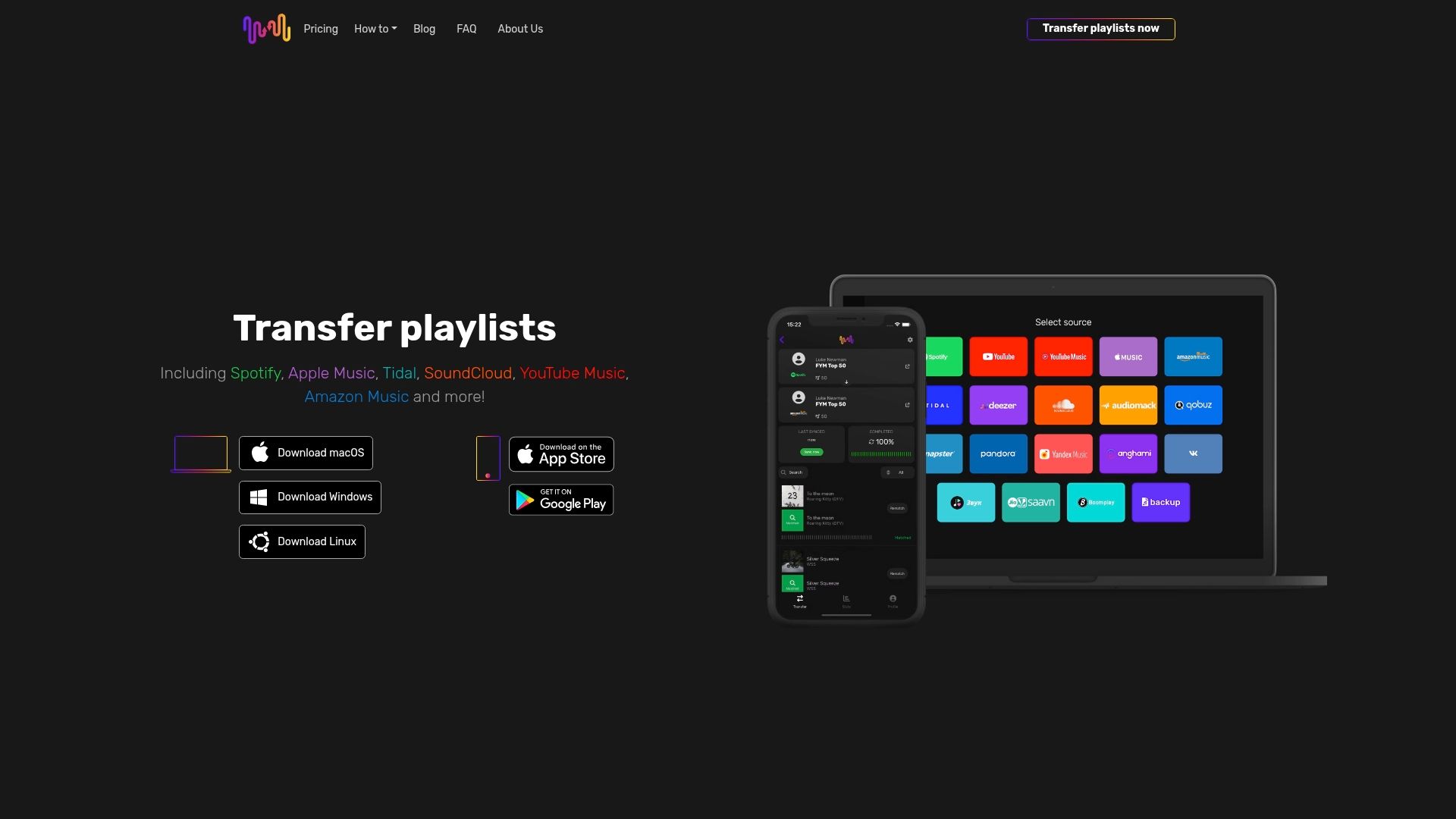
FreeYourMusic.com offers a user-friendly solution designed to handle these exact challenges. With automated synchronization across major streaming services like Spotify, Apple Music, and Tidal, you can effortlessly migrate your entire library while maintaining playlist structure and metadata integrity. Its multi-platform compatibility and privacy safeguards allow you to transfer unlimited playlists securely without losing valuable tracks.
Take control of your music collections today and experience hassle-free playlist synchronization that respects your time and privacy. Discover how easy seamless transfers can be by visiting Free Your Music and start syncing your music with confidence. For deeper insights on the technology behind syncing, explore music library syncing techniques to empower your next move.
Get started now to protect your playlists and enjoy uninterrupted music across all your favorite platforms at FreeYourMusic.com. Your perfect playlist transfer awaits.
Frequently Asked Questions
What is playlist synchronization?
Playlist synchronization is a digital music management process that enables the seamless transfer and alignment of music collections across multiple streaming platforms, preserving metadata and playlist structures.
How does automated playlist synchronization work?
Automated playlist synchronization involves extracting metadata, mapping catalogs, and verifying track attributes through sophisticated algorithms to ensure accurate matching without manual intervention.
What are the benefits of using playlist synchronization for DJs?
Playlist synchronization allows DJs to prepare sets rapidly, maintain consistent access to their music libraries, and simplify cross-platform track management, enhancing their overall workflow.
What challenges should I be aware of when synchronizing playlists?
Key challenges include incomplete track matching, metadata inconsistencies, potential data privacy risks, and platform-specific licensing restrictions that may affect the transfer process.
Recommended
- Free Your Music - What Is Seamless Playlist Transfer? Complete Overview
- Free Your Music - Understanding Playlist Transfer Best Practices for Users
- Free Your Music - Understanding Playlist Transfer Challenges for Music Fans
- Free Your Music - Music Library Syncing Explained: Seamless Playlist Transfer
Your playlists belong to you.
Stop rebuilding by hand. Move everything in minutes and take your music wherever you go.
Download free →SongsBrew — our free music newsletter
A free perk for FYM users. Tips, playlists, no spam.