Music streaming trends 2025: a comprehensive understanding
Music streaming has long been more than just a convenient way to play songs. Today, platforms connect millions of listeners worldwide and create new trends and opportunities. Surprisingly, over 80 percent of global music revenue already comes from streaming. Many assume that this development will simply continue. But the real change is yet to come as artificial intelligence, personalization and innovative technologies completely redefine the way we discover music.
Table of Contents
- What are music streaming trends and why are they important?
- The dynamics of music streaming evolution
- Why music streaming trends are relevant
- The evolution of music streaming services in the digital age
- The origins of digital music streaming
- Modern music streaming ecosystems
- How artificial intelligence influences music selection
- The mechanisms of AI-driven music recommendation
- Personalization and ethical challenges
- The role of user experience and personalization
- The architecture of personalized music experiences
- Technological dimensions of the user experience
- Future prospects: where is music streaming heading?
- Technological convergence and innovation
- Economic and creative transformation
- Frequently asked questions
Quick summary
| Takeaway | Explanation |
|---|---|
| Music streaming is changing music consumption | Streaming services are not only platforms, but also culture bearers and decision makers in the music landscape. |
| Artificial intelligence improves personalization | AI algorithms analyze music patterns and user preferences for individual listening experiences. |
| Technology enables new spaces of discovery | Innovative features promote the discovery of new artists and music genres across geographical boundaries. |
| The future is dynamic and interactive | The integration of VR and AR will profoundly change and personalize the music experience. |
| Ethical questions about AI use | The use of AI in music raises the need for creative diversity and the avoidance of echo chambers. |
What are music streaming trends and why are they important?
Music streaming trends define the ongoing development and transformation of the digital music landscape. They describe the changing consumer preferences, technological innovations and service models that influence the way people consume, discover and experience music.
The dynamics of music streaming evolution
Music streaming is evolving rapidly and goes far beyond simply playing songs. It is a complex ecosystem that combines technology, artist interests, user behavior and global music trends. Current music industry analyses show that streaming services are not just music platforms, but also cultural carriers and spaces for discovering new sounds and talents.
The importance of music streaming trends can be attributed to several key factors:
- Technological transformation: continuous improvement of streaming algorithms
- Personalized music experiences: individually curated playlists and recommendations
- Global music networking: overcoming geographical music boundaries
Why music streaming trends are relevant
These trends are crucial for music lovers, artists and technology companies. They not only influence how music is consumed, but also how artists are discovered, monetized and promoted. A study by the Music Research Institute shows that streaming trends have a direct impact on music production, artist income and listening experiences.
To understand the latest developments, we recommend our guide to music streaming news, which provides deeper insights into the dynamic world of music streaming.
The future of music streaming is not static, but a continuous, dynamic process that encompasses technology, creativity and user experience in equal measure.
The evolution of music streaming services in the digital age
The history of music streaming services is a fascinating journey of technological innovation and cultural transformation. From the early days of digital music streaming to the complex, intelligent platforms of today, streaming services have fundamentally changed the way people experience music.
The origins of digital music streaming
The emergence of music streaming began with simple internet radios and peer-to-peer networks. Technology research reports show that the first generation of streaming services mainly struggled with challenges such as audio quality, bandwidth and rights issues. Musicians and platforms had to develop new business models to ensure fair remuneration and legal music distribution.
Key elements of early streaming development included:
- Technical infrastructure: improving internet speeds
- Legal framework: developing licensing models
- User experience: building user-friendly music platforms
Modern music streaming ecosystems
Today, music streaming services are sophisticated ecosystems that offer much more than just music playback. They combine artificial intelligence, personalized recommendation algorithms and social interaction features. Digital music analysts emphasize that modern platforms not only stream music, but also enable music discovery, artist promotion and global music connections.
Our music streaming platform helps users seamlessly switch between different streaming services and maintain their music collections.
The future of music streaming will be shaped by technologies such as machine learning, enhanced personalization and immersive music experiences. It is a dynamic field that is constantly creating new opportunities for musicians, listeners and technology companies.
| Aspect | Early days of music streaming | Modern streaming ecosystems |
|---|---|---|
| Technical infrastructure | Limited bandwidth, simple internet radios | High-performance servers, cloud storage, mobile access |
| Legal framework | Difficulties with licenses, rights issues | Optimized licensing models, fair use regulations |
| Personalization | Hardly available, general playlists | Individual AI recommendations, curated profiles |
| Artist promotion | Low monetization opportunities | Global reach, direct artist promotion |
| Music discovery | Limited, predominantly well-known tracks | Broad genre diversity, personalized recommendations |
How artificial intelligence influences music selection
Artificial intelligence (AI) is increasingly revolutionizing the way people discover, consume and experience music. It is transforming music streaming platforms from simple playback services to intelligent, personalized music ecosystems.
The mechanisms of AI-driven music recommendation
Modern AI algorithms analyze complex music patterns and user preferences with a precision that far surpasses human curators. Scientific research shows that machine learning algorithms not only recognize genre preferences, but also take into account subtle emotional and contextual nuances in music selection.
Key elements of AI-driven music recommendation include:
- Sound analysis: recognizing musical structures and moods
- Behavioral prediction: predicting future music preferences
- Contextual adaptation: consideration of time of day, activity and mood
| Mechanism of AI | How it works | Benefits for users |
|---|---|---|
| Sound analysis | Analyzes musical structures and mood elements | Provides music to match current mood |
| Behavior prediction | Determines future music preferences based on past usage | Predictive, personalized recommendations |
| Contextual adaptation | Considers time of day, activity and emotional factors | Situationally appropriate music selection |
Personalization and ethical challenges
Personalization through AI goes far beyond traditional recommendation systems. Digital music analysts emphasize that modern AI systems create a multidimensional music experience that takes into account individual tastes, cultural backgrounds and personal development.
Our Spotify statistics offer an insight into how AI algorithms track and interpret your personal music journey.
At the same time, the increasing use of AI raises important ethical questions: how can we develop algorithms that promote musical diversity without falling into creative echo chambers? The challenge is to use technology that expands music discovery rather than restricting it.
The role of user experience and personalization
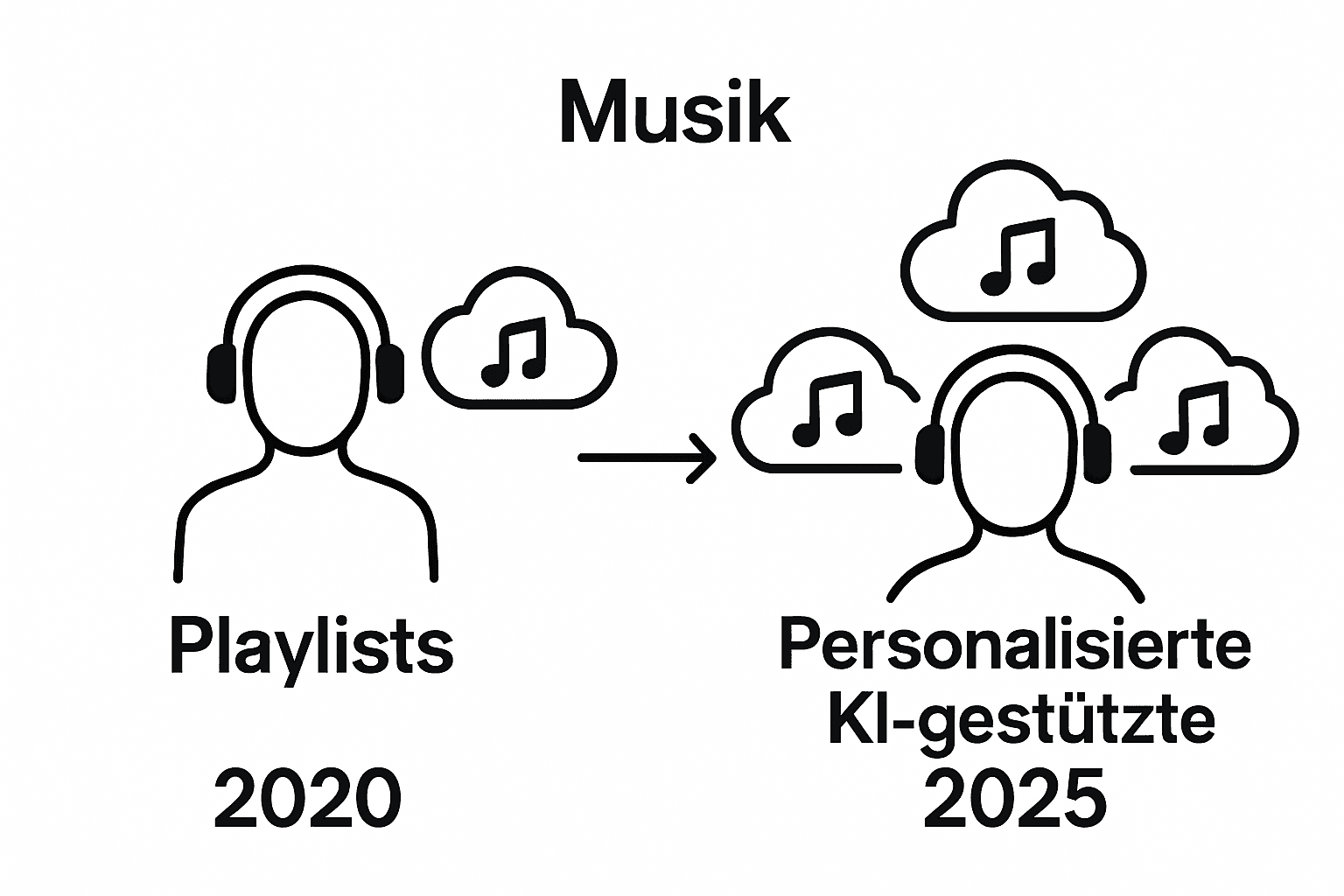
User experience and personalization are the key elements of modern music streaming platforms. They transform digital music consumption from a passive listening experience to an interactive, individualized journey that dynamically adapts to personal preferences and life situations.
The architecture of personalized music experiences
Digital usage research shows that modern streaming services no longer just play music, but construct complex user experiences. These experiences are based on multi-layered algorithms that analyze music tastes, listening dynamics and contextual variables simultaneously.
Key elements of personalization include:
- Contextual intelligence: adapting to time of day, activity and emotional state
- Dynamic playlist generation: real-time customization of musical recommendations
- Individual music discography: development of a personal music profile
Technological dimensions of the user experience
The user experience goes far beyond simple recommendation algorithms. Technology experts emphasize that modern platforms create an immersive journey that combines music consumption, social interaction and emotional resonance.
Our Spotify stats give you a deep insight into how your personal music journey is algorithmically tracked and interpreted.
Future prospects: where is music streaming heading?
Music streaming is on the cusp of a profound transformation that goes far beyond current technologies and usage patterns. The future will be characterized by a fusion of technology, creativity and personalized user experiences.
Technological convergence and innovation
Music industry research suggests that music streaming platforms will evolve into multi-sensory, immersive experiences. Artificial intelligence, augmented reality and contextual intelligence will blur the boundaries between music consumption and interactive experience.
Key elements of future music streaming development include:
- Immersive technologies: integration of VR and AR into music experiences
- Contextual personalization: complete adaptation to individual life situations
- Interactive music production: real-time collaboration between artists and listeners
Economic and creative transformation
The future of music streaming goes beyond pure distribution platforms. Technology experts predict an ecosystem in which musicians build direct connections with their listeners and open up new sources of income beyond traditional streaming models.
With our transfer from Deezer to Audius, you can already experience the flexibility that will characterize future music platforms.

Ready for the music streaming trends of 2025? Protect your playlists when switching providers
Uncertainties often arise when you are looking at current music streaming trends and considering which service best suits your needs. Many music listeners want flexibility in their choice of provider, but worry about losing valuable playlists and painstakingly curated music collections. The dynamic development in music streaming presents you with the challenge of taking your personal favourites and individual playlists with you without stress when you want to switch to new providers—especially when technologies such as AI and personalization make your music library ever more extensive.
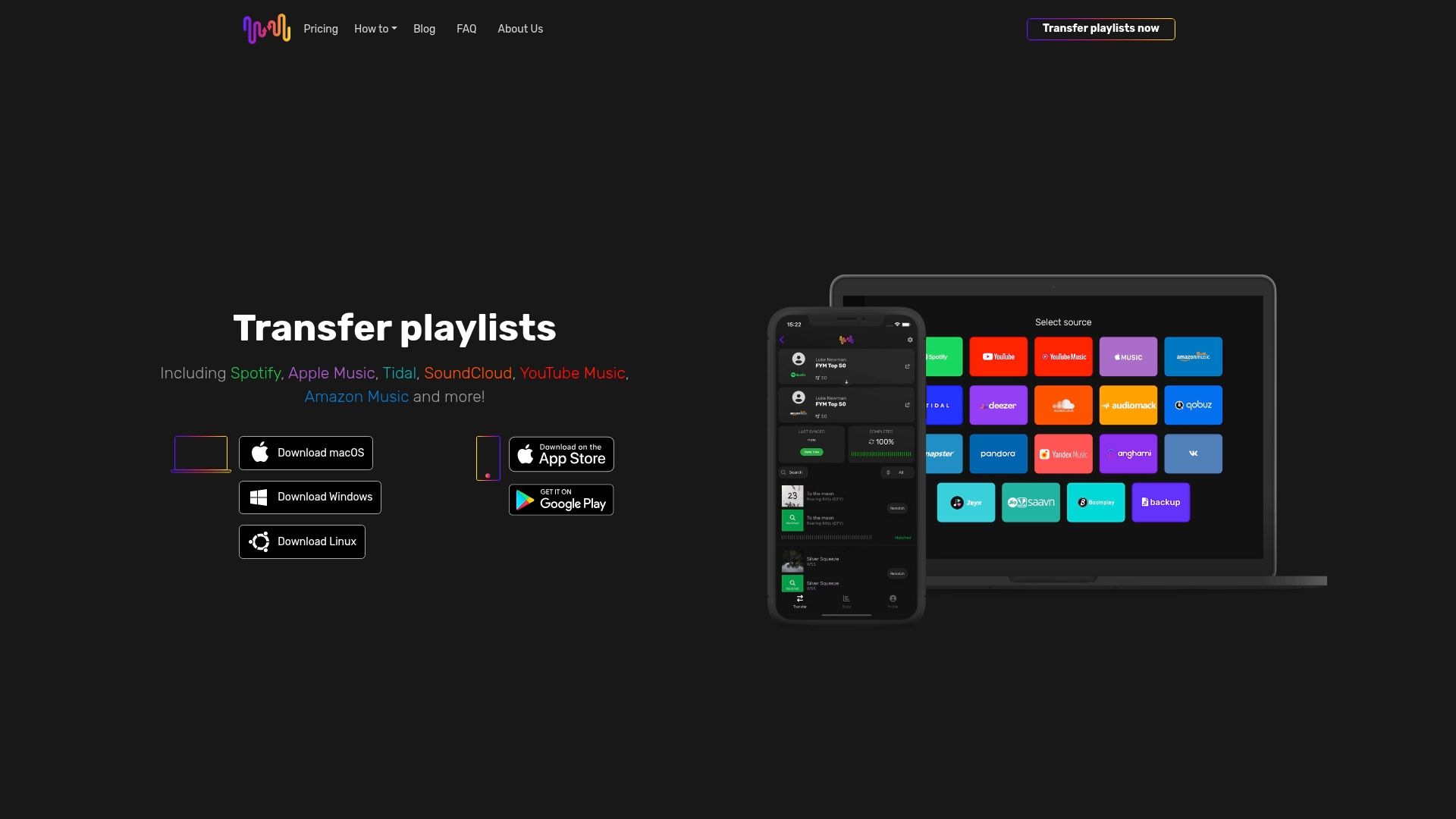
Don't wait any longer to painstakingly create new playlists. With Free Your Music, you can transfer your music easily, securely and completely between the leading streaming services such as Spotify, Apple Music or Tidal—including playlist structure and favorites. Discover how easy it can be to switch services and find out more about transferring from Deezer to Deezer and your Spotify statistics. Get started now and make sure your music accompanies your journey through the latest streaming trends.
Frequently asked questions
What are the most important music streaming trends for 2025?
The most important music streaming trends for 2025 include technological innovations such as artificial intelligence, immersive technologies and personalized user experiences that go beyond just music playback.
How does artificial intelligence influence music recommendations?
Artificial intelligence analyzes complex patterns in music and user behavior to provide personalized recommendations based on individual preferences and emotional nuances.
What role does user experience play in modern music streaming services?
The user experience in modern music streaming services includes intuitive, interactive features and contextual customization that dynamically shape and personalize music consumption.
How will music streaming evolve over the next few years?
Music streaming will continue to evolve through the integration of immersive technologies such as virtual reality and augmented reality, as well as new revenue streams for artists, creating a more diverse listening experience.
Recommendation
- Check out your stats for Spotify (Spotify Summaries)
- Free Your Music - your music statistics
- Transfer playlists from Deezer to Audius
What's next?
Your playlists belong to you.
Stop rebuilding by hand. Move everything in minutes and take your music wherever you go.
Download free →SongsBrew — our free music newsletter
A free perk for FYM users. Tips, playlists, no spam.