Playlist-Architektur erklärt: So gelingt der nahtlose Umzug

Beim Wechsel der Streaming-Plattform fühlt es sich oft so an, als würdest du mit deinen Playlists das Herzstück deiner Musikbibliothek aufs Spiel setzen. Für DJs aus den USA und leidenschaftliche Musikfans geht es dabei um mehr als das Speichern von Titellisten: Der unverwechselbare Hörfluss, die Übergänge und die emotionalen Spannungsbögen sollen erhalten bleiben. Wenn du die Playlist-Architektur beim Streaming verstehst, kannst du jede sorgfältig zusammengestellte Abfolge bewahren. So begleiten dich deine digitalen Musikreisen nahtlos zu jedem neuen Dienst.
Inhaltsverzeichnis
- Was ist Playlist-Architektur beim Streaming?
- Zentrale Bestandteile und Strukturelemente
- Verschiedene Modelle der Playlist-Architektur
- Wie Playlist-Architektur den Umzug ermöglicht
- Risiken und häufige Fehler beim Umzug
- Bewährte Methoden für eine präzise Playlist-Übertragung
Das Wichtigste auf einen Blick
| Punkt | Details |
|---|---|
| Playlist-Architektur verbessert das Hörerlebnis | Playlist-Architektur macht Musik zu einem interaktiven Erzählmedium und gestaltet das Hörerlebnis passend zu persönlichen Vorlieben und Stimmungen. |
| Die Titelreihenfolge ist entscheidend | Jeder Titel hat seinen bewusst gewählten Platz und beeinflusst den emotionalen Verlauf und den Hörfluss der Playlist. |
| Unterschiedliche Playlist-Modelle erfüllen unterschiedliche Bedürfnisse | Von Nutzern erstellte, algorithmisch zusammengestellte und redaktionell kuratierte Playlists bieten jeweils eigene Erlebnisse, die auf die Vorlieben der Hörenden abgestimmt sind. |
| Bewährte Methoden sichern den erfolgreichen Umzug | Gute Vorbereitung und spezialisierte Tools sind entscheidend, damit Playlists bei der Übertragung vollständig und in ihrer ursprünglichen Form erhalten bleiben. |
Was ist Playlist-Architektur beim Streaming?
Playlist-Architektur bezeichnet das ausgefeilte digitale Gerüst, das bestimmt, wie Musiktitel auf Streaming-Plattformen organisiert, angeordnet und erlebt werden. Sie geht weit über das bloße Erstellen einer Songliste hinaus: Dahinter steckt ein komplexes System der Musikauswahl, das persönliche Vorlieben, Hörgewohnheiten und emotionale Erlebnisse berücksichtigt.
Im Kern umfasst die Playlist-Architektur mehrere entscheidende Bestandteile, die festlegen, wie Musik strukturiert und gehört wird:
- Anordnung und Reihenfolge der Titel
- Übergänge zwischen Stimmungen und Genres
- Interaktionsmuster der Nutzer
- Algorithmische Empfehlungssysteme
- Emotionaler Verlauf der Musikauswahl
Die systematische Organisation digitaler Musik spiegelt das vielschichtige Zusammenspiel von Technologie und persönlichem musikalischem Ausdruck wider. Jede Playlist wird zu einer eigenen Geschichte, die ihre Hörer auf eine bewusst gestaltete Klangreise mitnimmt – passend zur aktuellen Stimmung oder zum gewünschten Erlebnis.
Moderne Streaming-Plattformen nutzen ausgefeilte Algorithmen, die verschiedene musikalische Merkmale analysieren, darunter Tempo, Tonart, Energie und thematische Zusammenhänge. Diese technischen Faktoren sorgen dafür, dass Playlists stimmig und bewusst zusammengestellt wirken, statt wie zufällige Sammlungen von Titeln.
Playlist-Architektur macht Musik vom passiven Hörerlebnis zu einem interaktiven, persönlichen Erzählmedium.
Wer Playlist-Architektur verstehen möchte, muss erkennen, dass die Platzierung jedes Titels eine gezielte Wirkung hat. Der erste Song gibt die Richtung vor, die folgenden Titel bauen Spannung auf oder setzen Kontraste, und die letzten Stücke sorgen für Auflösung oder einen emotionalen Abschluss.

Profi-Tipp: Achte beim Erstellen von Playlists auf den emotionalen Spannungsbogen und die musikalischen Übergänge zwischen den Titeln, um ein mitreißenderes Hörerlebnis zu gestalten.
Zentrale Bestandteile und Strukturelemente
Playlist-Architektur besteht im Wesentlichen aus komplexen Strukturelementen, die bestimmen, wie Musiksammlungen erstellt, organisiert und erlebt werden. Die Kriterien zur Bewertung der Playlist-Qualität machen deutlich, dass dahinter ein vielschichtiges Gerüst aus miteinander verbundenen Komponenten steckt, das weit über die reine Songauswahl hinausgeht.
Die zentralen Strukturelemente der Playlist-Architektur lassen sich in mehrere entscheidende Bereiche einteilen:
- Algorithmen zur Titelauswahl
- Mechanismen zur Titelanordnung
- Einbindung von Nutzerpräferenzen
- Kriterien für den thematischen Zusammenhalt
- Möglichkeiten zur dynamischen Anpassung
Jede dieser Komponenten trägt entscheidend dazu bei, aus einer zufälligen Songsammlung eine musikalische Geschichte mit Bedeutung zu machen. Algorithmen zur Titelauswahl nutzen ausgefeilte Verfahren wie maschinelles Lernen und Datenanalyse, um musikalische Vorlieben, Verbindungen zwischen Genres und Hörgewohnheiten zu verstehen.
Ein weiterer wichtiger Aspekt der Playlist-Architektur sind die Mechanismen zur Titelanordnung. Sie bestimmen, wie Titel aufeinanderfolgen, damit fließende Übergänge, ein stimmiger emotionaler Verlauf und ein fesselndes Hörerlebnis entstehen. Algorithmen analysieren dafür musikalische Eigenschaften wie Tempo, Tonart, Rhythmus und Stimmung, um nahtlose Übergänge zwischen den Songs zu ermöglichen.
Gute Playlist-Architektur macht aus der mechanischen Zusammenstellung von Musik die Kunst, persönliche Geschichten zu erzählen.
Die Einbindung von Nutzerpräferenzen ermöglicht eine dynamische Personalisierung. Hörer können die Erstellung von Playlists durch direktes Feedback, ihren Hörverlauf und ihre Interaktionen beeinflussen. Dank dieses anpassungsfähigen Ansatzes reagieren Playlists auf Veränderungen und entwickeln sich mit dem Musikgeschmack weiter.
Profi-Tipp: Kombiniere beim Erstellen von Playlists bewusst ungewöhnliche Genres und beobachte, wie fließende Übergänge daraus einzigartige Musikreisen machen können.
Verschiedene Modelle der Playlist-Architektur
Playlist-Architektur umfasst unterschiedliche Modelle, die grundlegend verändern, wie Musik auf Streaming-Plattformen zusammengestellt und erlebt wird. Die verschiedenen Ansätze zur Playlist-Erstellung zeigen eine vielfältige Landschaft musikalischer Organisationsstrategien, die unterschiedliche Hörvorlieben und technische Möglichkeiten berücksichtigen.
Die wichtigsten Modelle der Playlist-Architektur lassen sich in mehrere klar unterscheidbare Ansätze einteilen:
-
Von Nutzern erstellte Playlists
- Manuell zusammengestellte Sammlungen
- Vollständig personalisierte Auswahl
- Spiegeln den individuellen Musikgeschmack wider
-
Algorithmisch kuratierte Playlists
- Auswahl durch maschinelles Lernen
- Basieren auf dem Hörverlauf
- Dynamisch aktualisierte Empfehlungen
-
Redaktionelle Playlists
- Professionell kuratierte Sammlungen
- Auf Genres, Stimmungen oder Anlässe ausgerichtet
- Von Fachleuten aus der Musikbranche betreut
Filterverfahren spielen eine entscheidende Rolle bei der Unterscheidung dieser Modelle. Modelle zur Playlist-Erstellung nutzen in der Regel ausgefeilte Ansätze wie kollaboratives Filtern, inhaltsbasiertes Filtern und hybride Systeme. Diese kombinieren mehrere Datenquellen, um intelligente, anpassungsfähige Musikerlebnisse zu schaffen.
Modelle mit kollaborativem Filtern analysieren das Nutzerverhalten und erkennen Gemeinsamkeiten zwischen Hörern, um Titel zu empfehlen. Inhaltsbasiertes Filtern untersucht dagegen musikalische Eigenschaften wie Genre, Tempo und Instrumentierung, um zum jeweiligen Kontext passende Playlists zu erstellen.
Ausgefeilte Playlist-Architektur macht aus passivem Musikhören eine interaktive, persönliche Reise.
Hybride Modelle sind der fortschrittlichste Ansatz zur Playlist-Erstellung. Sie verbinden mehrere Datenquellen, um differenzierte und stark personalisierte Musikerlebnisse zu schaffen. Diese Modelle passen sich dynamisch an veränderte Nutzerpräferenzen an und nutzen sowohl Verhaltensdaten als auch musikalische Metadaten, um außergewöhnliche Playlist-Erlebnisse zu gestalten.
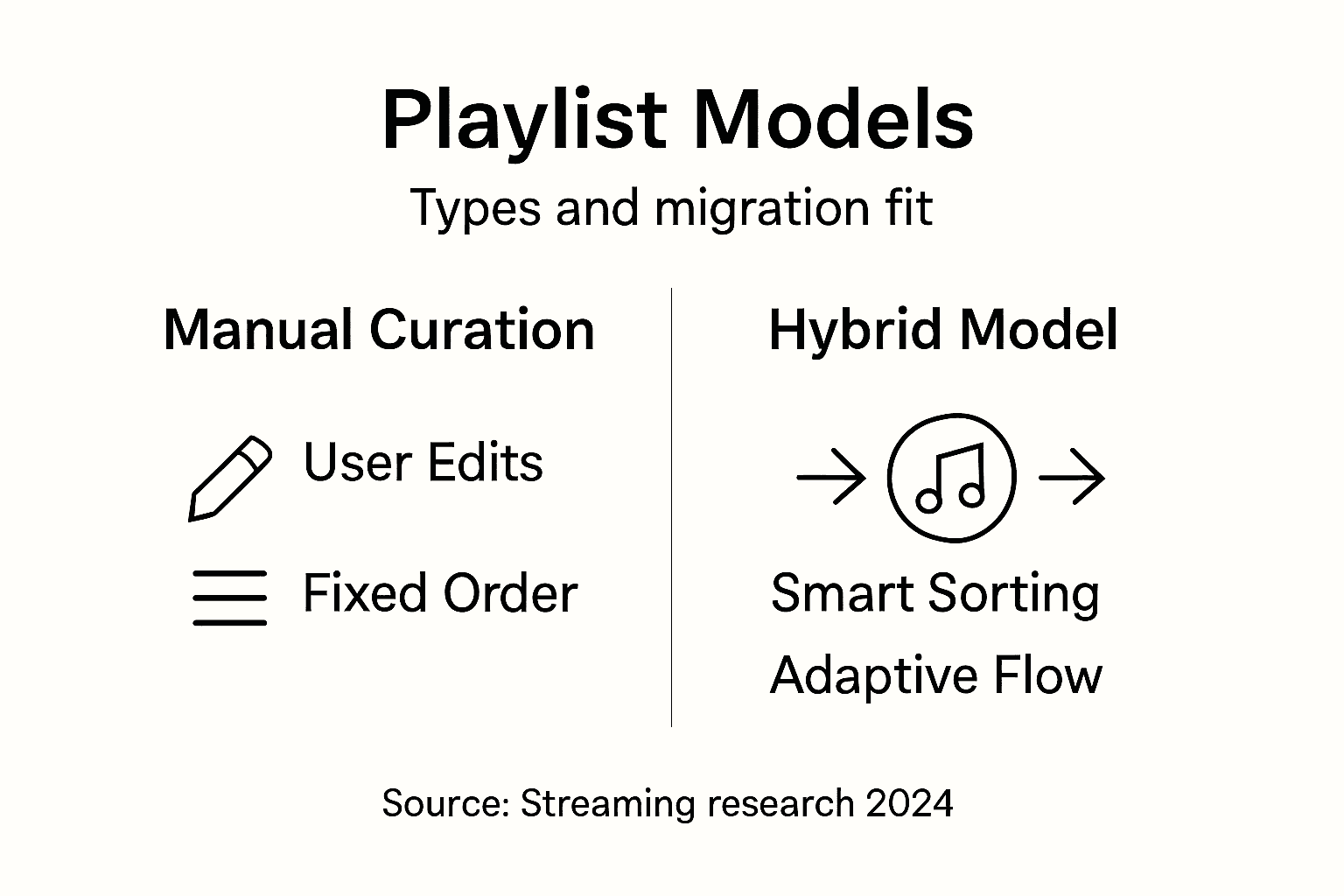
Hier siehst du einen Vergleich der Playlist-Architekturmodelle und ihrer Auswirkungen auf das Nutzererlebnis:
| Modelltyp | Art der Zusammenstellung | Anpassungsfähigkeit | Schwerpunkt des Nutzererlebnisses |
|---|---|---|---|
| Von Nutzern erstellt | Manuelle Auswahl | Vollständig individuell | Gestaltung und Kontrolle |
| Algorithmisch kuratiert | Automatisiert durch KI | Sehr anpassungsfähig | Entdecken und Komfort |
| Redaktionell (von Fachleuten kuratiert) | Fachleute aus der Musikbranche | Regelmäßig aktualisiert | Themenbezogener Musikgenuss |
| Hybrid | Kombiniert KI und Nutzereingaben | Maximale Flexibilität | Ausgewogene Personalisierung |
Profi-Tipp: Probiere verschiedene Playlist-Modelle aus. Schau dir an, wie unterschiedliche Streaming-Plattformen Empfehlungen erstellen, und analysiere die Unterschiede in der zugrunde liegenden Architektur.
Wie Playlist-Architektur den Umzug ermöglicht
Der Umzug von Playlists ist eine komplexe technische Herausforderung, die ausgefeilte Architekturkonzepte erfordert, damit Musiksammlungen nahtlos übertragen werden können. Systeme zur Playlist-Übertragung nutzen anspruchsvolle Verfahren zur Zuordnung von Metadaten, um Musiksammlungen über verschiedene Streaming-Plattformen hinweg unverändert zu erhalten.
Zu den wichtigsten Mechanismen, die den Playlist-Umzug ermöglichen, gehören:
-
Standardisierung von Metadaten
- Identifikationscodes für Titel
- Einheitliche Zuordnung von Songeigenschaften
- Plattformübergreifende Songerkennung
-
Algorithmischer Abgleich
- Verfahren zur unscharfen Suche
- Vergleich akustischer Fingerabdrücke
- Bewertung kontextbezogener Ähnlichkeiten
-
Strategien zum Erhalt der Playlist
- Beibehaltung der Titelabfolge
- Erhalt der ursprünglichen Reihenfolge
- Möglichst geringer Datenverlust
Technische Übersetzungsschichten spielen eine entscheidende Rolle dabei, die Unterschiede zwischen den individuellen Datenstrukturen verschiedener Streaming-Dienste zu überbrücken. Diese Architekturkomponenten analysieren mehrere Merkmale von Musiktiteln, darunter Angaben zu Künstlern, Veröffentlichungsdetails, Audioeigenschaften und eindeutige Kennungen, um eine präzise Playlist-Übertragung zu ermöglichen.
Intelligente Playlist-Architektur macht aus einem Umzug mit möglichen Datenverlusten einen präzisen, auf die Nutzer ausgerichteten Vorgang.
Die fortschrittlichsten Übertragungssysteme setzen Algorithmen für maschinelles Lernen ein, die aus Nutzerinteraktionen und Feedback lernen und so die Zuordnungsgenauigkeit kontinuierlich verbessern. Diese dynamischen Systeme erkennen feine Abweichungen in den Metadaten von Titeln, gleichen kleinere Unterschiede zwischen Plattformen aus und sorgen für eine möglichst originalgetreue Übertragung.
Profi-Tipp: Erstelle vor dem Playlist-Umzug eine Sicherung deiner ursprünglichen Playlist. So kannst du deine Sammlung wiederherstellen, falls unerwartete Abweichungen in den Daten auftreten.
Risiken und häufige Fehler beim Umzug
Beim Umzug von Playlists lauern mögliche Fallstricke, die sorgfältig zusammengestellte Musiksammlungen beeinträchtigen können. Häufige Übertragungsfehler können eine Musikbibliothek erheblich durcheinanderbringen, wenn du ihnen nicht gezielt vorbeugst.
Zu den häufigsten Risiken beim Playlist-Umzug gehören:
-
Risiken für Datenverlust
- Unvollständig übertragene Titel
- Beschädigte Metadaten
- Verlust der Playlist-Struktur
-
Kompatibilitätsprobleme zwischen Plattformen
- Nicht unterstützte Titelformate
- Regionale Musikbeschränkungen
- Lizenzbedingte Einschränkungen
-
Technische Herausforderungen bei der Übertragung
- Uneinheitliche Titelzuordnung
- Doppelte Songeinträge
- Fehlerhafte Titelreihenfolge
Nutzer unterschätzen häufig, wie komplex die Übertragung von Playlists zwischen verschiedenen Streaming-Plattformen ist. Abweichende Metadaten können erhebliche Schwierigkeiten verursachen, da jede Plattform eigene Kennungen, Musikkataloge und Codierungssysteme verwendet, die eine direkte Übertragung erschweren.
Beim Umzug geht es darum, Songs zu übertragen und zugleich die musikalische Geschichte und die emotionale Reise einer Playlist zu bewahren.
Nicht autorisierte oder manuelle Übertragungsmethoden erhöhen das Risiko beschädigter Daten exponentiell. Automatisierte Übertragungstools mit ausgefeilten Zuordnungsalgorithmen können das Risiko fehlender Titel oder beeinträchtigter Playlists deutlich senken. Diese fortschrittlichen Systeme nutzen maschinelles Lernen, um mögliche Übertragungskonflikte zu erkennen und zu lösen, bevor daraus ernsthafte Probleme werden.
Die folgende Tabelle fasst häufige Risiken beim Playlist-Umzug und ihre Auswirkungen auf deine Musiksammlung zusammen:
| Übertragungsrisiko | Typische Folge | Hauptursache |
|---|---|---|
| Datenverlust | Fehlende Titel | Inkompatibilität zwischen Plattformen oder Fehler |
| Metadatenfehler | Falsche oder unleserliche Angaben | Uneinheitliche Kennungen |
| Falsche Titelreihenfolge | Gestörter Hörfluss | Einschränkungen des Übertragungsverfahrens |
| Duplikate | Doppelte Titel | Unzureichende Erkennungsalgorithmen |
Profi-Tipp: Bewahre immer eine lokale Sicherung deiner ursprünglichen Playlist auf und prüfe die übertragene Sammlung direkt nach dem Umzug, damit du mögliche Abweichungen schnell erkennst.
Bewährte Methoden für eine präzise Playlist-Übertragung
Der Umzug von Musik-Playlists erfordert ein durchdachtes Vorgehen, das über eine einfache Dateiübertragung hinausgeht. Spezialisierte Übertragungsverfahren sorgen dafür, dass sorgfältig zusammengestellte Musiksammlungen mit möglichst wenig Datenverlust und höchster Genauigkeit zwischen verschiedenen Streaming-Plattformen erhalten bleiben.
Zu den wichtigsten bewährten Methoden für eine präzise Playlist-Übertragung gehören:
-
Vorbereitung vor dem Umzug
- Erfasse den aktuellen Inhalt deiner Playlist
- Prüfe die Verfügbarkeit der Titel auf den verschiedenen Plattformen
- Erkenne mögliche Kompatibilitätsprobleme
-
Technische Übertragungsstrategien
- Nutze spezialisierte Übertragungstools
- Prüfe die Genauigkeit der Titelzuordnung
- Behalte die ursprüngliche Playlist-Reihenfolge bei
-
Überprüfung nach dem Umzug
- Vergleiche die ursprüngliche mit der übertragenen Playlist
- Suche nach fehlenden oder falsch übertragenen Titeln
- Prüfe manuell, ob die Playlist vollständig und korrekt ist
Der Metadatenabgleich ist der entscheidende Faktor für einen erfolgreichen Playlist-Umzug. Jede Streaming-Plattform verwendet eigene Titelkennungen, was die direkte Übertragung erschwert. Fortschrittliche Übertragungstools setzen ausgefeilte Algorithmen ein, die mehrere Titeleigenschaften analysieren, um eine möglichst genaue Zuordnung zu gewährleisten.
Ein erfolgreicher Playlist-Umzug erfordert Präzision und verbindet technische Möglichkeiten mit dem Erhalt der musikalischen Zusammenstellung.
Automatisierte Übertragungstools reduzieren menschliche Fehler deutlich, indem sie Verfahren des maschinellen Lernens einsetzen, die die Titelzuordnung kontinuierlich verbessern. Diese Systeme analysieren akustische Fingerabdrücke, Künstler-Metadaten und den bisherigen Hörverlauf, um Playlists möglichst präzise zu übertragen.
Profi-Tipp: Dokumentiere deine ursprüngliche Playlist vor dem Umzug in einer Tabelle. So kannst du Titel, die möglicherweise nicht automatisch übertragen werden, schnell erkennen und manuell ersetzen.
Vereinfache deinen Playlist-Umzug mit durchdachter Architektur
Die Komplexität der Playlist-Architektur und die Herausforderungen einer nahtlosen Übertragung zeigen ein häufiges Problem für Musikfans: Sie möchten ihre musikalischen Reisen ohne Unterbrechung bewahren. Dieser Artikel betont, wie wichtig ein genauer Metadatenabgleich, der Erhalt der Playlist-Struktur und die Vermeidung von Datenverlust oder einer falschen Titelreihenfolge bei der Übertragung sind. Genau für diese Probleme wurde FreeYourMusic.com entwickelt.
Mit FreeYourMusic.com erhältst du eine unkomplizierte Lösung, die den emotionalen Spannungsbogen und die sorgfältig gestaltete Geschichte deiner Playlists bewahrt. Unsere automatisierte Plattform garantiert eine präzise Titelzuordnung zwischen Diensten wie Spotify, Apple Music und Tidal und erhält dabei die ursprüngliche Reihenfolge und den vollständigen Aufbau deiner Playlists. Nutze Funktionen wie Cloud-Backups, die Unterstützung mehrerer Konten und eine fortlaufende automatische Synchronisierung, damit deine Musiksammlungen auch beim Wechsel vollständig erhalten bleiben.
Nimm deinen Musikumzug noch heute selbst in die Hand: Besuche FreeYourMusic.com und entdecke, wie mühelos du unbegrenzt viele Playlists übertragen kannst.
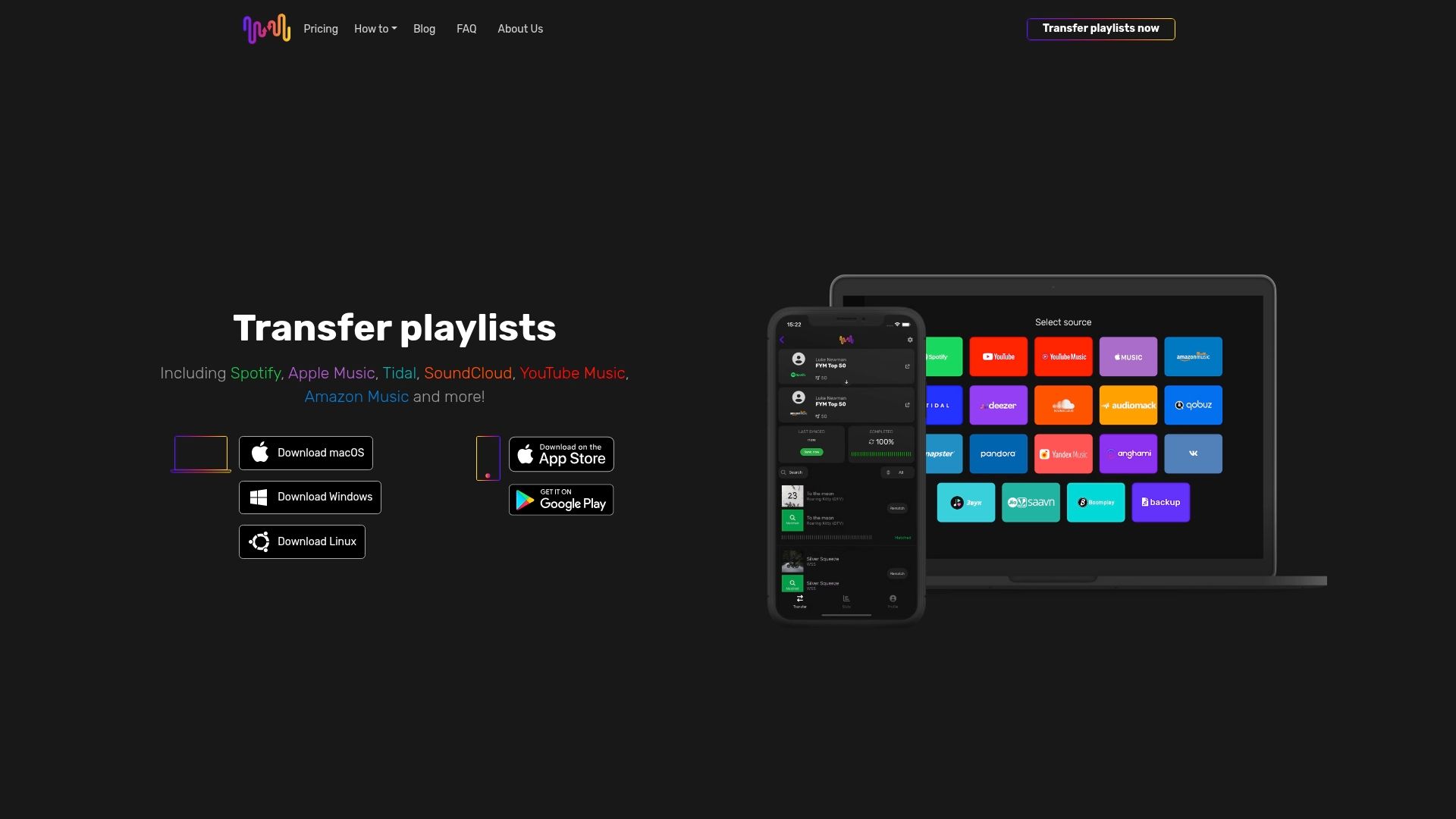
Bereit, deine Playlists zu sichern und genau so zu hören, wie du es möchtest? Entdecke, wie FreeYourMusic.com deine musikalischen Geschichten vor Verlust und Unterbrechungen schützt, und starte deinen Umzug jetzt mit einem guten Gefühl.
Häufig gestellte Fragen
Was ist Playlist-Architektur?
Playlist-Architektur ist das digitale Gerüst, das Musiktitel auf Streaming-Plattformen organisiert, ihre Reihenfolge festlegt und das Hörerlebnis verbessert. Dabei berücksichtigt sie persönliche Vorlieben und emotionale Verläufe.
Wie funktioniert der Playlist-Umzug?
Beim Playlist-Umzug werden Metadaten zugeordnet und Titel algorithmisch abgeglichen, um Playlists zwischen verschiedenen Streaming-Plattformen zu übertragen. Dabei bleiben die Titel und ihre Anordnung erhalten.
Welche Risiken treten beim Playlist-Umzug häufig auf?
Zu den häufigsten Risiken gehören Datenverlust, Metadatenfehler, Kompatibilitätsprobleme zwischen Plattformen und eine falsche Titelreihenfolge. All das kann die Musiksammlung beeinträchtigen.
Welche bewährten Methoden sollte ich für eine präzise Playlist-Übertragung beachten?
Eine gute Vorbereitung, spezialisierte Übertragungstools und eine anschließende Überprüfung helfen dir, Playlists präzise und mit möglichst wenig Datenverlust zu übertragen.
Empfohlene Artikel
Deine Playlists gehören dir.
Hör auf, von Hand neu aufzubauen. Verschiebe alles in Minuten und nimm deine Musik überallhin mit.
Kostenlos herunterladen →SongsBrew — unser kostenloser Musik-Newsletter
Ein kostenloser Vorteil für FYM-Nutzer. Tipps, Playlists, kein Spam.