Playlist Analytics: Transforming Music Discovery
Transferring playlists between streaming platforms can feel daunting when your carefully curated tracks risk getting lost. For every European music enthusiast or aspiring DJ, the ability to bring favorite songs and mixes across services matters both for personal enjoyment and professional opportunities. With playlist analytics revealing complex listener behaviors and strategic music trends, this article demystifies migration tools and techniques so you can keep your collections intact and stay in tune with your audience.
Table of Contents
- Defining Playlist Analytics And Key Concepts
- Major Playlist Types Across Streaming Services
- How Playlist Analytics Tools Work
- Benefits For Djs And Music Enthusiasts
- Risks, Limitations, And Data Integrity Issues
Key Takeaways
| Point | Details |
|---|---|
| Playlist analytics provides insights into listener behavior. | It helps understand music consumption patterns, aiding in personalized recommendations. |
| Different playlist types serve various purposes. | Editorial, algorithmic, and user-generated playlists offer unique avenues for music discovery and audience engagement. |
| Data integrity remains a key challenge. | Inconsistencies across platforms and algorithmic bias can hinder effective analytics and decision-making. |
| DJs and music enthusiasts can leverage analytics for trend forecasting. | This allows for strategic curation and deeper audience engagement, enhancing their music experiences. |
Defining Playlist Analytics and Key Concepts
Playlist analytics represents a sophisticated data science approach to understanding music consumption patterns and listener behaviors. By transforming seemingly random song collections into strategic datasets, this emerging field provides unprecedented insights into musical preferences and trends.
At its core, playlist analytics involves multiple complex elements:
- Track Interaction Analysis: Examining how different songs connect and transition within playlists
- Demographic Insights: Understanding listener characteristics through playlist composition
- Genre Blending Patterns: Tracking how musical styles intersect and evolve
- Temporal Trend Mapping: Analyzing how playlist structures change over time
Researchers utilize advanced methodologies to decode complex listener behaviors, combining multiple data types like track metadata, audio features, and user interaction patterns. This multidimensional approach enables music platforms to create more personalized recommendations and enhance music discovery experiences.
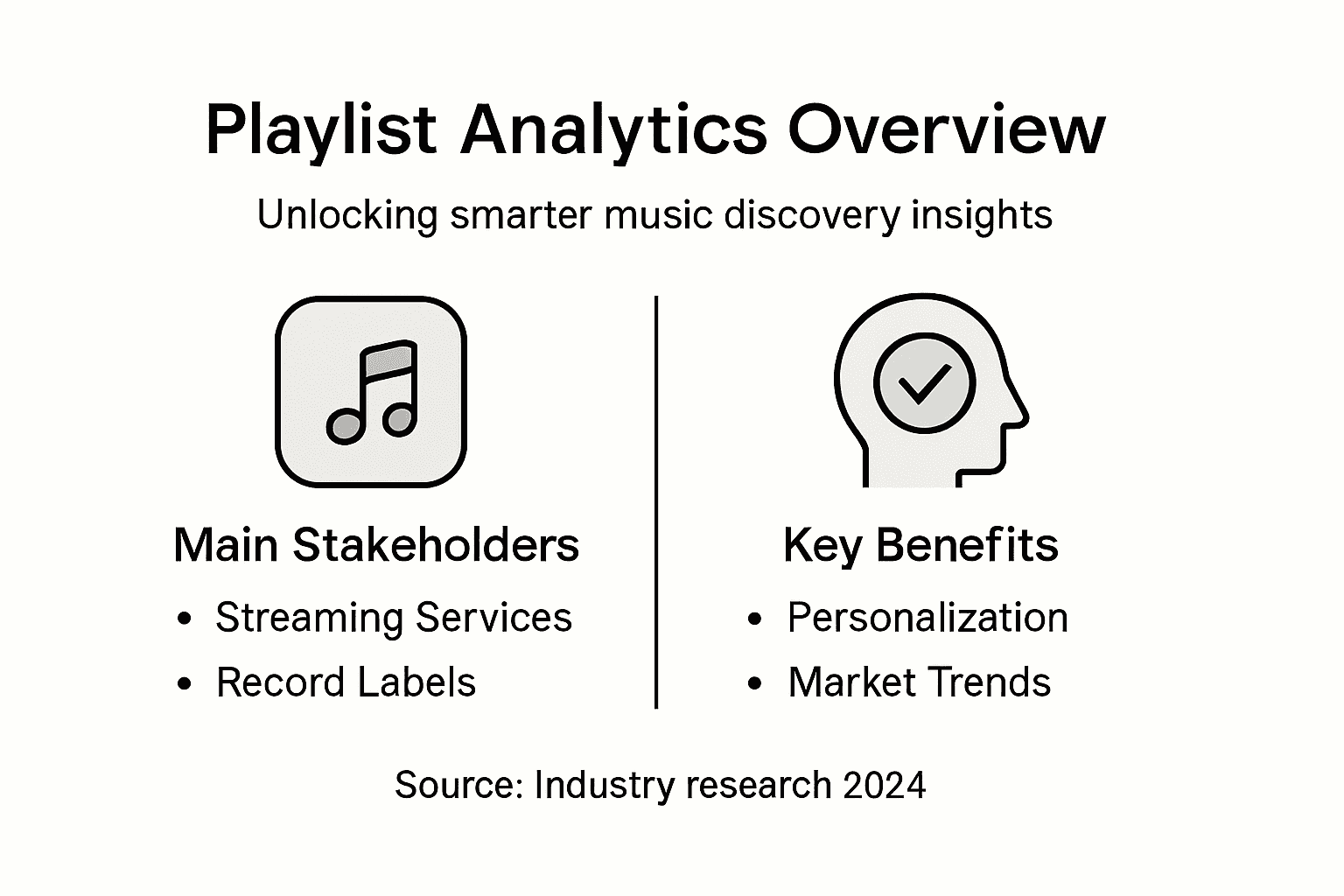
The strategic value of playlist analytics extends beyond mere entertainment. Music streaming services, record labels, and artists can leverage these insights to understand audience preferences, predict emerging trends, and develop targeted marketing strategies. By analyzing playlist structures, professionals gain a nuanced understanding of musical ecosystems and listener psychology.
Pro tip: Focus on collecting comprehensive playlist data across multiple platforms to gain more holistic insights into listener behaviors.
To better understand playlist analytics, here are its business applications and typical data sources:
| Application Area | What It Enables | Common Data Sources |
|---|---|---|
| Audience Profiling | Targeted marketing strategies | User age, region, playlist content |
| Trend Prediction | Anticipating popular genres or songs | Playlist updates, interaction timestamps |
| Artist Promotion | Data-driven artist exposure | Track performance, playlist placement |
Major Playlist Types Across Streaming Services
Music streaming platforms have developed sophisticated playlist ecosystems that cater to diverse listener preferences and musical experiences. Streaming platforms offer three primary playlist categories that shape how users discover and consume music.
The main playlist types include:
- Editorial Playlists: Professionally curated collections by music experts and platform specialists
- Algorithmic Playlists: Personalized recommendations generated through machine learning
- User-Generated Playlists: Custom collections created directly by listeners
Editorial playlists represent the most prestigious playlist category, featuring carefully selected tracks chosen by industry professionals. These playlists often highlight emerging artists, create thematic musical journeys, and provide significant exposure for musicians seeking broader audience recognition.
Algorithmic playlists leverage advanced data science techniques to analyze individual listening habits, creating highly personalized recommendations. By examining factors like genre preferences, listening history, and temporal patterns, these intelligent playlists adapt dynamically to each user's unique musical taste.

User-generated playlists contribute remarkable diversity to the music streaming landscape. These collections allow listeners to become curators, sharing personal musical narratives and discovering niche genres that might not receive mainstream attention. They represent a grassroots approach to music discovery, enabling community-driven musical exploration.
Pro tip: Experiment with different playlist types to maximize your music discovery potential and uncover hidden musical gems.
Here's how the key playlist types differ in function and audience impact:
| Playlist Type | Main Curator | Personalization Level | Primary Audience Benefit |
|---|---|---|---|
| Editorial Playlists | Music professionals | Low | Discovery of new artists |
| Algorithmic Playlists | Machine learning | High | Custom-fit music recommendations |
| User-Generated Lists | Everyday listeners | Variable | Sharing and niche exploration |
How Playlist Analytics Tools Work
Playlist analytics tools represent sophisticated digital platforms that transform raw music data into actionable strategic insights. Advanced frameworks collect comprehensive playlist information across multiple streaming services, revealing intricate patterns of musical consumption and listener behavior.
Key operational components of playlist analytics tools include:
- Data Collection: Aggregating information from multiple streaming platforms
- Pattern Recognition: Identifying complex musical transition and genre relationships
- Listener Behavior Analysis: Tracking individual and aggregate music consumption trends
- Predictive Modeling: Generating insights about emerging musical preferences
The technical workflow begins with massive data aggregation, where tools capture detailed metadata about tracks, including attributes like genre, release date, acoustic characteristics, and listener interaction patterns. These platforms employ machine learning algorithms to analyze track sequencing, identifying subtle connections between songs that might not be immediately apparent to human curators.
Moreover, playlist analytics tools provide granular insights that extend beyond simple track recommendations. They can detect emerging artist trends, evaluate playlist authenticity, estimate potential streaming performance, and help music industry professionals make data-driven decisions about artist promotion and audience targeting.
Advanced platforms integrate multiple data dimensions, combining audio features, listener demographics, temporal trends, and social network interactions to create comprehensive musical ecosystem maps. By transforming complex datasets into digestible insights, these tools bridge the gap between raw information and strategic musical understanding.
Pro tip: Leverage multiple playlist analytics tools to cross-validate insights and gain a more comprehensive understanding of musical trends.
Benefits for DJs and Music Enthusiasts
Playlist analytics has transformed the music discovery landscape, offering unprecedented insights for DJs and passionate music enthusiasts. Early detection of emerging music trends enables professionals to stay ahead of the curve and make strategic musical selections.
Key benefits for DJs and music enthusiasts include:
- Trend Forecasting: Identifying rising artists before mainstream recognition
- Strategic Curation: Developing data-driven playlist selections
- Audience Engagement: Understanding listener preferences more deeply
- Genre Exploration: Discovering innovative musical connections
- Professional Advantage: Gaining competitive insights into music consumption patterns
For professional DJs, playlist analytics provides a powerful toolset for crafting exceptional musical experiences. By analyzing complex track interactions, listeners can understand subtle genre transitions, predict audience reactions, and create more engaging performance sets that resonate with specific crowd demographics.
Music enthusiasts benefit from these tools by uncovering hidden musical gems and understanding the intricate relationships between different artists and genres. These platforms allow users to explore musical landscapes beyond traditional recommendation algorithms, revealing connections that might otherwise remain undiscovered.
Advanced playlist analytics transform music consumption from a passive experience into an active, data-driven exploration. By combining technological insights with creative intuition, DJs and music lovers can develop a more nuanced understanding of musical ecosystems and emerging artistic trends.
Pro tip: Experiment with multiple playlist analytics tools to develop a comprehensive understanding of musical trends and enhance your musical discovery journey.
Risks, Limitations, and Data Integrity Issues
Playlist analytics, while powerful, confronts significant challenges that can compromise its effectiveness and reliability. Data integrity challenges represent critical obstacles in transforming raw musical information into actionable insights.
Key risks and limitations include:
- Data Inconsistency: Variations across different streaming platforms
- Algorithmic Bias: Potential skewing of recommendations
- Privacy Concerns: Risks associated with personal listening data
- Technical Limitations: Gaps in tracking complex musical interactions
- Interpretation Errors: Misunderstanding nuanced data signals
The fundamental challenge lies in maintaining accurate data representation across diverse musical ecosystems. Different streaming platforms employ unique metadata standards, making cross-platform analysis inherently complex. Machine learning algorithms might inadvertently perpetuate existing musical biases, potentially limiting true musical discovery.
Privacy represents another significant concern in playlist analytics. While these tools offer unprecedented insights, they simultaneously collect extensive personal listening data. Users must carefully consider the trade-offs between personalized recommendations and potential privacy invasions, understanding how their musical preferences are tracked, analyzed, and potentially monetized.
Technical limitations further complicate playlist analytics. Current tools struggle to fully capture the emotional and contextual nuances of musical experiences. An algorithm might understand genre transitions and listener patterns, but it cannot replicate the deeply personal and subjective nature of musical appreciation.
Pro tip: Always cross-reference playlist analytics insights with multiple sources to mitigate potential data interpretation errors.
Seamless Playlist Migration Enhances Your Music Discovery Journey
Playlist analytics reveals how playlists are evolving and what listeners truly want. This insight is powerful but comes with one challenge keeping your discoveries connected across platforms. Managing and transferring your playlists between streaming services can be time-consuming and frustrating when you want to explore new trends or curate your music strategically. Preserve your curated playlists exactly as you want them and never lose track of your musical landscape.
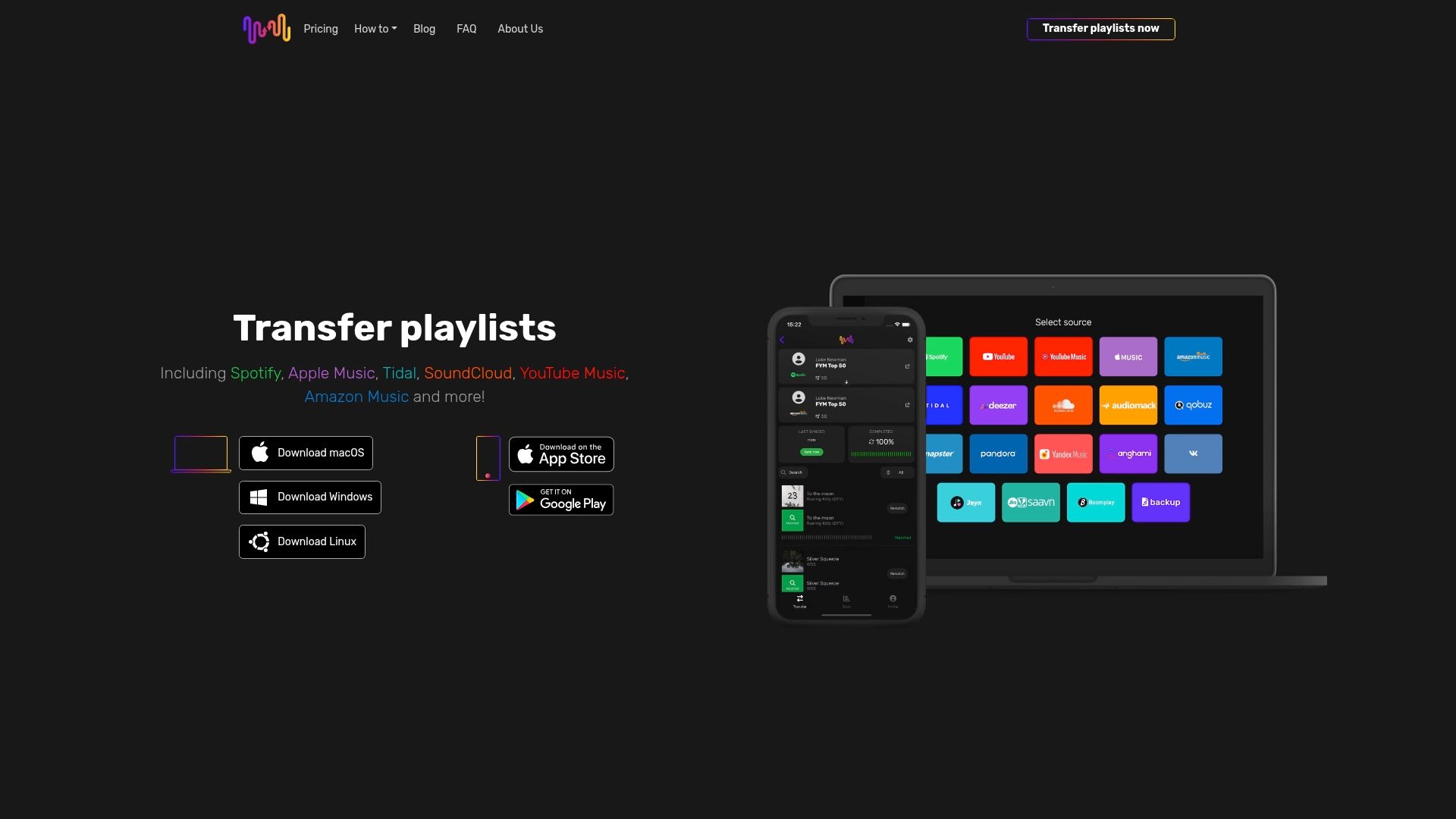
Discover how FreeYourMusic.com makes playlist migration effortless and reliable. Whether you rely on editorial, algorithmic, or user-generated playlists, our platform supports your music exploration by syncing and transferring unlimited playlists with precision. Don’t let platform barriers limit your access to emerging artists or audience insights. Take control of your music across Spotify, Apple Music, Tidal, YouTube Music, Amazon Music, and more. Act now to simplify your playlist management and amplify your music discovery at FreeYourMusic.com.
Frequently Asked Questions
What is playlist analytics?
Playlist analytics is the study of music consumption patterns and listener behaviors through data analysis of playlists. It offers insights into track interactions, demographics, genre trends, and how these aspects change over time.
How do music streaming services use playlist analytics?
Music streaming services utilize playlist analytics to enhance user experience by providing personalized recommendations, understanding audience preferences, predicting trends, and developing targeted marketing strategies for artists and labels.
What are the different types of playlists in music streaming services?
The main playlist types include editorial playlists, which are curated by music professionals; algorithmic playlists, which use machine learning to personalize recommendations; and user-generated playlists, created by everyday listeners to share music.
What benefits do DJs and music enthusiasts gain from playlist analytics?
DJs and music enthusiasts can benefit from playlist analytics by discovering emerging trends, developing data-driven playlists, engaging their audience effectively, exploring new genres, and gaining insights into music consumption patterns.
Recommended
- Free Your Music - Music Industry Trends for 2024
- Free Your Music - How Do Spotify Personalized Playlists Work?
- Free Your Music - AI Big in Music Trends
- Free Your Music - 7 Essential Music Streaming Features You Need
- Master TikTok Engagement Workflow for Maximum Growth
- The Rise of TikTok: A Brief History - playablemaker.com The Rise of TikTok: A Brief History
Your playlists belong to you.
Stop rebuilding by hand. Move everything in minutes and take your music wherever you go.
Download free →SongsBrew — our free music newsletter
A free perk for FYM users. Tips, playlists, no spam.