 Qobuz→
 Spotify
Pasar de Qobuz a Spotify
Pasa tus listas de reproducción, canciones favoritas, álbumes guardados y artistas seguidos de Qobuz a Spotify sin tener que rehacer nada a mano. Conecta ambas cuentas, elige qué quieres transferir y FreeYourMusic lo recrea en Spotify con los mismos nombres y el mismo orden de canciones.
★★★★★ 4,7 · Más de 12 M de descargas · Contraseña nunca compartida


¿Por qué pasarte de Qobuz a Spotify?
FreeYourMusic pasa tus listas de reproducción, canciones favoritas, álbumes guardados y artistas seguidos de Qobuz a Spotify. Busca las canciones una a una y te muestra todo lo que no está en Spotify, para que puedas corregirlo antes de cambiarte.
Transferencias compatibles
Listas de reproducción (con nombres y orden originales), Canciones favoritas, Álbumes guardados y Artistas seguidos
Revisa las canciones que faltan
Los catálogos varían. Revisa los resultados de la transferencia para ver qué canciones no se han podido encontrar en el servicio de destino.
Cómo pasar listas de reproducción de Qobuz a Spotify
Cuatro pasos. Iguales en iPhone, Android, Mac, Windows y Linux.
Respuesta rápida
Para pasar de Qobuz a Spotify, instala FreeYourMusic, elige Qobuz como origen y Spotify como destino, selecciona las listas que quieras e inicia la transferencia. La app busca cada canción en Spotify y te muestra las pistas que no ha podido encontrar.
- 1
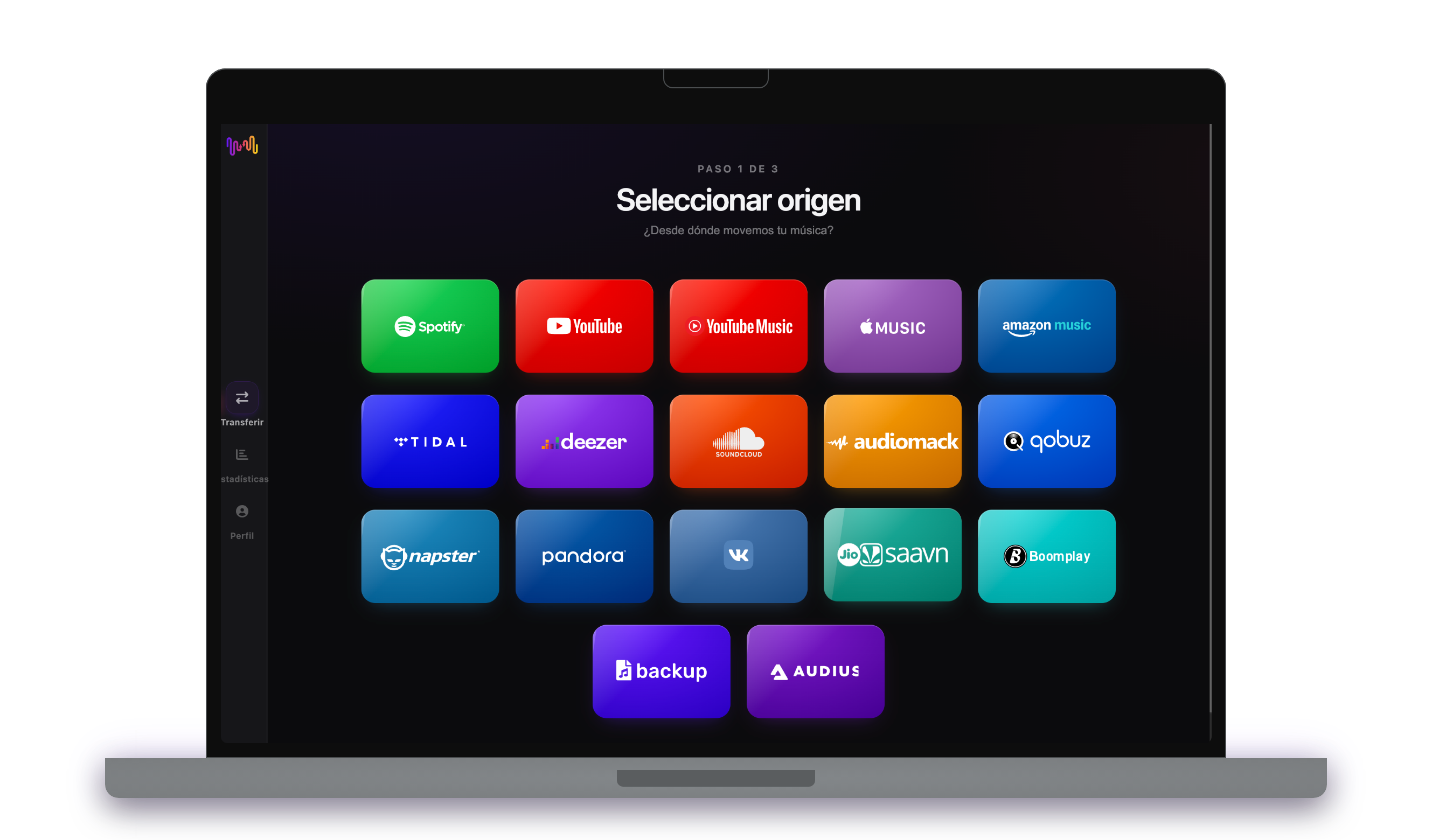
Conecta Qobuz como origen
Abre FreeYourMusic, toca el icono de Qobuz en la pantalla «Seleccionar origen» e inicia sesión en la página de acceso de Qobuz. FreeYourMusic no guarda tu contraseña de Qobuz.
- 2
Elige Spotify como destino
En la pantalla «Seleccionar destino», toca Spotify e inicia sesión. FreeYourMusic necesita acceso a tu biblioteca de Spotify para crear allí las listas.
- 3
Elige qué transferir
Marca las listas que quieres tener en Spotify. Usa los filtros y el buscador para encontrarlas, o selecciónalo todo para transferir toda tu biblioteca de Qobuz de una vez.

- 4
Inicia la transferencia y revisa los resultados
Toca «Iniciar la transferencia». FreeYourMusic busca cada canción en Spotify, mantiene los nombres de las listas y el orden de las canciones, y muestra un índice de confianza para cada coincidencia. Usa Rematch para corregir las canciones que no haya encontrado.

Lo que debes saber antes de pasar de Qobuz a Spotify
Qobuz como origen
Desde Qobuz puedes transferir listas de reproducción, pistas favoritas, álbumes guardados y artistas seguidos.
Spotify como destino
Una cuenta gratuita de Spotify puede recibir tu música. Spotify busca por código ISRC, así que las canciones de un servicio que proporciona códigos ISRC coinciden con mucha precisión.
Qué se transfiere de Qobuz a Spotify
En todos los dispositivos
Pasar, convertir o importar: una sola transferencia de Qobuz a Spotify
Lo llames como lo llames, es lo mismo. Puedes pasar tus playlists de Qobuz a Spotify, convertir una playlist de Qobuz en una de Spotify o importar tu biblioteca de Qobuz a Spotify. FreeYourMusic hace las tres cosas en una sola transferencia, para una lista o para una biblioteca de miles de canciones.
Mantén Qobuz y Spotify sincronizados
¿Sigues añadiendo canciones en Qobuz? Con Premium, Auto-Sync revisa tus listas transferidas y añade automáticamente las canciones nuevas a Spotify, para que ambas bibliotecas sigan iguales. Precios →
Pasa de Qobuz a otro servicio


Ver todas las transferencias de Qobuz →
Transfiere a Spotify desde otro servicio
Millones confían en nosotros para transferir listas de reproducción de Qobuz a Spotify
Preguntas frecuentes
¿Cómo transfiero mi lista de reproducción de Qobuz a Spotify?
Para pasar de Qobuz a Spotify, instala FreeYourMusic, elige Qobuz como origen y Spotify como destino, selecciona las listas que quieras e inicia la transferencia. La app busca cada canción en Spotify y te muestra las pistas que no ha podido encontrar.
¿Qué se transfiere exactamente de Qobuz a Spotify?
FreeYourMusic pasa tus listas de reproducción, canciones favoritas, álbumes guardados y artistas seguidos de Qobuz a Spotify. Busca las canciones una a una y te muestra todo lo que no está en Spotify, para que puedas corregirlo antes de cambiarte.
¿Puedo transferir listas de reproducción de Qobuz a Spotify gratis?
Sí: el plan gratuito transfiere 300 canciones sin tarjeta, y consigues 300 más al registrarte gratis con tu correo. Mejora tu plan para obtener transferencias ilimitadas, Auto-Sync y Cloud Backup.
¿Qué pasa con las canciones que no están en Spotify?
Los catálogos varían según el servicio y la región. FreeYourMusic muestra cada canción que no ha podido encontrar en Spotify, para que elijas otra versión con Rematch o la omitas. Nada desaparece sin que lo veas.
¿Se borrarán mis listas de reproducción de Qobuz?
No. FreeYourMusic copia tu música a Spotify y deja tu biblioteca de Qobuz tal como está. Después decides si mantienes o cancelas tu cuenta de Qobuz.
¿Cuánto tarda una transferencia de Qobuz a Spotify?
La mayoría de las listas se transfieren en pocos minutos. Las bibliotecas grandes tardan más, porque el tiempo depende del número de canciones y de los límites de Qobuz y Spotify. Puedes seguir usando tu dispositivo mientras dura la transferencia.
¿Puedo pasar mi música de Qobuz a Spotify desde el móvil?
Sí. FreeYourMusic funciona en iPhone, iPad y Android, y en ordenadores Mac, Windows y Linux. Los pasos son los mismos en todos los dispositivos.
¿Listo para pasarte a Spotify?
Descarga FreeYourMusic y transfiere toda tu biblioteca en minutos.
Descarga gratis →