Migração de bibliotecas de música: como garantir uma transição sem problemas

Mudar entre o Spotify, o Apple Music, o Tidal e outras grandes plataformas de streaming pode parecer um verdadeiro quebra-cabeças técnico. Para DJs e amantes de música que passam anos a criar playlists cuidadosamente selecionadas, transferir essas listas tão valiosas pode parecer arriscado e complicado. Compreender bem a migração de bibliotecas de música ajuda a proteger o seu catálogo pessoal, a manter a ordem das faixas e a garantir que nenhuma das suas músicas favoritas se perde pelo caminho. Explorar este tema permite conhecer os passos essenciais e as estratégias mais eficazes para continuar a desfrutar da sua música sem interrupções.
Índice
- O que é a migração de bibliotecas de música e para que serve
- Principais plataformas de streaming e problemas de compatibilidade
- Funcionalidades essenciais para uma migração sem problemas
- Segurança, privacidade e exatidão dos dados
- Como evitar problemas e erros comuns na migração
Pontos principais
| Ponto | Detalhes |
|---|---|
| Migração de bibliotecas de música | Permite transferir playlists e coleções entre plataformas de streaming, preservando uma experiência de audição personalizada. |
| Desafios de compatibilidade | As principais plataformas têm particularidades técnicas que podem afetar a precisão da transferência, como problemas de metadados e disponibilidade de músicas. |
| Segurança e privacidade | É necessário garantir a proteção dos dados durante a migração, utilizando ferramentas seguras e consultando as políticas de privacidade. |
| Boas práticas | Crie cópias de segurança, pré-visualize os resultados da migração e faça transferências de teste para evitar erros comuns e perdas de dados. |
O que é a migração de bibliotecas de música e para que serve
A migração de bibliotecas de música é um processo digital planeado que permite aos amantes de música transferir as suas playlists, coleções de músicas e preferências de audição de uma plataforma de streaming para outra. O objetivo central é garantir uma mudança de serviço sem problemas, preservando os arquivos musicais criados com tanto cuidado. Compreender o processo de transferência de coleções de música implica reconhecer os desafios técnicos e emocionais associados à mudança de uma biblioteca pessoal de música.
O principal objetivo da migração de bibliotecas de música vai além da simples transferência técnica. Responde a necessidades importantes, como a liberdade de escolher uma plataforma, o acesso a diferentes catálogos musicais, a redução de custos e a preservação de uma experiência de audição personalizada. Há várias razões para mudar de serviço: descobrir catálogos musicais mais completos, procurar melhor qualidade de áudio, encontrar subscrições mais económicas ou reagir a alterações nas funcionalidades e recomendações musicais da plataforma.
Uma migração bem-sucedida exige um planeamento cuidadoso e a compreensão das possíveis dificuldades. É necessário identificar corretamente as músicas em cada plataforma, preservar a ordem e a estrutura das playlists, resolver eventuais discrepâncias nos metadados e gerir diferenças de licenciamento ou disponibilidade entre serviços de streaming. Tanto os profissionais como os amantes de música reconhecem que uma estratégia de migração bem executada evita a fragmentação das coleções e mantém intacto o percurso musical que construíram com tanto cuidado.
Dica de especialista: Antes de iniciar a migração da sua biblioteca de música, crie sempre uma cópia de segurança das playlists existentes para se proteger contra possíveis perdas de dados durante a transferência.
Principais plataformas de streaming e problemas de compatibilidade
O panorama atual do streaming de música inclui uma grande variedade de plataformas, cada uma com a sua arquitetura técnica e o seu ecossistema de conteúdos. O guia completo das plataformas de streaming de música mostra a complexidade de transferir bibliotecas de música entre estes ambientes digitais. Entre as principais plataformas estão o Spotify, o Apple Music, o Tidal, o Amazon Music, o YouTube Music e o Pandora, cada uma com desafios específicos para quem pretende migrar a sua biblioteca sem problemas.
Os problemas de compatibilidade resultam de vários fatores técnicos e de licenciamento. A transferência de bibliotecas pode deparar-se com obstáculos como inconsistências nos metadados, restrições regionais de conteúdos, diferenças na formatação das playlists e padrões distintos de qualidade de áudio. Algumas plataformas utilizam formatos de codificação próprios ou protocolos de gestão de direitos digitais que podem dificultar as transferências diretas. Por exemplo, determinadas músicas podem existir numa plataforma e estar indisponíveis noutra, deixando lacunas em coleções cuidadosamente organizadas.
As plataformas de streaming também diferem bastante na forma como tratam os metadados, estruturam as playlists e reconhecem as músicas através de algoritmos. Estas diferenças podem provocar complicações inesperadas durante a transferência de bibliotecas, como alterações na ordem das playlists, faixas em falta ou correspondências incorretas entre músicas. Tanto os profissionais da música como os ouvintes ocasionais precisam de ter em conta estas particularidades técnicas para garantir uma mudança tranquila entre serviços. Compreender estes desafios de compatibilidade é essencial para manter as bibliotecas pessoais de música completas e intactas.
Veja uma comparação dos principais desafios de compatibilidade nas grandes plataformas de streaming de música:
| Plataforma de streaming | Desafio comum | Limitação relevante |
|---|---|---|
| Spotify | Formatação dos metadados | Códigos de playlist proprietários |
| Apple Music | Disponibilidade regional | Faixas com áudio sem perdas limitadas por país |
| Tidal | Diferenças na qualidade de áudio | Biblioteca de podcasts mais pequena |
| Amazon Music | Variações no reconhecimento de músicas | Problemas na ordem das playlists |
| YouTube Music | Carregamentos não oficiais | Metadados de álbuns inconsistentes |
| Pandora | Diferenças nos algoritmos | Restrições ao tamanho das playlists |
Dica de especialista: Antes de migrar a sua biblioteca de música, crie uma cópia de segurança completa e utilize ferramentas de transferência especializadas para minimizar possíveis perdas de dados ao mudar de plataforma.
Funcionalidades essenciais para uma migração sem problemas
Uma migração de bibliotecas de música sem problemas depende de funcionalidades tecnológicas avançadas que respondam aos desafios complexos da transferência de coleções digitais. Estes 7 exemplos de plataformas de streaming de música destacam as capacidades essenciais para uma transição tranquila entre ecossistemas musicais digitais. As funcionalidades mais importantes incluem algoritmos sofisticados de correspondência de músicas, preservação abrangente dos metadados, manutenção da estrutura das playlists e mecanismos sólidos de compatibilidade entre plataformas.
As tecnologias avançadas de correspondência de músicas são um dos pilares de uma migração eficaz. Estes algoritmos inteligentes analisam vários atributos, incluindo o nome da faixa, o artista, o álbum, a duração e a impressão digital acústica, para garantir transferências precisas entre plataformas. A preservação dos metadados vai além das informações básicas das faixas e abrange playlists criadas pelos utilizadores, contagens de reproduções, músicas marcadas como favoritas e o histórico pessoal de audição. Esta abordagem abrangente garante que os utilizadores mantêm os detalhes que dão contexto à sua coleção e que foram reunindo ao longo do tempo.
As ferramentas de migração mais eficazes integram várias funcionalidades sofisticadas para responder a possíveis dificuldades de transferência. Entre elas estão a resolução de conflitos de faixas duplicadas em tempo real, a gestão das diferenças regionais na disponibilidade de músicas, o suporte para vários formatos de ficheiro e tecnologias adaptáveis de correspondência que conseguem lidar com as restrições específicas de cada plataforma. Os profissionais da música precisam de ferramentas capazes de gerir estas complexidades técnicas de forma inteligente, preservando a integridade das suas coleções cuidadosamente selecionadas e garantindo uma mudança sem obstáculos entre serviços de streaming.
Dica de especialista: Pré-visualize sempre os resultados da transferência da sua biblioteca de música antes de a concluir, para confirmar que todas as playlists e todos os detalhes das faixas foram migrados corretamente entre plataformas.
Segurança, privacidade e exatidão dos dados
A migração de bibliotecas de música levanta questões importantes de privacidade e segurança que exigem atenção rigorosa por parte dos utilizadores e de quem desenvolve as plataformas. Compreender os desafios da transferência de playlists permite perceber a complexidade da proteção de dados durante a mudança de coleções digitais de música. Os protocolos de segurança devem proteger os dados pessoais de audição, impedir acessos não autorizados e manter a confidencialidade das playlists criadas pelos utilizadores e dos seus históricos de audição.
A exatidão dos dados é uma dimensão essencial de uma migração segura. As tecnologias avançadas de encriptação e os mecanismos de autenticação seguros são fundamentais para proteger as informações dos utilizadores durante as transferências. Estas tecnologias garantem que os metadados pessoais permanecem intactos e protegidos ao longo de todo o processo, prevenindo possíveis violações de dados ou alterações não autorizadas. Os utilizadores devem avaliar cuidadosamente as garantias de segurança das ferramentas de migração, dando atenção à encriptação de ponta a ponta, aos protocolos de autenticação seguros e às práticas transparentes de tratamento de dados que reduzam possíveis vulnerabilidades.
As questões de privacidade vão além da proteção imediata dos dados e abrangem estratégias mais amplas de consentimento e gestão da informação. As plataformas de migração de confiança implementam políticas e mecanismos de privacidade abrangentes que dão aos utilizadores um controlo detalhado sobre os seus dados pessoais. Isto inclui formas claras de dar e retirar consentimento, políticas transparentes de utilização de dados e mecanismos sólidos para eliminar dados e gerir contas. Os profissionais da música precisam de ferramentas de migração que facilitem transferências sem problemas e demonstrem um compromisso com os mais elevados padrões de privacidade e proteção de dados.
Dica de especialista: Consulte sempre a política de privacidade e as práticas de tratamento de dados de uma plataforma antes de iniciar uma migração da sua biblioteca de música, para garantir a proteção integral dos seus dados pessoais de audição.
Segue-se um resumo das boas práticas para uma migração segura e precisa de bibliotecas de música:
| Boa prática | Objetivo | Resultado |
|---|---|---|
| Utilizar encriptação de ponta a ponta | Proteger os dados dos utilizadores | Impedir acessos não autorizados |
| Pré-visualizar os resultados da migração | Verificar playlists e faixas | Reduzir os elementos em falta |
| Verificar restrições de licenciamento | Identificar conteúdos indisponíveis | Minimizar lacunas na coleção |
| Verificar a preservação dos metadados | Manter as informações das músicas e playlists | Garantir transferências precisas |
Como evitar problemas e erros comuns na migração
A migração de bibliotecas de música apresenta vários desafios que podem comprometer a integridade das coleções cuidadosamente selecionadas pelos utilizadores. Os 7 exemplos de plataformas de streaming de música evidenciam a variedade e a complexidade dos problemas que podem surgir durante uma transferência. Entre os problemas mais comuns estão transferências incompletas de playlists, corrupção de metadados, erros na correspondência de músicas e perdas inesperadas de dados pessoais de audição, que podem frustrar até os amantes de música com mais conhecimentos técnicos.
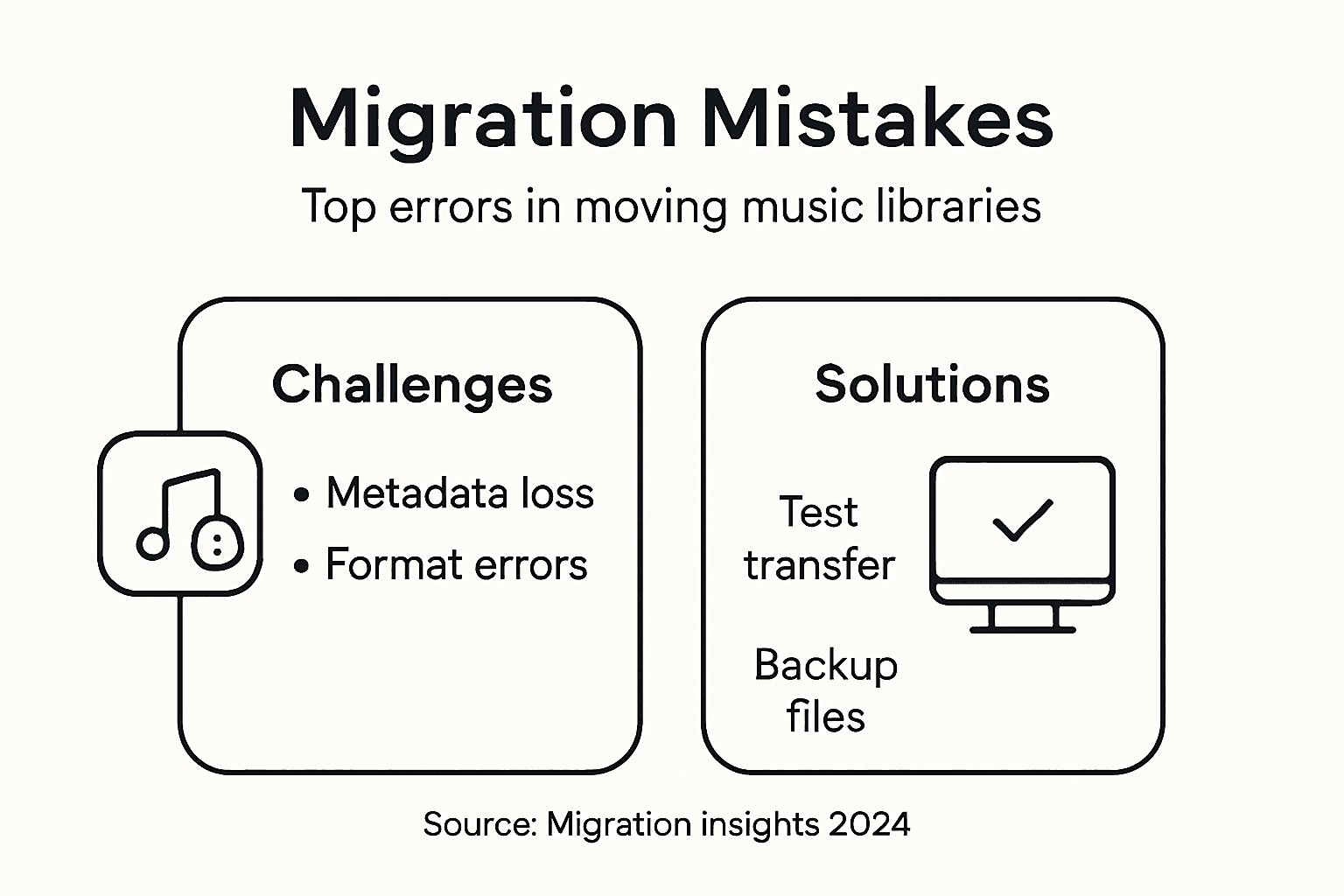
Os erros técnicos surgem frequentemente devido a diferenças na forma como cada plataforma trata os metadados e nos algoritmos que utiliza para reconhecer músicas. Os utilizadores deparam-se muitas vezes com faixas duplicadas, versões incorretas de músicas, informações erradas sobre artistas e variações na qualidade de áudio que podem afetar significativamente a experiência de migração. Os erros mais graves podem resultar de formatos de ficheiro incompatíveis, restrições regionais de licenciamento musical e falhas na preservação da estrutura das playlists entre serviços de streaming.
Reduzir os riscos da migração exige uma abordagem estratégica que combine planeamento cuidadoso, pesquisa aprofundada e utilização de ferramentas de transferência especializadas. Para uma migração bem-sucedida, é necessário compreender as limitações técnicas específicas de cada plataforma, manter cópias de segurança completas e verificar sistematicamente os resultados das transferências. Os profissionais da música devem adotar uma abordagem metódica que inclua a pré-visualização dos conteúdos transferidos, a comparação das playlists para confirmar a sua integridade e a utilização de várias estratégias de cópia de segurança para evitar possíveis perdas de dados.
Dica de especialista: Crie um inventário detalhado da sua biblioteca de música antes da migração e faça uma transferência de teste com um pequeno conjunto de playlists para identificar possíveis problemas de compatibilidade antes de transferir tudo.
Simplifique a migração da sua biblioteca de música com o FreeYourMusic.com
Transferir a sua coleção de música entre plataformas de streaming pode ser complexo e desgastante. Como explica o artigo "Migração de bibliotecas de música: como garantir uma transição sem problemas", desafios como discrepâncias nos metadados, erros na correspondência de músicas e dificuldades em preservar a estrutura das playlists causam frequentemente frustração a quem procura manter intacta a sua experiência musical. Precisa de uma solução fiável que resolva estes problemas automaticamente e proteja as suas playlists e o seu histórico de audição.
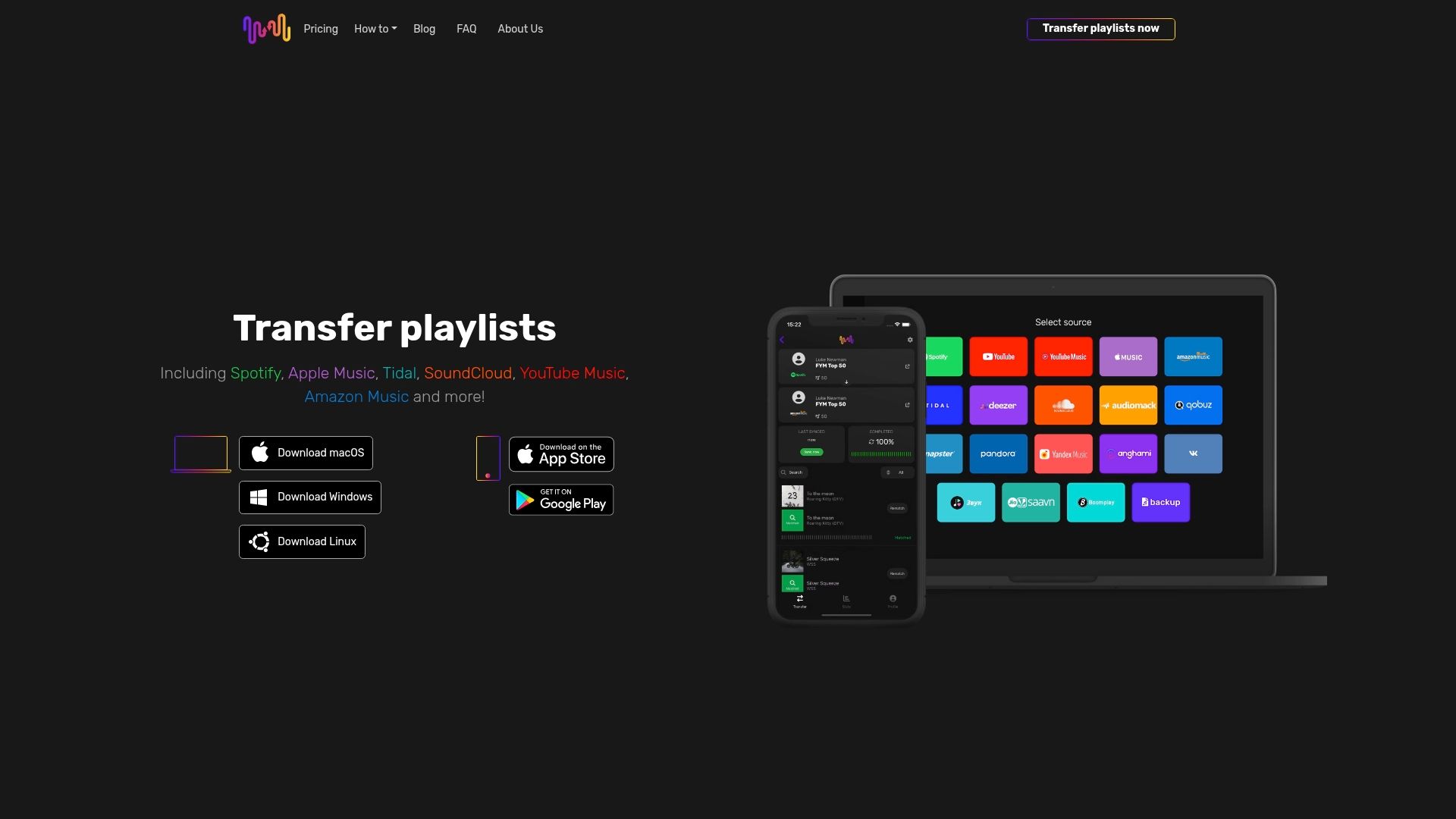
O FreeYourMusic.com oferece uma plataforma potente e fácil de utilizar, concebida para eliminar estes problemas. Com algoritmos avançados de correspondência de músicas, opções de cópia de segurança na nuvem e suporte para um número ilimitado de playlists em serviços como o Spotify, o Apple Music, o Tidal e outros, pode transferir toda a sua biblioteca com confiança, sem perder qualquer detalhe. Deixe de se preocupar com a compatibilidade ou a exatidão dos dados e comece logo a desfrutar da sua música no novo serviço de streaming.
Tudo a postos para migrar a sua música sem esforço, com transferências seguras e precisas?
Descubra como é fácil manter as suas playlists cuidadosamente selecionadas e a sua experiência de audição personalizada. Visite agora o FreeYourMusic.com e dê hoje o primeiro passo para mudar de serviço de streaming sem problemas. Explore o nosso site para saber mais sobre as vantagens da compatibilidade entre plataformas de streaming de música e descobrir como funciona a nossa tecnologia.
Perguntas frequentes
O que é a migração de bibliotecas de música?
A migração de bibliotecas de música é o processo de transferir playlists cuidadosamente selecionadas, coleções de músicas e preferências de audição de uma plataforma de streaming para outra, garantindo que os utilizadores não perdem os seus arquivos musicais durante a mudança.
Quais são os desafios mais comuns na migração de bibliotecas de música?
Os desafios mais comuns incluem inconsistências nos metadados, restrições regionais de conteúdos, diferenças na formatação das playlists e padrões distintos de qualidade de áudio, que podem dificultar a transferência de bibliotecas entre serviços de streaming.
Como posso garantir uma migração bem-sucedida da minha biblioteca de música?
Para garantir uma migração bem-sucedida, crie uma cópia de segurança das suas playlists, utilize ferramentas de transferência especializadas com funcionalidades sólidas de correspondência de músicas e preservação de metadados e verifique cuidadosamente os resultados para identificar possíveis problemas.
Que cuidados devo ter com a privacidade e a segurança durante a migração da minha biblioteca de música?
É essencial consultar as políticas de privacidade das ferramentas de migração, verificar se utilizam encriptação de ponta a ponta e medidas de autenticação seguras e garantir que mantém o controlo sobre os seus dados pessoais para preservar a privacidade durante a transferência.
Leituras recomendadas
- Free Your Music - Como funciona a sincronização de bibliotecas de música: transferência de playlists sem problemas
- Free Your Music - Processo de transferência de bibliotecas de música: guia completo
- Free Your Music - Conheça as vantagens da migração de playlists
- Free Your Music - Conheça as boas práticas de migração de playlists
As suas playlists pertencem-lhe.
Pare de reconstruir à mão. Mova tudo em minutos e leve a sua música para onde quer que vá.
Descarregar grátis →SongsBrew — a nossa newsletter de música gratuita
Uma vantagem gratuita para os utilizadores do FYM. Dicas, playlists, sem spam.