Role of Automation in Playlist Management Efficiency

Every independent DJ knows the challenge of keeping playlists fresh when switching between platforms like Spotify or Apple Music. Seamless playlist management matters because audiences expect smooth transitions, consistency, and unique curation wherever you play. With automation in playlist management powered by advanced machine learning and real-time personalization, curating and transferring playlists has become more efficient and adaptable across digital services, letting you focus on creative mixing and musical discovery.
Table of Contents
- Defining Automation In Playlist Management
- Types Of Playlist Automation Tools
- How Automation Streamlines Music Workflows
- Cross-Platform Syncing And Matching Processes
- Common Pitfalls When Automating Playlists
Key Takeaways
| Point | Details |
|---|---|
| Understanding Playlist Automation | Playlist automation uses advanced algorithms to personalize music selection and create dynamic listening experiences. |
| Diverse Tool Types | Different playlist automation tools utilize collaborative, content-based, context-based, and hybrid approaches for varied user engagement. |
| Streamlined Music Workflows | Automation significantly reduces manual effort in playlist creation while enhancing user experiences through real-time recommendations. |
| Addressing Ethical Challenges | Users and developers should monitor algorithmic biases and promote musical diversity to ensure fair exposure for all artists. |
Defining Automation in Playlist Management
Automation in playlist management represents a sophisticated technological approach to transforming how music enthusiasts curate and expand their digital music collections. At its core, this process leverages advanced computational techniques to intelligently recommend and organize songs across streaming platforms.
The fundamental objective of playlist automation involves optimizing music selection through machine learning by employing complex algorithms that analyze user preferences and musical characteristics. These systems go beyond simple recommendation engines, instead creating dynamic, personalized musical experiences that adapt in real-time to individual listening patterns.
Key components of playlist management automation include:
- Intelligent song recommendation algorithms
- Automatic playlist continuation techniques
- Machine learning-driven preference matching
- Real-time musical preference analysis
- Dynamic playlist generation and modification
Modern automation strategies utilize sophisticated techniques like reinforcement learning to simulate sequential decision-making processes. Simulation-based approaches allow platforms to generate playlists that maximize user satisfaction without direct experimentation on listeners.
The ultimate goal of playlist management automation transcends mere song selection - it aims to create seamless, personalized musical journeys that feel intuitive and engaging. By understanding individual listening habits and musical preferences, these systems can craft experiences that feel almost magically tailored to each user.
Pro tip: Experiment with multiple automation tools to find the playlist management approach that best matches your unique musical taste and listening style.
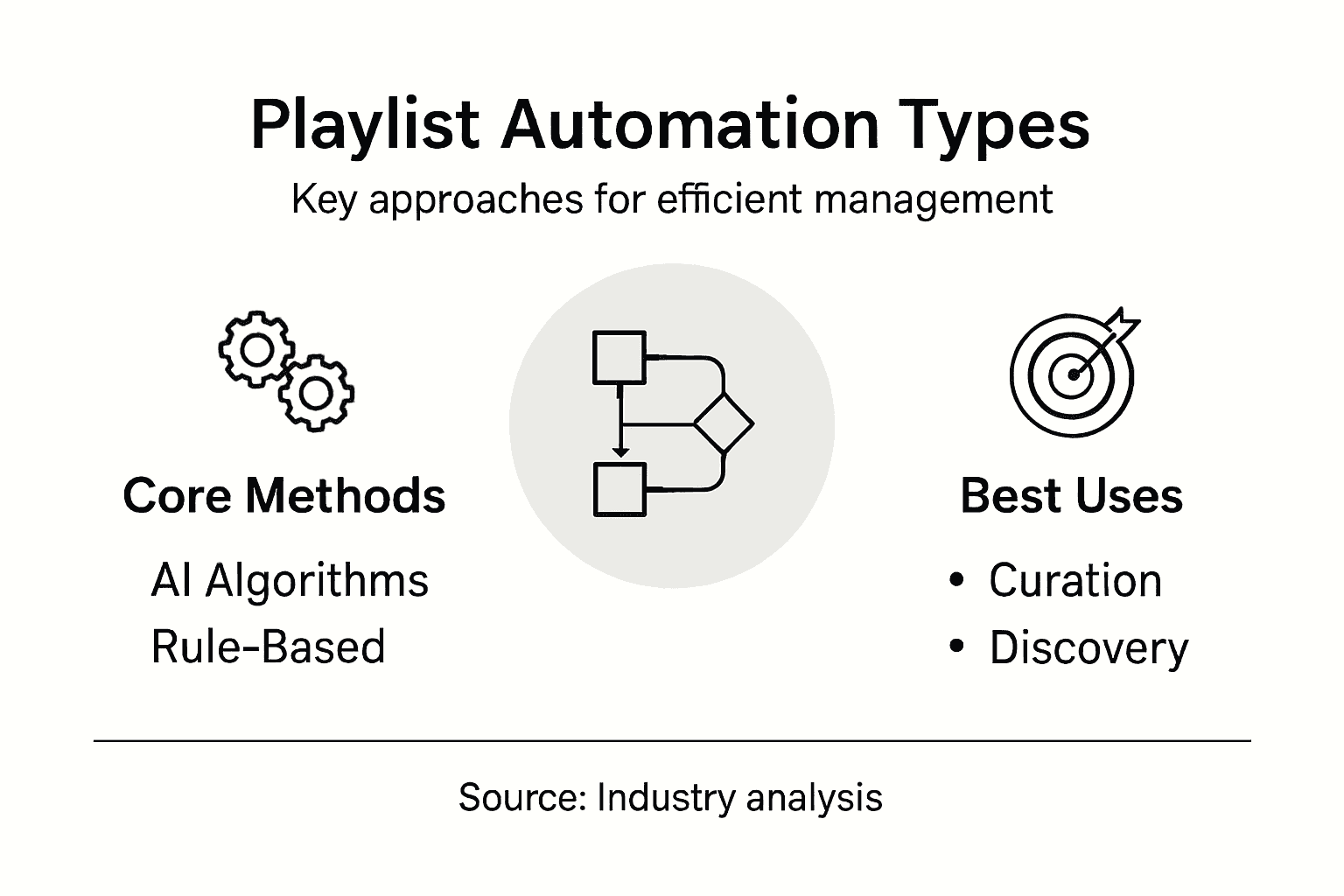
Types of Playlist Automation Tools
Playlist automation tools represent a sophisticated technological ecosystem designed to streamline music curation and enhance listener experiences across digital platforms. These tools leverage advanced computational techniques to intelligently manage, recommend, and organize musical collections with unprecedented precision and personalization.
Recommendation methods vary significantly across different automation platforms, creating diverse approaches to playlist generation. The primary categories of playlist automation tools include:
- Collaborative Filtering Tools: Analyze user behavior and preferences by comparing listening patterns across multiple users
- Content-Based Filtering Systems: Evaluate musical characteristics like genre, tempo, and acoustic features
- Context-Based Automation: Consider environmental and situational factors like time of day, mood, and activity
- Hybrid Recommender Platforms: Combine multiple methodological approaches for enhanced personalization
Modern playlist automation technologies utilize advanced neural network architectures to create increasingly sophisticated recommendation systems. These tools integrate complex data streams, including user interaction history, musical metadata, and real-time listening behaviors to generate dynamic and adaptive playlist experiences.

The technological sophistication of playlist automation tools continues to evolve, with emerging systems capable of understanding nuanced musical preferences and creating almost intuitive musical journeys. By leveraging machine learning and complex algorithmic frameworks, these tools transform how music enthusiasts discover, curate, and enjoy their digital music collections.
Here's a concise comparison of key playlist automation tool types and their unique advantages:
| Tool Type | Core Approach | Best For | Main Limitation |
|---|---|---|---|
| Collaborative Filtering | Uses group listening patterns | Discovering popular tracks | May ignore musical uniqueness |
| Content-Based Filtering | Analyzes song traits and metadata | Refining specific genres | Struggles with new releases |
| Context-Based Automation | Adapts to user context or environment | Mood-based playlists | Limited by context detection |
| Hybrid Recommender | Blends multiple algorithms | Deep, personalized mixes | Complex setup and tuning |
Pro tip: Experiment with multiple playlist automation tools to understand how different algorithms interpret and predict your unique musical taste.
How Automation Streamlines Music Workflows
Music workflow automation represents a transformative technological approach that fundamentally reimagines how digital music management and curation processes operate. By integrating intelligent algorithms and advanced computational techniques, these systems dramatically reduce manual effort while enhancing overall user experience and musical discovery.
Artificial intelligence dramatically optimizes music workflows across multiple dimensions of music consumption and playlist management. The primary benefits of automation include:
- Accelerated playlist generation processes
- Personalized music recommendations
- Real-time adaptive listening experiences
- Enhanced user engagement strategies
- Reduced manual curation efforts
Automated playlist management systems leverage sophisticated technologies to create more interactive and efficient user experiences. Advanced streaming platform technologies enable seamless playlist creation, manipulation, and sharing across multiple platforms, replacing traditional manual processes with intelligent, context-aware solutions.
The technological evolution of music workflow automation continues to push boundaries, transforming how listeners interact with digital music platforms. By integrating complex machine learning algorithms, real-time data analysis, and user preference tracking, these systems create increasingly intuitive and personalized musical experiences that adapt dynamically to individual listener preferences.
Pro tip: Regularly update your music automation tools and experiment with different recommendation algorithms to continuously refine your digital music experience.
Cross-Platform Syncing and Matching Processes
Cross-platform music synchronization represents a sophisticated technological challenge that enables seamless playlist management across diverse streaming services. This complex process involves intricate algorithmic techniques designed to preserve musical experiences while navigating the unique architectural differences between various digital music platforms.
Knowledge graph-based synchronization systems enable sophisticated playlist matching by integrating heterogeneous data sources. The critical components of effective cross-platform syncing include:
- Comprehensive metadata mapping
- Intelligent song fingerprinting
- Preference profile translation
- Real-time listening habit consolidation
- Semantic music attribute alignment
Advanced machine learning models facilitate scalable playlist continuation strategies that maintain musical coherence across different streaming environments. These sophisticated frameworks analyze multiple dimensions of musical characteristics, including genre, tempo, acoustic properties, and user listening history to ensure accurate playlist translation.
The technological complexity of cross-platform synchronization goes beyond simple song matching. These systems must navigate intricate challenges like varied metadata standards, different encoding formats, and platform-specific recommendation algorithms, creating intelligent bridges between seemingly incompatible musical ecosystems.
Pro tip: Always maintain backup copies of your playlists and verify synchronization results to ensure complete and accurate music library transfers.
Common Pitfalls When Automating Playlists
Automated playlist management introduces complex technological challenges that can inadvertently compromise musical discovery and user experience. Despite sophisticated algorithmic capabilities, these systems are not immune to significant operational and ethical limitations that can fundamentally impact music consumption patterns.
Algorithmic biases significantly impact music recommendations across digital streaming platforms. The most critical pitfalls include:
- Reduced musical diversity
- Overrepresentation of mainstream artists
- Limited exposure for independent musicians
- Potential reinforcement of listener echo chambers
- Unintentional genre or cultural discrimination
The technical complexity of playlist automation reveals multiple systemic challenges. Automated recommendation systems create potential ethical risks that extend beyond simple playlist generation, including privacy concerns and potential legal complications arising from opaque algorithmic decision-making processes.
Navigating these pitfalls requires a nuanced approach that balances technological efficiency with artistic integrity. Music lovers and platform developers must remain vigilant, continuously auditing and refining automation systems to ensure they promote genuine musical exploration and support diverse artistic ecosystems.
The following table summarizes frequent pitfalls in automated playlist management and practical strategies to address them:
| Pitfall | Impact on Listening | Recommended Solution |
|---|---|---|
| Reduced diversity | Limits exposure to new music | Manually add varied artists |
| Echo chamber formation | Reinforces narrow tastes | Use genre-expanding tools |
| Privacy concerns | Risks personal data leakage | Review platform privacy settings |
| Overreliance on mainstream | Overshadows independents | Support emerging artist playlists |
Pro tip: Regularly review and manually adjust your automated playlists to maintain musical diversity and challenge algorithmic echo chambers.
Streamline Your Playlist Management with Seamless Automation
Managing playlists across different music streaming platforms can feel overwhelming especially when automation challenges like inconsistent syncing and incomplete song matching arise. The article highlights common pain points such as the need for accurate cross-platform synchronization and preserving playlist structure without losing musical diversity or having to rebuild collections manually. This is where automation must go beyond simple recommendation algorithms to truly enhance your listening experience.
FreeYourMusic.com offers an intuitive solution designed to eliminate these frustrations. Our platform specializes in effortless playlist migration and synchronization across Spotify, Apple Music, Tidal, YouTube Music, Amazon Music, and more. With features like cloud backup, unlimited playlist transfers, and high-precision song matching, you gain full control over your music library while preserving the integrity and order of your playlists.
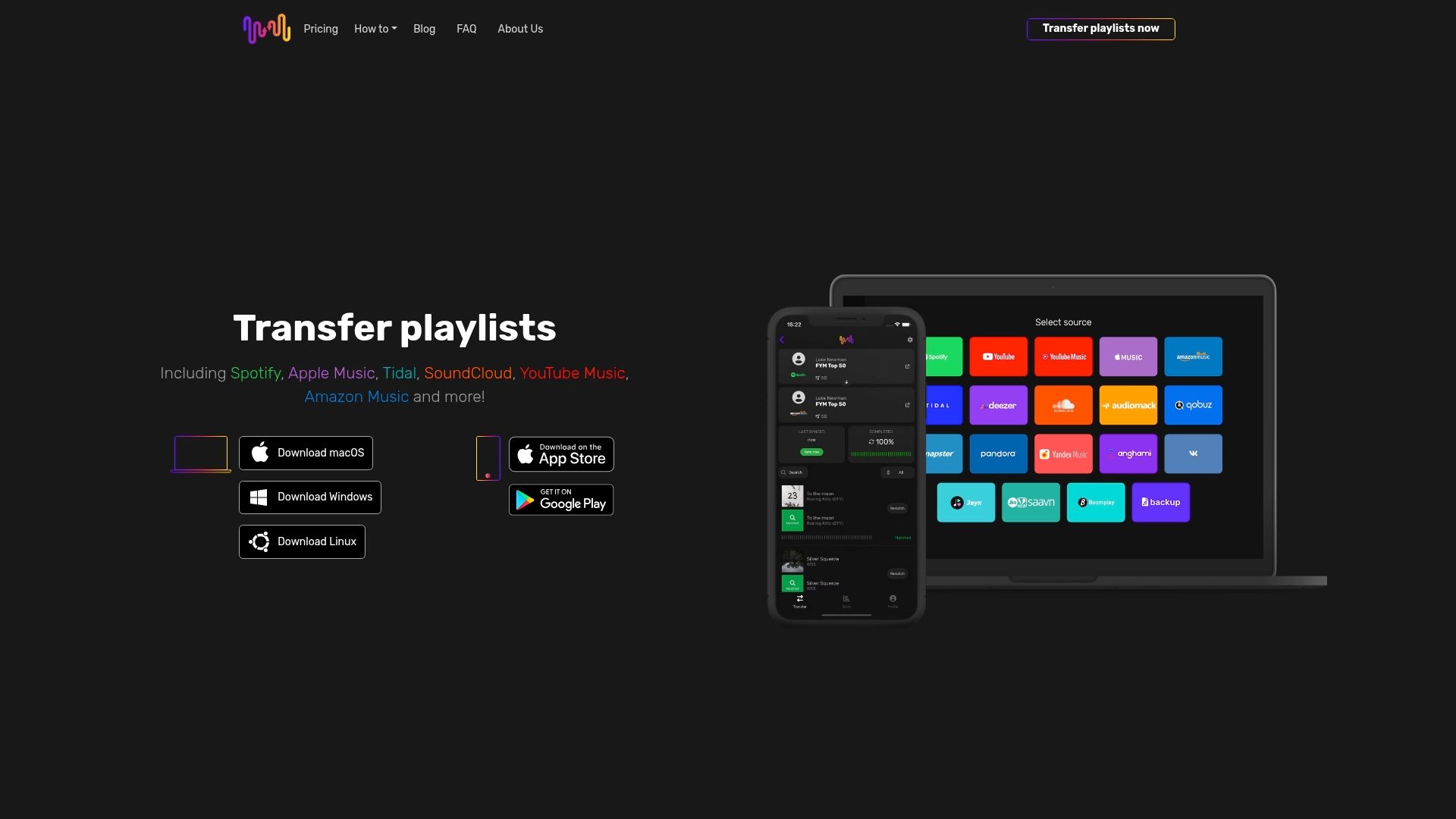
Take control of your automated playlist management today and experience the true power of seamless cross-platform syncing. Do not let technology barriers limit your music enjoyment. Visit FreeYourMusic.com now and discover how easy it is to migrate your playlists without missing a beat. Explore our multi-account support and auto-syncing features to keep your digital music collection perfectly up to date and ready whenever you want to listen.
Frequently Asked Questions
What is automation in playlist management?
Automation in playlist management leverages advanced computational techniques to intelligently recommend and organize songs, optimizing music selection through machine learning and creating personalized musical experiences.
How do playlist automation tools enhance music discovery?
These tools use various recommendation methods, such as collaborative filtering and content-based filtering, allowing users to discover new music tailored to their preferences, thus enriching their listening experience.
What are common pitfalls of using automated playlist management systems?
Common pitfalls include reduced musical diversity, overrepresentation of mainstream artists, and potential echo chambers that limit exposure to new and independent musicians.
How can I maintain musical diversity while using automation tools?
To maintain diversity, regularly review and manually adjust your automated playlists, add varied artists and genres, and utilize genre-expanding tools to challenge algorithmic biases.
Recommended


Your playlists belong to you.
Stop rebuilding by hand. Move everything in minutes and take your music wherever you go.
Download free →SongsBrew — our free music newsletter
A free perk for FYM users. Tips, playlists, no spam.