Advantages of Multi-Account Music Platforms

Managing playlists across Spotify, Apple Music, Tidal, and YouTube Music often means hours lost to repetitive tasks and scattered audience engagement. For independent creators and curators in North America, this fragmented approach can limit growth and dilute your presence. With multi-account music platforms serving as central distribution systems, you can synchronize and migrate playlists effortlessly, ensuring your music reaches every listener wherever they stream.
Table of Contents
- What Multi-Account Music Platforms Are
- Cross-Platform Reach and Audience Growth
- Efficient Playlist Management and Syncing
- Monetization, Analytics, and Revenue Control
- Risks, Limitations, and Best Practices
Key Takeaways
| Point | Details |
|---|---|
| Multi-Account Platforms Improve Workflow | Multi-account platforms streamline playlist management by allowing users to sync playlists across all streaming services automatically, saving significant time. |
| Consistent Presence Drives Audience Engagement | Maintaining identical playlists on different platforms enhances visibility and appeals to diverse listener demographics without losing audience engagement. |
| Analytics Centralization Enhances Revenue Strategy | Multi-account platforms provide consolidated analytics, helping creators track performance and optimize revenue across various streaming services. |
| Be Aware of Risks and Best Practices | Users must understand platform policies and maintain manual oversight to ensure compliance, data security, and algorithmic fairness while leveraging automation. |
What Multi-Account Music Platforms Are
Multi-account music platforms are digital services that allow you to manage multiple streaming accounts simultaneously across different services. These platforms function as bridges, connecting your Spotify, Apple Music, Tidal, YouTube Music, Amazon Music, and other streaming accounts in one unified space.
Think of them as central hubs rather than replacement services. You maintain your original accounts and subscriptions on each platform. The multi-account tool simply gives you access and control from a single dashboard.
Core Function
The primary purpose is playlist synchronization and migration. When you build a playlist on one service, multi-account platforms let you automatically replicate it across all your other accounts with a few clicks.
Key capabilities include:
- Transferring entire playlist collections between platforms
- Syncing newly added songs across multiple accounts in real-time
- Preserving song order and playlist structure during transfers
- Matching songs accurately, even when catalog names differ slightly
- Creating automatic backups of your music libraries
Multi-account platforms operate as central distribution systems that enable independent creators to maintain consistent presence across streaming ecosystems.
Why Independent Creators Need This
As an independent artist or curator managing multiple streaming accounts, you face a real problem. Each service has its own playlist structure, audience, and technical requirements. Building identical playlists manually on five different platforms takes hours.

Multi-account platforms eliminate this repetitive work. You create your playlist once, then deploy it everywhere simultaneously.
How It Works in Practice
The process is straightforward. Connect your streaming accounts to the platform using secure authentication. Select which playlists you want to sync. Choose your target services. The platform handles song matching and transfers automatically.
Updates happen in real-time with auto-sync enabled. Add a track to your Spotify playlist, and it appears on Apple Music, Tidal, and YouTube Music within minutes.
Why This Matters for Your Workflow
Managing multiple streaming platforms without this technology fragments your audience engagement. Your listeners scattered across different services see different playlists. Your promotional strategy lacks consistency.
Multi-account platforms consolidate your presence, ensuring your carefully curated collections reach listeners regardless of their preferred service.
Pro tip: Start by syncing your most important playlists first, then gradually add others as you understand the tool's matching accuracy for your music library.
Cross-Platform Reach and Audience Growth
Your audience is fragmented across streaming platforms. Some listeners prefer Spotify. Others use Apple Music or YouTube Music exclusively. Without a coordinated strategy, you're leaving listeners behind.
Multi-account platforms solve this by amplifying your presence everywhere simultaneously. When you maintain consistent playlists across multiple services, you tap into each platform's unique user base.
How Multi-Platform Presence Drives Growth
Every streaming service has different listener demographics and engagement patterns. Spotify dominates in certain markets. Apple Music thrives in others. YouTube Music captures casual listeners searching for music. By maintaining presence on all platforms, you capture listeners regardless of where they stream.
This coordinated cross-platform activity multiplies your potential audience exposure exponentially.
The Numbers Behind Multiple Accounts
Consider the math. If you reach 1,000 listeners on Spotify and 800 on Apple Music through separate playlists, you've captured different audience segments. But if those playlists are identical and discoverable across platforms, you increase replay rates and algorithmic visibility on each service.
Search algorithms on each platform reward consistent, active presence. Cross-platform syncing keeps your playlists fresh and visible everywhere.
Successful independent creators manage distribution across multiple services simultaneously to maximize international reach and fanbase growth.
Building Your Cross-Platform Strategy
Start by identifying which platforms your listeners use most. Then create playlists strategically:
- Maintain identical core playlists across all major platforms
- Update playlists simultaneously to signal activity to algorithms
- Track listener engagement on each platform separately
- Adjust promotional efforts based on platform-specific performance
- Use auto-sync to eliminate manual updating across accounts
Reaching International Audiences
Different regions have platform preferences. North American listeners concentrate on Spotify and Apple Music. European audiences use Tidal more heavily. Asian markets favor YouTube Music and local services.
By maintaining presence everywhere, you're accessible to listeners globally without geographic silos.
Here's a summary of regional music streaming preferences and access strategies:
| Region | Top Platforms | Key Access Strategy |
|---|---|---|
| North America | Spotify, Apple Music | Maintain strong presence |
| Europe | Tidal, Spotify | Localize key playlists |
| Asia | YouTube Music, local apps | Adapt to local services |
| Global | All major platforms | Ensure cross-platform syncing |
Why Consistency Matters
When your playlist exists only on Spotify, your Apple Music listeners can't find it. They get frustrated. They stop checking for new music from you. Multi-account platforms eliminate this friction by ensuring your curated collections exist wherever listeners search.
Pro tip: Sync your playlists monthly and monitor engagement metrics on each platform separately to identify which services drive your strongest listener growth.
Efficient Playlist Management and Syncing
Managing playlists across multiple streaming accounts manually is exhausting. You update Spotify, then remember you need to update Apple Music. Then YouTube Music. Then Amazon Music. Hours vanish into repetitive work.
Multi-account platforms eliminate this friction entirely. They automate synchronization so your playlists stay identical across all services instantly.
The Manual Playlist Problem
Without syncing tools, maintaining consistency becomes nearly impossible. You add a song to one playlist and forget to add it elsewhere. Listeners notice the differences. Your curated experience fragments across platforms.
This inconsistency confuses your audience and wastes your time managing duplicate work.
How Automated Syncing Works
When you enable auto-sync, changes ripple across all connected accounts simultaneously. Add a track to your Spotify playlist, and it automatically appears on Apple Music, Tidal, YouTube Music, and Amazon Music within minutes.
This automation streamlines curator workload by eliminating repetitive manual updates across multiple platforms.
Key Management Features
Efficient playlist management includes several critical capabilities:
- Real-time syncing across unlimited playlists
- Accurate song matching across different platform catalogs
- Preservation of playlist order and structure
- Batch uploading of entire libraries simultaneously
- Cloud backup storage for security
- Selective syncing (choose which playlists to sync)
Time Savings in Practice
Consider your actual workflow. Building a 50-song playlist manually on five platforms takes approximately 4 hours. Using multi-account syncing, you create the playlist once and deploy it everywhere in 10 minutes.
That's 3 hours and 50 minutes recovered every single time you curate new music.
Organizing Multiple Client Accounts
If you manage playlists for multiple artists or brands, syncing becomes even more critical. You might maintain 20 playlists across 5 platforms for different clients. Manual management becomes chaotic.
Auto-sync with organized naming conventions keeps everything coherent and prevents mixing up different accounts.
Consistent user experiences across multiple platforms require seamless playlist synchronization that eliminates manual updating entirely.
Preventing Sync Errors
When you update playlists manually, mistakes happen. Song order changes. Tracks accidentally delete. With automated syncing, your source playlist becomes the single source of truth. Everything else mirrors it perfectly.
This reduces errors dramatically and ensures listeners experience identical playlists everywhere.
Pro tip: Create a "master" playlist on your primary streaming service, then sync it to all others, ensuring you have one authoritative version to manage rather than juggling multiple copies.
Monetization, Analytics, and Revenue Control
Every streaming platform pays differently. Spotify pays one rate. Apple Music pays another. Tidal pays yet another. Without visibility into each platform's performance, you're flying blind financially.
Multi-account platforms give you the analytics control to track earnings, identify your highest-paying platforms, and optimize your revenue strategy accordingly.
Understanding Platform Payment Differences
Monetization rates vary significantly across services. Some platforms pay artists per stream. Others pay based on listener engagement or subscription tier. Your earnings depend entirely on where your listeners stream.
Managing accounts separately means you never see the complete financial picture. You don't know which platforms generate the most revenue.
Centralized Analytics Dashboards
Multi-account platforms consolidate analytics from all connected services into one dashboard. You see listener numbers, stream counts, and revenue data from Spotify, Apple Music, YouTube Music, Amazon Music, and Tidal simultaneously.
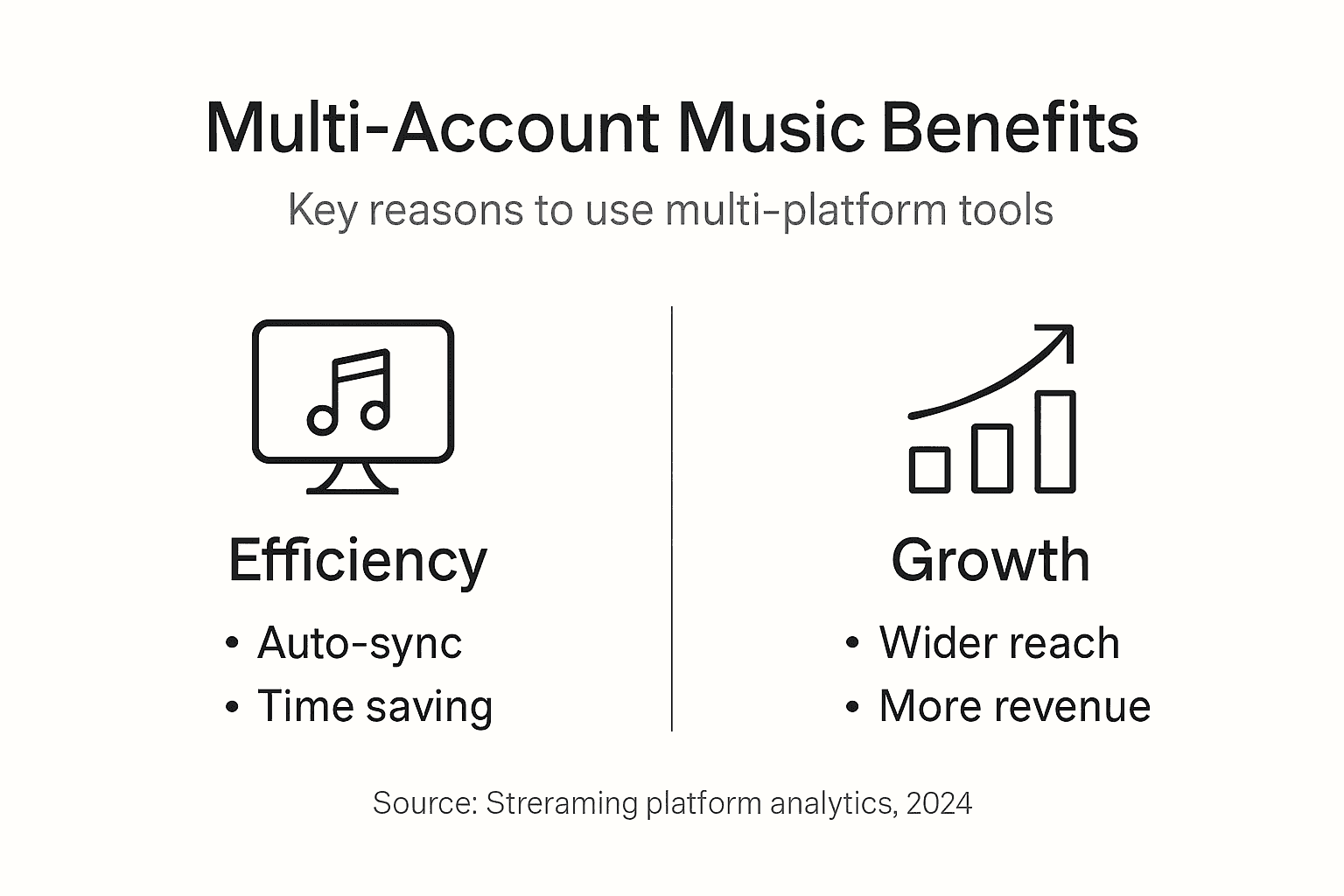
This centralized view reveals patterns you'd miss managing accounts separately.
Tracking Revenue Across Platforms
Here's what you can monitor in one place:
- Total streams per platform
- Revenue earned from each service
- Listener growth rates by platform
- Geographic performance data
- Peak engagement periods
- Song-by-song performance metrics
Strategic Revenue Optimization
With detailed analytics, you make better promotional decisions. If Apple Music generates 40% of your revenue but receives only 20% of your promotion focus, you adjust.
You identify underperforming platforms and decide whether to increase content or shift resources elsewhere.
Diversifying Income Streams
Independent creators often rely on a single platform, creating financial vulnerability. When one platform's algorithm changes, your income plummets. With monetization strategies across multiple accounts, you distribute risk.
Revenue from five platforms is more stable than revenue from one.
Managing Multiple Artist Accounts
If you manage playlists for multiple artists, analytics become critical. You need to track which artists perform best on which platforms. Multi-account analytics let you see this instantly and adjust promotional efforts accordingly.
You prevent low-performing accounts from draining marketing resources.
Detailed analytics enable better monetization control by showing you exactly where revenue comes from and where optimization opportunities exist.
Real Revenue Impact
Understanding platform-specific performance directly affects your bottom line. You might discover that YouTube Music generates higher per-stream payouts than expected. You increase content distribution there.
Or you notice Apple Music listeners skip frequently. You adjust playlist curation to match that audience's preferences.
Pro tip: Export monthly analytics reports from your multi-account platform and compare revenue-per-stream by platform to identify which services deserve your promotional focus.
Risks, Limitations, and Best Practices
Multi-account platforms offer tremendous advantages, but they're not without drawbacks. Understanding the risks helps you use them responsibly and maximize their benefits.
Common challenges include data fragmentation, potential algorithm biases, platform policy violations, and security concerns. Being aware of these helps you navigate them effectively.
Understanding Platform Terms of Service
Each streaming platform has specific rules about account management and syncing. Some platforms explicitly prohibit automated syncing tools. Others allow it with restrictions.
Violating these terms can result in account suspension or permanent bans. Always review current platform policies before connecting accounts.
Data Security and Privacy Risks
When you connect multiple streaming accounts to a third-party platform, you're granting access to personal data. Your listening history, follower lists, and account information become accessible through the syncing service.
Choose platforms with strong encryption, transparent privacy policies, and secure authentication methods.
Algorithmic Biases and Smaller Artists
Algorithmic systems can disadvantage smaller creators when playlists concentrate on major platforms. If you curate playlists using multi-account tools, be intentional about featuring independent artists.
Diversifying your playlist sources prevents algorithmic echo chambers.
Key Risks to Monitor
Be aware of these potential issues:
- Account suspension if platform policies prohibit syncing
- Data breaches if the platform has weak security
- Algorithmic suppression of independent artists
- Over-reliance on single platform ecosystem
- Loss of playlist control if syncing tool shuts down
- Inaccurate song matching across platforms
Best Practices for Responsible Use
Fair platform management requires transparent data practices and coordinated strategies that respect creator rights. Start by reading each platform's terms thoroughly.
Use official authentication methods. Never share login credentials. Enable two-factor authentication on all accounts.
Limiting Over-Centralization
Don't rely entirely on automated syncing. Periodically review your playlists manually to catch errors, verify song matches, and ensure quality.
Keep your most important playlists backed up separately. If the syncing tool fails, you still have your originals.
Below is a side-by-side look at risks and best practices for using multi-account music platforms:
| Risk Area | Main Concern | Best Practice |
|---|---|---|
| Policy Violations | Account suspension or bans | Review platform terms regularly |
| Data Privacy | Exposure of personal information | Use tools with strong encryption |
| Algorithmic Bias | Lower visibility for independent work | Diversify sources and curation |
| Service Outages | Loss of synced playlists | Maintain offline backups |
Playlist Curation Responsibility
When syncing playlists across platforms, remember that each has different audiences and algorithms. A playlist optimized for Spotify might not resonate on YouTube Music.
Consider platform-specific adjustments rather than identical playlists everywhere.
Responsible multi-account management requires transparent practices, understanding platform policies, and maintaining manual oversight alongside automation.
Staying Compliant
Regularly check platform updates and policy changes. Streaming services modify their terms frequently. What's allowed today might be prohibited tomorrow.
Subscribe to updates from platforms you use to catch policy changes early.
Pro tip: Keep detailed records of which playlists sync to which platforms and manually audit them quarterly to catch errors, policy violations, or algorithmic biases before they affect your accounts.
Simplify Your Music Life with Multi-Account Syncing Solutions
Managing multiple streaming accounts and playlists can be overwhelming as the article highlights. The time-consuming task of manually syncing and updating playlists across services often leads to frustration and inconsistency in your music library. You want a seamless way to maintain your curated playlists with accurate song matching and real-time updates so your audiences can enjoy the same experience no matter where they listen.
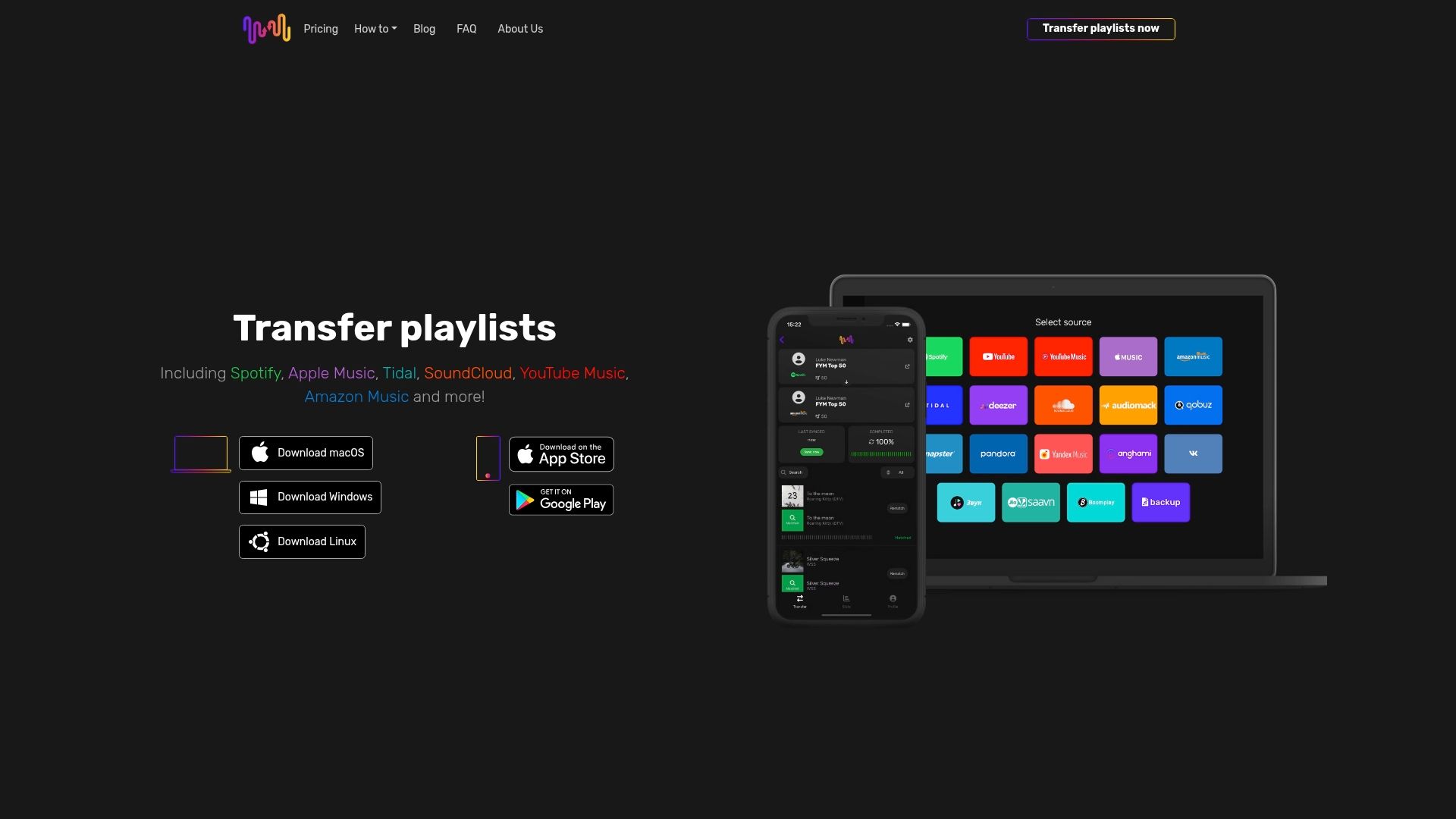
Discover how FreeYourMusic.com addresses these challenges by offering a powerful SaaS platform designed specifically for effortless playlist migration and synchronization across Spotify, Apple Music, Tidal, YouTube Music, Amazon Music, and more. Our user-friendly app preserves your playlist structure and ordering while supporting unlimited playlists and multi-account management. Take control of your music presence today and avoid manual playlist rebuilding forever. Visit FreeYourMusic.com now to start syncing your collections and unlock efficient cross-platform music management.
Frequently Asked Questions
What are multi-account music platforms?
Multi-account music platforms are digital services that allow users to manage multiple streaming accounts across different services from a single dashboard, facilitating playlist synchronization and migration.
How do multi-account music platforms benefit independent creators?
These platforms help independent creators save time and maintain consistency across multiple streaming services by allowing them to sync playlists automatically, thus reaching a broader audience without manual updates.
What key features should I look for in a multi-account music platform?
When choosing a multi-account music platform, look for features such as real-time playlist syncing, accurate song matching, cloud backup options, and the ability to manage playlists for multiple artists or clients efficiently.
How does automated syncing work?
Automated syncing allows changes made to a playlist on one platform to be reflected across all connected accounts almost instantly, ensuring that listeners see consistent music collections without the need for manual updates.
Recommended


Your playlists belong to you.
Stop rebuilding by hand. Move everything in minutes and take your music wherever you go.
Download free →SongsBrew — our free music newsletter
A free perk for FYM users. Tips, playlists, no spam.