Understanding Music Playlist Structure Definition for Users

Music playlists might sound simple, just a bunch of songs put together on your favorite app. But studies show that strategically designed playlists can actually shape your mood, work performance, and even shopping habits. That means the real magic is not just what you listen to but how those songs are arranged—one playlist could change your entire day.
Table of Contents
- What Is Music Playlist Structure?
- The Importance Of Playlist Structure In Music Discovery
- Key Elements Of Playlist Structure: Themes And Flow
- How Music Playlists Impact Listening Experiences
- Practical Applications Of Effective Playlist Structuring
Quick Summary
| Takeaway | Explanation |
|---|---|
| Playlist structure enhances musical experiences | A well-organized playlist transforms random songs into meaningful auditory journeys reflecting personal taste and mood. |
| Thematic coherence is vital | Strategic emotional and conceptual connections between tracks enhance the listener's journey, making playlists more impactful. |
| Algorithms improve music discovery | Modern platforms analyze playlist structures to recommend new music based on user preferences, enhancing exploration. |
| Playlists serve psychological purposes | Curated music can enhance mood, reduce stress, and influence energy, making playlists powerful tools for emotional management. |
| Practical applications span various fields | From professional settings to mental health, effective playlist structuring can optimize performance and emotional states in diverse contexts. |
What is Music Playlist Structure?
A music playlist structure represents the systematic organization and arrangement of songs within a digital collection, defining how tracks are selected, ordered, and presented to listeners. This framework goes beyond simple song compilation, serving as a sophisticated mechanism for musical experience and personal expression.
Core Components of Playlist Structure
At its fundamental level, a music playlist structure encompasses several critical elements that determine how songs interact and flow. Music playlist architecture involves multiple dimensions of musical organization:
- Sequencing: The specific order and progression of tracks
- Thematic Coherence: Underlying conceptual or emotional connections between songs
- Metadata Integration: How individual track information is embedded and utilized
The structure allows users to create personalized musical narratives, transforming random song collections into meaningful listening experiences.
The table below breaks down the core components of playlist structure and briefly explains each element to help clarify their roles within music playlist design.
| Component | Description |
|---|---|
| Sequencing | The specific order and progression of tracks to guide the listener through a musical journey. |
| Thematic Coherence | The emotional or conceptual connections between songs, providing unified narrative and continuity. |
| Metadata Integration | Embedding and utilizing track information such as artist, genre, and energy to enhance organization. |
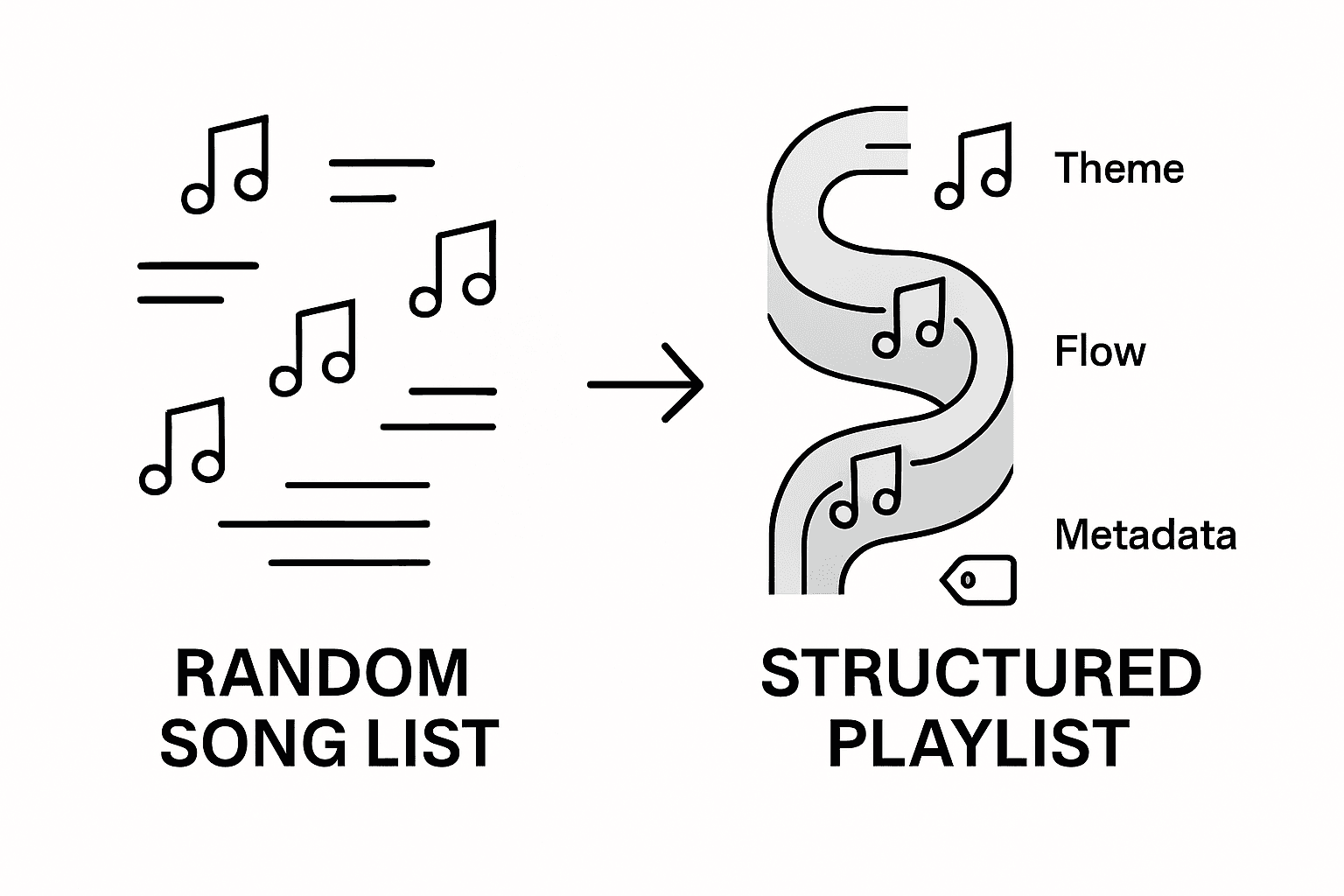 Each playlist becomes a unique sonic journey, reflecting individual taste, mood, and musical preferences.
Functional Dynamics of Playlist Architecture
Playlist structures are not static entities but dynamic frameworks that adapt to user interactions. They manage complex relationships between tracks, considering factors like genre compatibility, tempo transitions, emotional resonance, and acoustic similarities.
Musical algorithms and intelligent playlist management systems analyze these intricate connections, enabling seamless song transitions and creating cohesive listening experiences. Whether curating a workout playlist, romantic evening compilation, or professional DJ set, the underlying structure determines musical coherence and emotional impact.
For music enthusiasts looking to explore playlist transfer options across different streaming platforms, understanding these structural nuances becomes crucial in maintaining musical integrity during service migrations.
The Importance of Playlist Structure in Music Discovery
Playlist structure plays a pivotal role in transforming music consumption from passive listening to an active, personalized exploration of sonic landscapes.
The strategic arrangement of tracks becomes a powerful mechanism for musical discovery, enabling listeners to uncover new artists, genres, and emotional experiences.
Personalization and Algorithmic Exploration
Modern music platforms leverage sophisticated algorithms that analyze playlist structures to recommend new music tailored to individual preferences. Research from music recommendation systems demonstrates how intricate playlist architectures enable intelligent music suggestions by understanding complex relationships between tracks.
Key factors driving music discovery through playlist structures include:
- Contextual Similarity: Identifying tracks with comparable musical characteristics
- Listener Behavior Patterns: Analyzing how users interact with different musical collections
- Emotional Trajectory: Mapping the mood and energy flow across playlist sequences
These algorithmic approaches transform playlist structures from simple song collections into dynamic musical journey maps that continuously adapt to listener preferences.
Cultural and Emotional Significance
Beyond technical mechanisms, playlist structures serve profound cultural and emotional functions. They function as personal narratives, allowing users to express identity, mood, and individual musical tastes through carefully curated track selections. Each playlist becomes a unique sonic fingerprint, representing personal musical journeys and emotional landscapes.
For music enthusiasts seeking to explore playlist transfer across multiple streaming platforms, understanding these intricate structural nuances becomes crucial. The ability to maintain playlist integrity during platform transitions ensures that personal musical stories remain intact, preserving the emotional and cultural significance embedded within each carefully constructed musical collection.
Key Elements of Playlist Structure: Themes and Flow
The construction of a compelling playlist transcends mere song selection, involving intricate considerations of thematic coherence and musical progression. These fundamental elements transform isolated tracks into immersive, narrative sonic experiences that resonate deeply with listeners.
Thematic Foundations of Playlist Design
Themes serve as the conceptual backbone of playlist architecture, providing underlying meaning and emotional continuity. Research on musical playlist design reveals that successful playlists create intricate narratives through strategic track selection and arrangement.
Playlist themes can emerge through multiple dimensions:
- Emotional Coherence: Maintaining a consistent mood or psychological journey
- Genre Exploration: Tracing musical evolution or cross genre connections
- Storytelling: Constructing sequential musical narratives
These thematic approaches enable listeners to experience music as a holistic, meaningful journey rather than a random collection of songs.

Musical Flow and Transitional Dynamics
Musical flow represents the technical and emotional progression between tracks, creating seamless auditory experiences. This involves analyzing complex musical characteristics like tempo, key signature, rhythmic patterns, and acoustic texture to ensure smooth transitions.
Professional playlist curators and music algorithms meticulously map these transitional dynamics, understanding that abrupt shifts can disrupt listener engagement. The goal is to create a sonic landscape where each track feels naturally connected to its predecessors and successors.
For music enthusiasts interested in preserving playlist integrity across different streaming platforms, understanding these nuanced structural elements becomes crucial in maintaining the original musical narrative during platform migrations.
How Music Playlists Impact Listening Experiences
Music playlists are far more than simple collections of songs, functioning as sophisticated psychological and emotional tools that profoundly shape how listeners perceive and interact with music. These curated sonic journeys transform passive audio consumption into active, immersive experiences that engage multiple sensory and emotional dimensions.
Psychological and Emotional Modulation
Psychological research on musical experiences reveals that strategically constructed playlists can significantly influence listener mood, mental state, and emotional trajectory. Playlists serve as powerful emotional regulators, capable of:
- Mood Enhancement: Deliberately selecting tracks to elevate or stabilize emotional states
- Stress Reduction: Creating soundscapes that promote relaxation and mental calm
- Energy Management: Designing sequences that stimulate or soothe psychological energy levels
These psychological mechanisms demonstrate how playlist structures transcend mere entertainment, becoming sophisticated tools for mental and emotional wellness.
Context and Behavioral Transformation
Playlist experiences are deeply contextual, adapting to specific environments, activities, and personal states. Whether accompanying a workout, facilitating work concentration, or setting a romantic atmosphere, playlists dynamically reshape listener experiences by providing precise sonic environments.
The contextual power of playlists lies in their ability to create portable emotional landscapes that can instantly transform mundane moments into meaningful, personalized experiences. Each playlist becomes a carefully crafted sonic intervention, strategically designed to guide listener perception and emotional response.
For music enthusiasts interested in exploring seamless playlist management across multiple platforms, understanding these intricate psychological dimensions becomes crucial in preserving the emotional integrity of musical collections during platform transitions.
Practical Applications of Effective Playlist Structuring
Playlist structuring extends far beyond personal music enjoyment, emerging as a powerful tool across professional, therapeutic, and commercial domains. The strategic arrangement of musical tracks can profoundly influence human behavior, emotional states, and performance outcomes in diverse contexts.
This table categorizes the key practical applications of effective playlist structuring and summarizes their distinct purposes across different real-world environments.
| Application Environment | Purpose of Playlist Structuring |
|---|---|
| Workplace Productivity | Enhances concentration and reduces stress through thoughtfully arranged soundscapes. |
| Fitness Training | Motivates and synchronizes with physical activity by sequencing energetic tracks. |
| Mental Health Support | Supports emotional healing by creating therapeutic musical journeys. |
| Retail/Hospitality Spaces | Influences customer perception and behavior by shaping environmental atmosphere. |
Professional and Wellness Environments
Research on playlist applications demonstrates the sophisticated potential of carefully curated musical experiences. Professional settings increasingly leverage playlist structures to optimize performance and emotional regulation:
- Workplace Productivity: Creating soundscapes that enhance concentration and reduce stress
- Fitness Training: Designing motivational sequences that synchronize with physical intensity
- Mental Health Support: Developing therapeutic musical journeys for emotional healing
These applications reveal how playlist structures transcend entertainment, becoming precision tools for human performance and psychological management.
Commercial and Experiential Design
Businesses and experiential designers recognize playlists as sophisticated environmental engineering tools. Retail spaces, hospitality environments, and public venues strategically use musical structures to influence customer perception, mood, and behavior.
The sonic architecture of a playlist can subtly manipulate consumer emotions, encouraging longer store visits, creating welcoming atmospheres, or driving specific behavioral responses. Each track placement becomes a carefully calculated psychological intervention, transforming mundane spaces into immersive sensory experiences.
For music enthusiasts interested in exploring sophisticated playlist management techniques, understanding these multifaceted applications provides deeper insights into the transformative power of musical curation.
Protect Your Playlist Structures When You Switch Streaming Services
You worked hard to build playlists that capture moods, storylines, and seamless flow, just as described in the article on music playlist structure. Yet transferring these carefully arranged collections between streaming platforms often means losing your precise order, track transitions, and personal touch. Rebuilding from scratch can feel incredibly frustrating and time-consuming.
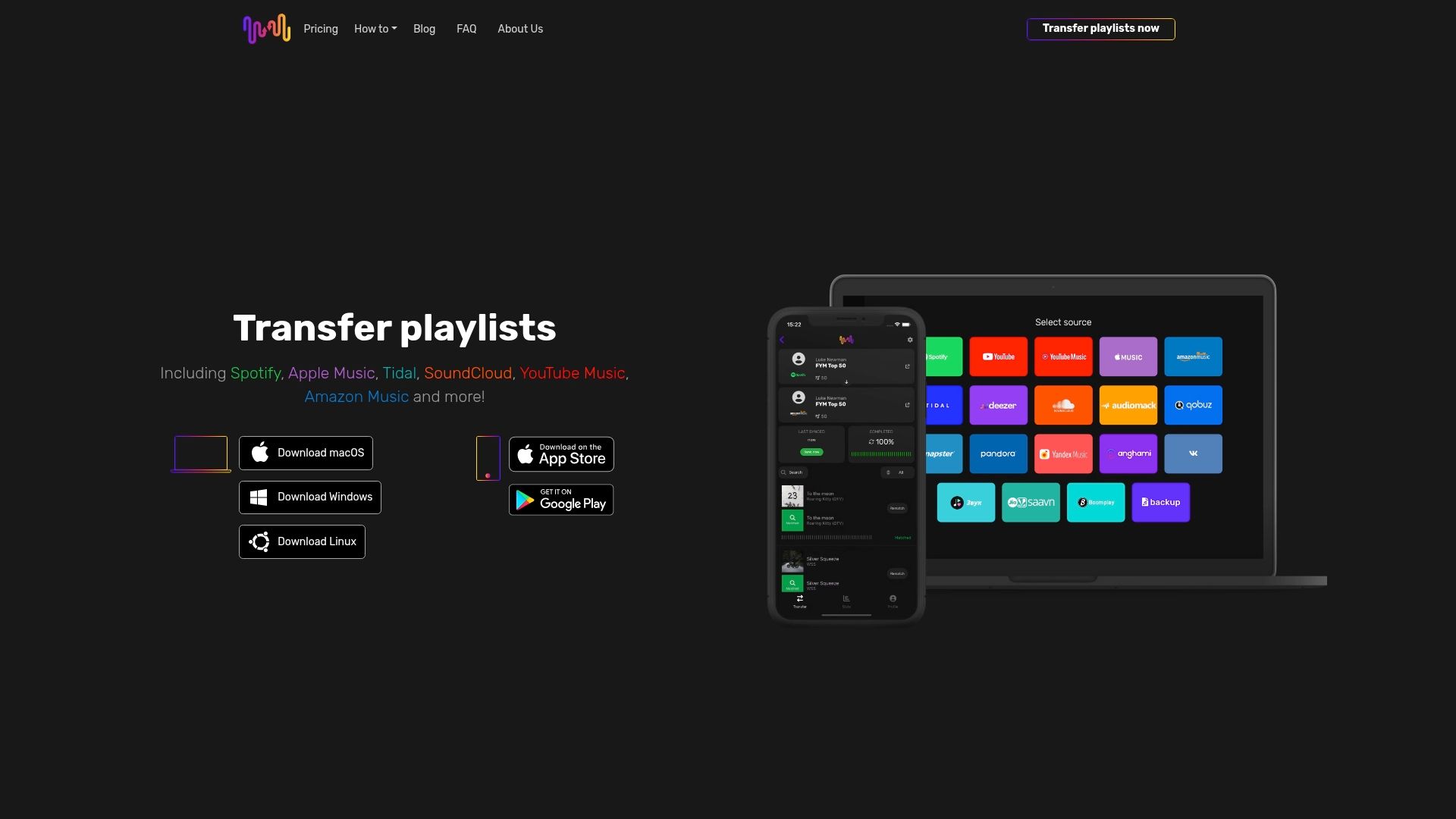
Why risk losing your creative playlist architecture? Use Free Your Music to keep every transition, theme, and musical journey intact across Spotify, Apple Music, Tidal, YouTube Music, and more. Our platform automatically matches songs and maintains your original playlist order so your music always feels like home. Start safeguarding your playlists and experience effortless migration today at https://freeyourmusic.com.
Frequently Asked Questions
What is a music playlist structure?
A music playlist structure is a systematic organization of songs within a digital collection, defining how tracks are selected, ordered, and presented to listeners, enhancing musical experiences and personal expression.
How does thematic coherence impact playlist construction?
Thematic coherence provides underlying meaning and emotional continuity in playlists, allowing tracks to create intricate narratives and resonate deeply with listeners by maintaining consistent moods or exploring genres.
What role do algorithms play in playlist structure and music discovery?
Algorithms analyze playlist structures to recommend new music based on contextual similarity, listener behavior patterns, and emotional trajectories, transforming playlists into dynamic maps of musical exploration.
How can understanding playlist structure improve my music listening experience?
Understanding playlist structure can enhance your listening experience by helping you create cohesive, emotionally engaging playlists, ensuring smooth transitions between tracks, and allowing for personalized musical narratives.
Recommended
- Transfer playlists from YouTube Music to YouTube
- Transfer playlists from YouTube to Audius
- Transfer playlists from Qobuz to Audiomack
- Transfer playlists from YouTube Music to Audius
- Jeff Prices The Definitive Guide To Spotify Royalties - The Corporatethief Beats

Your playlists belong to you.
Stop rebuilding by hand. Move everything in minutes and take your music wherever you go.
Download free →SongsBrew — our free music newsletter
A free perk for FYM users. Tips, playlists, no spam.