What is playlist continuity? A 2026 guide for seamless transitions

Playlist continuity goes beyond song order. It involves tempo, key, mood, and metadata working together to create smooth listening experiences. When you switch streaming platforms, these elements often break down, causing jarring transitions and skipped tracks. This guide helps you understand playlist continuity and maintain it across services.
Table of Contents
- Introduction To Playlist Continuity
- Core Elements Defining Playlist Continuity
- Technical Challenges In Preserving Playlist Continuity
- Common Misconceptions About Playlist Continuity
- Comparison Of Playlist Continuity Handling By Major Streaming Services
- Best Practices For Curating Playlists With Optimal Continuity
- How Tools Like Free Your Music Support Playlist Continuity
- Conclusion: Elevating Listening Experience Through Playlist Continuity
- Enhance Your Playlist Continuity With Free Your Music
Key takeaways
| Point | Details |
|---|---|
| Definition | Playlist continuity maintains smooth, logical flow of tracks through musical and technical elements working together. |
| Platform differences | Streaming services handle metadata and track order differently, creating transfer challenges that disrupt flow. |
| Transfer challenges | Up to 25% of songs can be mismatched during platform migrations, breaking continuity. |
| Solution approach | Combining audio feature analysis, metadata accuracy, and specialized transfer tools preserves playlist flow. |
Introduction to playlist continuity
Playlist continuity maintains smooth, logical flow between tracks through musical and technical harmony. It creates listening experiences where one song naturally leads to the next without jarring interruptions.
Continuity matters because seamless playlist flow influences retention rates by up to 18%. Listeners stay engaged longer when playlists feel intentional rather than random. Poor continuity leads to skips, dissatisfaction, and platform abandonment.
In today's streaming ecosystem, users frequently manage playlists across multiple platforms. Maintaining continuity becomes challenging when different services interpret audio features differently. Each platform has unique metadata standards and matching algorithms.
Key benefits of strong playlist continuity include:
- Mood preservation throughout listening sessions
- Increased session length and user engagement
- Reduced skip rates and listener fatigue
- Enhanced subscriber retention
- Professional playlist curation quality
Understanding continuity helps you create playlists that feel cohesive regardless of where listeners access them. This knowledge becomes critical when migrating playlists between services or curating for multiple streaming platforms.
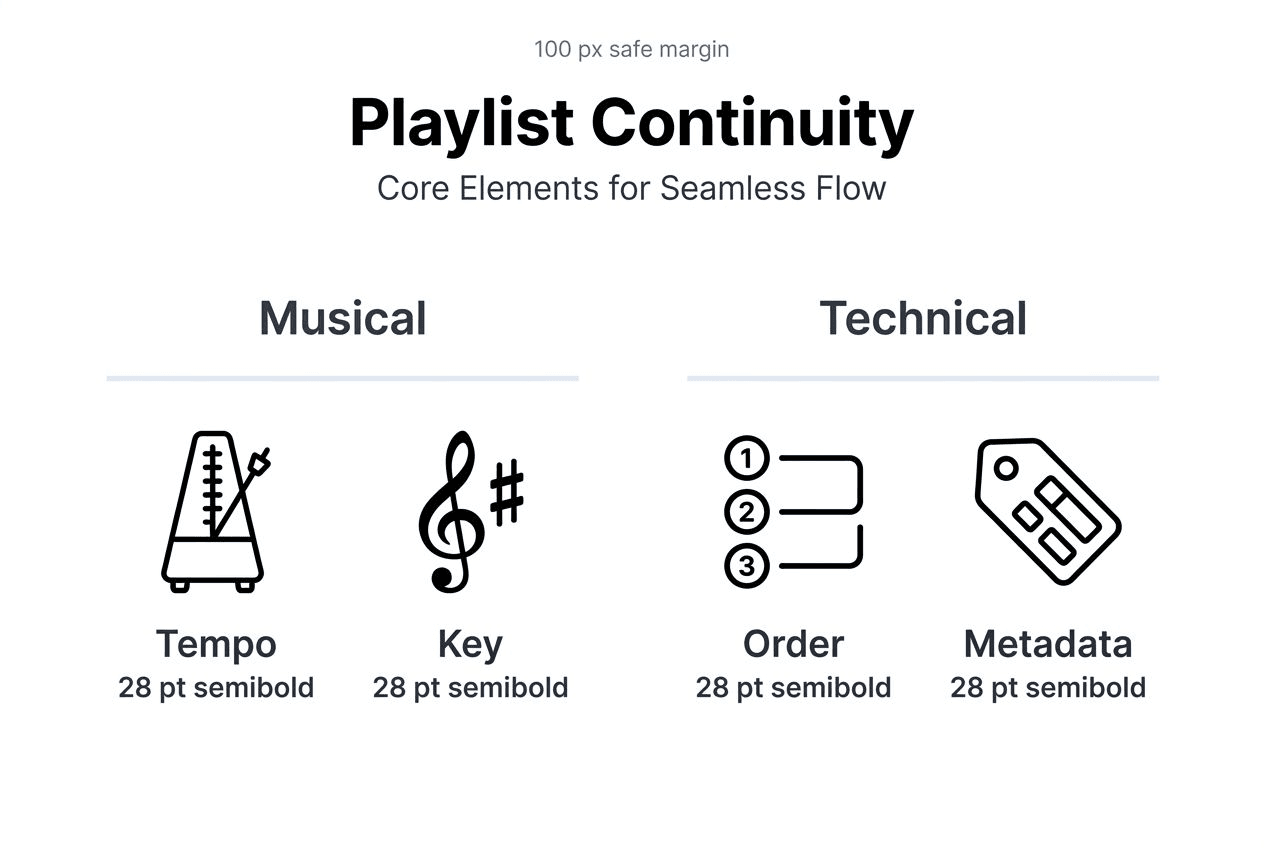
Core elements defining playlist continuity
Musical continuity relies on several audio characteristics working in harmony. Tempo creates rhythmic flow between tracks. Songs transitioning from 120 BPM to 125 BPM feel natural, while jumps from 90 BPM to 160 BPM jar listeners.
Key signatures influence harmonic relationships between consecutive songs. Tracks in complementary keys create pleasing transitions. Clashing keys produce dissonance that breaks flow.
Mood and energy levels must progress logically. A high-energy track following a melancholic ballad feels abrupt unless intentionally designed for contrast. Energy should build gradually or maintain consistency based on playlist purpose.

Track order and metadata form the technical foundation. Metadata includes artist names, song titles, album information, and release dates. Accurate metadata ensures songs match correctly when transferred between services.
Streaming platforms interpret audio features differently despite analyzing the same recordings. Spotify might classify a song as 128 BPM while Apple Music registers 130 BPM. These discrepancies affect algorithmic playlist suggestions and continuity perception.
Audio fingerprinting technology identifies songs by analyzing unique sonic signatures. When fingerprints match correctly, continuity survives platform transfers. Audio feature mismatch accounts for over 40% of continuity complaints.
Metadata quality determines matching accuracy. Incomplete or inconsistent metadata causes songs to appear as unavailable or replaced with incorrect versions. This breaks carefully planned transitions and ruins playlist flow.
Pro Tip: Export playlist metadata before transfers to verify accuracy and identify potential matching issues early.
Technical challenges in preserving playlist continuity
Metadata mismatches create the most common transfer problems. Different platforms use varying metadata standards for identical songs. An artist name formatted as "Artist, The" on one service might appear as "The Artist" on another.
These inconsistencies prevent accurate song identification. The transfer tool cannot confirm both entries reference the same track. Listeners receive incomplete playlists or wrong song versions.
Algorithmic reordering disrupts intended sequences. Some platforms automatically reorganize imported playlists based on popularity, release date, or predicted preference. This destroys carefully crafted transitions and mood progressions.
Up to 25% of songs get mismatched or reordered during typical transfers. The problem intensifies with larger playlists containing hundreds of tracks. Each mismatched song creates ripple effects disrupting surrounding transitions.
Fingerprinting technology fails more often than expected. Live recordings, remasters, and regional releases confuse matching algorithms. A 2026 remaster might replace the original 2010 version you selected for its specific sound characteristics.
Platform standard differences compound these issues:
- Encoding quality variations affect audio fingerprints
- Regional catalog differences limit song availability
- Licensing restrictions prevent certain tracks from appearing
- Version inconsistencies create matching ambiguities
These challenges make manual playlist recreation equally problematic. Curators must verify each song individually and rebuild transitions from scratch. Understanding playlist transfer best practices helps minimize disruptions.
Common misconceptions about playlist continuity
Many believe track order alone preserves continuity. They assume maintaining sequence guarantees smooth flow. This oversimplification ignores the musical elements that create actual listening coherence.
Order matters, but tempo clashes and key mismatches destroy continuity despite correct sequencing. A playlist with perfect order but incompatible audio features feels disjointed.
Another misconception suggests playlist transfers automatically preserve flow. Users expect migration tools to maintain all continuity aspects without intervention. Reality proves different as metadata inconsistencies and platform algorithms interfere.
Some curators ignore audio features entirely, focusing solely on genre or artist grouping. They create thematically consistent playlists that sound jarring because energy levels jump erratically.
Assuming all streaming platforms handle continuity identically leads to disappointment. Each service prioritizes different aspects. What works perfectly on Spotify might feel broken on Tidal.
Key misconceptions to avoid:
- Believing metadata quality does not affect transfers
- Trusting platform algorithms to maintain your intended flow
- Thinking genre matching ensures musical compatibility
- Assuming basic transfer methods preserve all elements
- Expecting identical experiences across all services
Pro Tip: Analyze both track order and audio features using metadata visualization tools before transfers to identify potential continuity breaks.
Effective continuity requires combined attention to musical characteristics and technical accuracy. Neither element alone suffices for seamless listening experiences.
Comparison of playlist continuity handling by major streaming services
Spotify excels at metadata richness and audio feature detection. Its algorithms analyze tempo, key, energy, and danceability with impressive accuracy. However, Spotify sometimes reorders playlists based on listening patterns and engagement predictions.
This algorithmic intervention helps discovery but disrupts curator intent. Your carefully planned flow might get rearranged to prioritize popular tracks or predicted preferences. The platform assumes it knows better than manual curation.
Apple Music better preserves original playlist order during imports and transfers. It respects curator sequencing more reliably than competitors. This strength comes with a tradeoff: rigid metadata requirements cause frequent mismatches.
Apple's strict matching system refuses to approximate when metadata does not align perfectly. Songs become unavailable rather than substituted with close matches. This preserves integrity but creates gaps in playlists.
Tidal focuses on high-fidelity audio quality over continuity features. Its metadata handling proves inconsistent, particularly for lesser-known artists. Order preservation ranks as Tidal's weakest area among major services.
| Platform | Metadata Quality | Order Preservation | Audio Feature Detection | Continuity Impact |
|---|---|---|---|---|
| Spotify | Excellent | Moderate | Excellent | Strong matching, but algorithmic reordering disrupts intent |
| Apple Music | Good | Excellent | Good | Best order preservation, but rigid metadata causes gaps |
| Tidal | Moderate | Weak | Moderate | High-fidelity focus, but inconsistent metadata breaks flow |
User satisfaction varies based on priorities. Curators valuing exact sequencing prefer Apple Music. Those prioritizing comprehensive catalogs and matching accuracy choose Spotify. Audiophiles accept Tidal's continuity limitations for sound quality.
Understanding these differences helps you optimize playlists for specific platforms or choose appropriate transfer strategies.
Best practices for curating playlists with optimal continuity
Building playlists with strong continuity requires systematic analysis and testing. Follow these proven strategies:
-
Analyze tracks for tempo compatibility before sequencing. Group songs within 10-15 BPM ranges to maintain rhythmic flow. Gradual tempo changes feel natural while sudden jumps break immersion.
-
Map key signatures to identify harmonic relationships. Use the Camelot Wheel or similar systems to find complementary keys. Adjacent keys blend smoothly while opposite keys create tension.
-
Maintain consistent mood progressions throughout sections. Build energy gradually or sustain specific emotional tones. Avoid jarring mood shifts unless creating intentional contrast moments.
-
Verify metadata accuracy before platform transfers. Check artist names, song titles, and album information for consistency across services. Clean metadata prevents matching failures.
-
Test playlists through actual listening sessions on target platforms. Identify skips, awkward transitions, and energy inconsistencies. Adjust based on real experience rather than theoretical compatibility.
-
Document your continuity decisions using spreadsheets or playlist management tools. Record tempo, key, energy levels, and transition notes. This documentation helps recreate flow if transfers fail.
-
Create buffer tracks for difficult transitions. Insert intermediate songs that bridge incompatible elements. These connectors smooth otherwise jarring shifts.
-
Review platform-specific algorithms and their impact on your sequencing. Understand how each service might alter your intended flow. Adjust accordingly or choose platforms respecting manual curation.
Pro Tip: Use audio feature visualization tools to create visual maps of your playlist flow, making tempo and energy inconsistencies immediately obvious.
These practices elevate playlist quality from random collections to cohesive listening experiences. Attention to both musical and technical details separates professional curation from casual assembly.
How tools like Free Your Music support playlist continuity
Specialized transfer services address the technical challenges that break playlist continuity. These tools focus on accurate song matching and metadata synchronization rather than basic copying.
Accurate song matching minimizes the mismatches that create gaps and wrong versions. Advanced algorithms compare multiple data points including audio fingerprints, metadata fields, and release information. This comprehensive approach achieves higher success rates than platform-native transfers.
Metadata synchronization preserves playlist structure during migration. The service maintains track order, song relationships, and curator annotations. Your intended flow survives the transfer intact.
Support for multiple platforms enables seamless movement between services. Whether migrating from Spotify to Apple Music, Tidal to YouTube Music, or backing up to files, the process remains consistent. This flexibility helps curators maintain presence across streaming ecosystems.
Key benefits include:
- Seamless user experience during platform switches
- Preservation of large music collections without manual reconstruction
- Reliable handling of complex playlists with hundreds of tracks
- Backup and restoration options protecting against data loss
- Time savings compared to manual recreation
These services prove especially valuable when managing extensive libraries. Recreating hundreds of playlists manually becomes impractical. Automated tools handle the technical complexity while you focus on curation quality.
Understanding playlist transfer best practices combined with proper tools creates the best migration outcomes. Technical solutions handle matching and synchronization while your knowledge guides continuity decisions.
The combination ensures playlists maintain their intended flow regardless of platform. You control the artistic vision while technology manages the technical execution. This partnership produces professional results with minimal disruption.
Conclusion: elevating listening experience through playlist continuity
Playlist continuity transforms random song collections into intentional listening journeys. It combines musical elements like tempo and key with technical accuracy in metadata and sequencing. Both aspects must work together for truly seamless experiences.
Applying the concepts from this guide improves your playlist quality immediately. Analyze audio features, verify metadata, and test actual listening flow. These practices separate amateur compilations from professional curation.
Using specialized tools like Free Your Music mitigates transfer disruptions that normally break continuity. Automated matching and synchronization preserve your creative intent across platforms. Technology handles technical challenges while you focus on artistic decisions.
Thoughtful curation creates playlists that engage listeners and keep them returning. Strong continuity enhances mood, increases session length, and builds loyalty. These benefits apply whether you curate for personal enjoyment or professional purposes.
The streaming landscape continues evolving with new platforms and features. Understanding continuity principles future-proofs your skills. You can adapt to any service while maintaining quality standards.
Enhance your playlist continuity with Free Your Music
Maintaining playlist continuity across streaming platforms becomes effortless with Free Your Music. The service automates migration while preserving the track order and metadata that create seamless flow. Your carefully planned transitions survive intact.
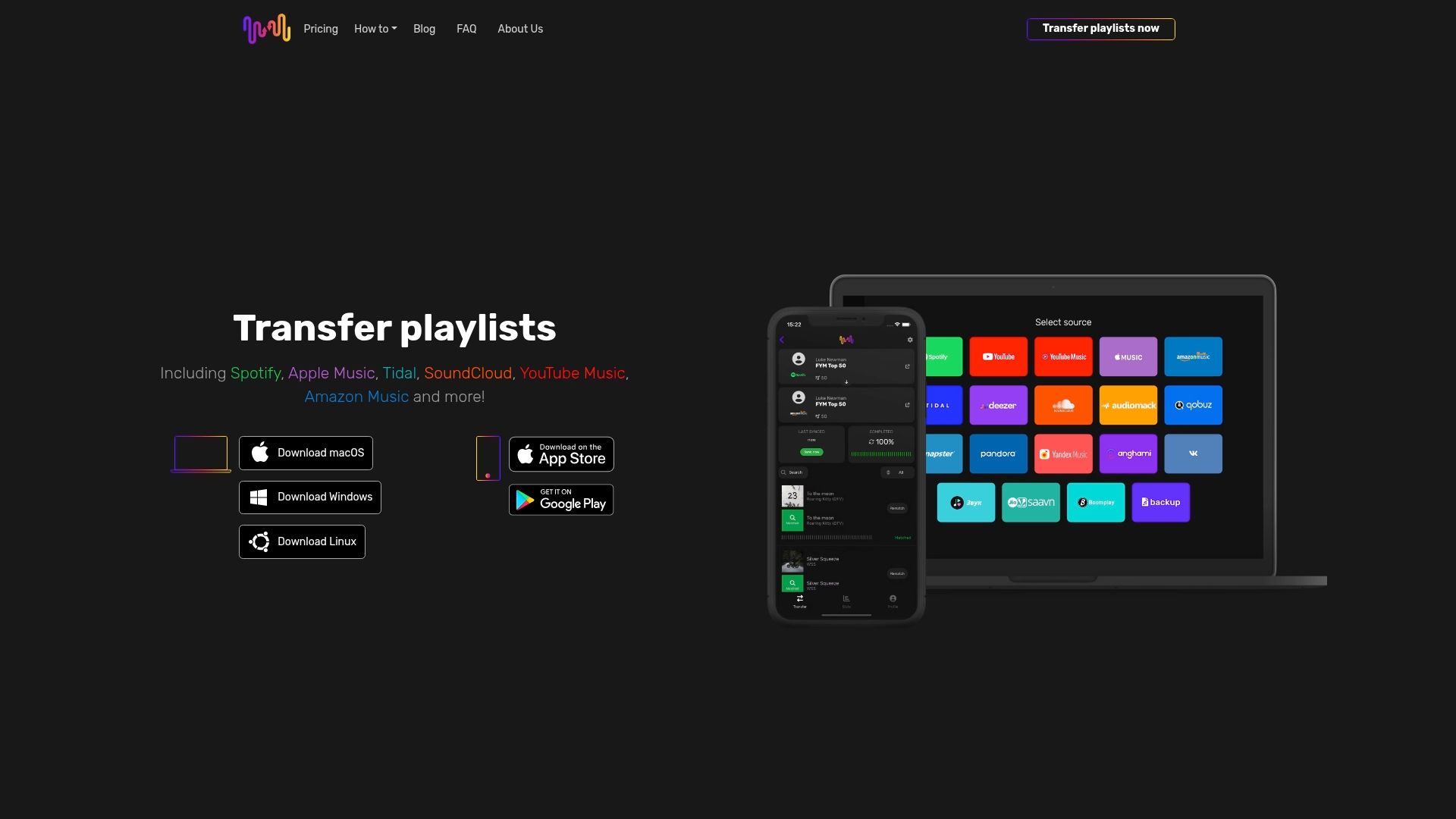
Supporting popular streaming platforms and file backups, Free Your Music handles Spotify, Apple Music, Tidal, YouTube Music, and more. Curators avoid the continuity disruptions that typically plague platform switches. Large music collections transfer reliably without manual reconstruction.
Try Free Your Music to keep your playlists flowing perfectly regardless of platform. Whether switching services or maintaining presence across multiple ecosystems, the tool preserves your creative vision. Transfer your backups or migrate entire libraries with confidence.
FAQ
What is playlist continuity and why does it matter?
Playlist continuity ensures smooth, logical flow between songs through compatible tempo, key, mood, and energy levels. It matters because seamless transitions enhance listening enjoyment, reduce skip rates, and keep users engaged longer. Poor continuity creates jarring experiences that drive listeners away.
How do streaming platforms differ in handling playlist continuity?
Spotify excels at audio feature matching but may algorithmically reorder tracks, disrupting curator intent. Apple Music better preserves original order but has rigid metadata requirements causing matching gaps. Tidal prioritizes sound quality over continuity features, resulting in inconsistent metadata handling and weak order preservation.
Can I maintain playlist continuity when switching streaming services?
Yes, using specialized tools like Free Your Music preserves metadata and track order during transfers. These services employ advanced matching algorithms that maintain your intended flow. Manual copying typically breaks continuity through metadata mismatches and reordering.
What are common mistakes to avoid in playlist continuity?
Relying solely on track order without analyzing tempo, key, or mood compatibility creates disjointed experiences. Using basic transfer methods loses critical metadata that ensures accurate matching. Ignoring actual listening tests prevents identification of awkward transitions and energy inconsistencies that break flow.
Recommended


Your playlists belong to you.
Stop rebuilding by hand. Move everything in minutes and take your music wherever you go.
Download free →SongsBrew — our free music newsletter
A free perk for FYM users. Tips, playlists, no spam.