Why preserving playlist data matters for music lovers
Switching streaming platforms feels exciting until you realize your meticulously curated playlists don't transfer cleanly. The real shock comes when you discover that playlist metadata, including collaborative playlists, followers, comments, descriptions, and cover art, is often lost during transfers. Beyond just song titles, you lose the context, social connections, and organizational structure that made those playlists uniquely yours. Understanding what playlist data actually contains and why preserving it matters protects your listening experience and helps you navigate platform transitions successfully.
Table of Contents
- What Is Playlist Data And Why Does It Matter?
- Challenges In Preserving Playlist Data Across Streaming Platforms
- How Preserving Playlist Data Impacts Your Music Experience And Satisfaction
- Practical Tips For Effectively Preserving Your Playlist Data
- Preserve Your Playlists Effortlessly With Free Your Music
- Frequently Asked Questions About Preserving Playlist Data
Key takeaways
| Point | Details |
|---|---|
| Playlist preservation boosts satisfaction | Maintaining your curated collections ensures continuity and enjoyment when switching platforms. |
| Metadata loss diminishes experience | Losing playlist descriptions, artwork, and social features removes personal and emotional context from your music. |
| Catalog differences create gaps | Regional licensing and library variations mean some songs disappear during transfers. |
| Third-party tools have limitations | Most services replicate only 70% of songs and frequently lose ordering and metadata. |
| Awareness protects your collection | Understanding these challenges helps you choose better migration strategies and backup solutions. |
What is playlist data and why does it matter?
Playlist data encompasses far more than a simple list of song titles. It includes the complete structure and context of your music collections: song sequences, metadata like descriptions and cover artwork, collaborative features, follower counts, and user comments. Each element contributes to the personalized experience streaming platforms deliver.
This data represents your unique listening history, musical preferences, and social connections within the platform ecosystem. When you curate playlists over months or years, you build something deeply personal that reflects your taste, memories, and even relationships with other music enthusiasts. Losing portions of this data during platform switches disrupts the carefully crafted experience you've invested time creating.
Playlist metadata, including collaborative playlists, followers, comments, descriptions, and cover art, is often lost during transfers, stripping away layers of meaning beyond the songs themselves. The emotional connection to a workout playlist isn't just about the tracks but also the motivational description you wrote, the friend who added that perfect final song, and the chronological order that builds energy perfectly.
Understanding playlist transfer challenges before switching platforms helps you take protective measures. Many users only discover what they've lost after completing a migration, when recovering that data becomes impossible or extremely difficult.
Pro Tip: Export your playlists to backup files regularly, capturing not just song lists but also descriptions and notes you've added, creating an independent archive separate from any single platform.
Challenges in preserving playlist data across streaming platforms
Multiple technical and licensing obstacles prevent seamless playlist preservation when moving between music services. These barriers range from fundamental catalog differences to limitations in how platforms structure and share data.
Playlist importing is a significant obstacle for users switching streaming services due to the loss of curated playlists. Streaming platforms maintain different music libraries based on licensing agreements, artist availability, and regional restrictions. A song available on Spotify might not exist on Apple Music, or vice versa, creating immediate gaps in transferred playlists.
Differences in music catalogs and regional restrictions complicate playlist transfers because geographic licensing varies dramatically. An album accessible in the United States might be unavailable in Canada or Europe on the same platform. When you move to a new service, these regional limitations can eliminate entire sections of your collection.
The five most common challenges users encounter include:
- Catalog mismatches where destination platforms lack specific songs, albums, or artists from your original playlists
- Metadata stripping that removes descriptions, cover images, collaborative features, and social engagement elements
- Order disruption where song sequences get scrambled or reorganized during the transfer process
- Version confusion when platforms select different recordings, remasters, or live versions than your originals
- Regional availability issues that block content based on your geographic location or licensing territories
Third-party transfer tools attempt to bridge these gaps but face inherent limitations. Most services replicate approximately 70% of songs while losing the careful ordering and additional context you created. Social features like follower lists, comments from friends, and collaborative additions simply don't transfer at all.
"The technical architecture of streaming platforms prioritizes keeping users within their ecosystem rather than facilitating smooth exits, making comprehensive data preservation an ongoing challenge for music lovers seeking platform flexibility."
Understanding playlist transfer best practices helps you anticipate and mitigate these obstacles before they damage your music library.
How preserving playlist data impacts your music experience and satisfaction
Successfully maintaining your playlist data during platform transitions directly influences how much you enjoy your new streaming service. The continuity of familiar collections, preserved contexts, and intact organization shapes your willingness to explore and commit to a new platform.
Playlist migration directly impacts user satisfaction and engagement across digital platforms. Research demonstrates that users who successfully transfer their curated collections show higher engagement rates, longer subscription retention, and greater overall satisfaction with their new service compared to those who lose significant portions of their libraries.
Preserving metadata maintains the emotional and social connections embedded in your playlists. A road trip playlist isn't valuable just because of the songs but because of the memories attached, the friend who contributed tracks, and the description explaining the journey it soundtracked. When these contextual elements survive migration, your relationship with the music remains intact.
Losing playlists creates friction that discourages platform exploration. Users facing the prospect of manually rebuilding years of curated collections often stick with unsatisfactory services rather than face that overwhelming task. This lock-in effect benefits platforms but damages user experience and choice.
"Studies confirm that playlist preservation during platform migration correlates with 40% higher user satisfaction scores and significantly increased platform loyalty, demonstrating that maintaining music collections is fundamental to positive streaming experiences."
The benefits of playlist migration extend beyond convenience to encompass emotional continuity and reduced switching anxiety. When you know your carefully crafted collections will transfer intact, you feel empowered to choose platforms based on features, pricing, and audio quality rather than feeling trapped by sunk time costs.

Practical tips for effectively preserving your playlist data
Protecting your playlist data requires proactive planning and strategic tool selection. These practical approaches help minimize loss and maximize what survives platform transitions.
Select specialized playlist preservation services rather than generic transfer methods. Tools built specifically for music migration understand the nuances of metadata, ordering, and catalog matching better than manual approaches or basic export functions. Research which services support the platforms you're moving between and what data elements they preserve.
Backup your playlists before initiating any platform switch. Export playlist data in multiple formats, including spreadsheets with song details, metadata notes documenting descriptions and contexts, and native platform formats when available. This redundancy ensures you can recover information if primary migration methods fail.
| Transfer Method | Metadata Support | Accuracy Rate | Best For |
|---|---|---|---|
| Manual recreation | Full control | 100% if careful | Small libraries, maximum precision |
| Platform native tools | Limited | 60-75% | Same-company ecosystem moves |
| Specialized services | Moderate to high | 70-90% | Large libraries, time efficiency |
| Backup and restore | Complete | 100% data capture | Preserving records, future transfers |
Understand catalog differences between your current and target platforms before migrating. Check whether your most valued artists and albums exist on the destination service, particularly for niche genres, independent labels, or regional content. This reconnaissance prevents unpleasant surprises after committing to a new platform.
Key preservation strategies include:
- Document playlist purposes and contexts in external notes before transferring
- Verify regional availability of critical songs and albums on target platforms
- Use multiple transfer methods to cross-check results and fill gaps
- Preserve collaborative playlist contributor information separately
- Schedule transfers during promotional periods when catalog additions are common
Avoid these common mistakes:
- Assuming all songs will transfer without checking catalog compatibility
- Deleting original playlists before verifying successful migration
- Ignoring metadata loss until after completing the platform switch
- Relying solely on automated tools without manual verification
- Forgetting to capture social features and collaborative elements
Pro Tip: Check the cross-platform transfer guide to understand specific compatibility issues between your current and target platforms, then create a prioritized list of playlists to ensure your most valuable collections receive extra attention during migration.
Review playlist migration best practices to develop a comprehensive migration strategy that balances speed, accuracy, and metadata preservation based on your specific needs and library size.
Preserve your playlists effortlessly with Free Your Music
Switching streaming platforms doesn't have to mean losing the music collections you've spent years building. Free Your Music specializes in seamless playlist migration across all major streaming services, preserving your curated libraries with minimal data loss.
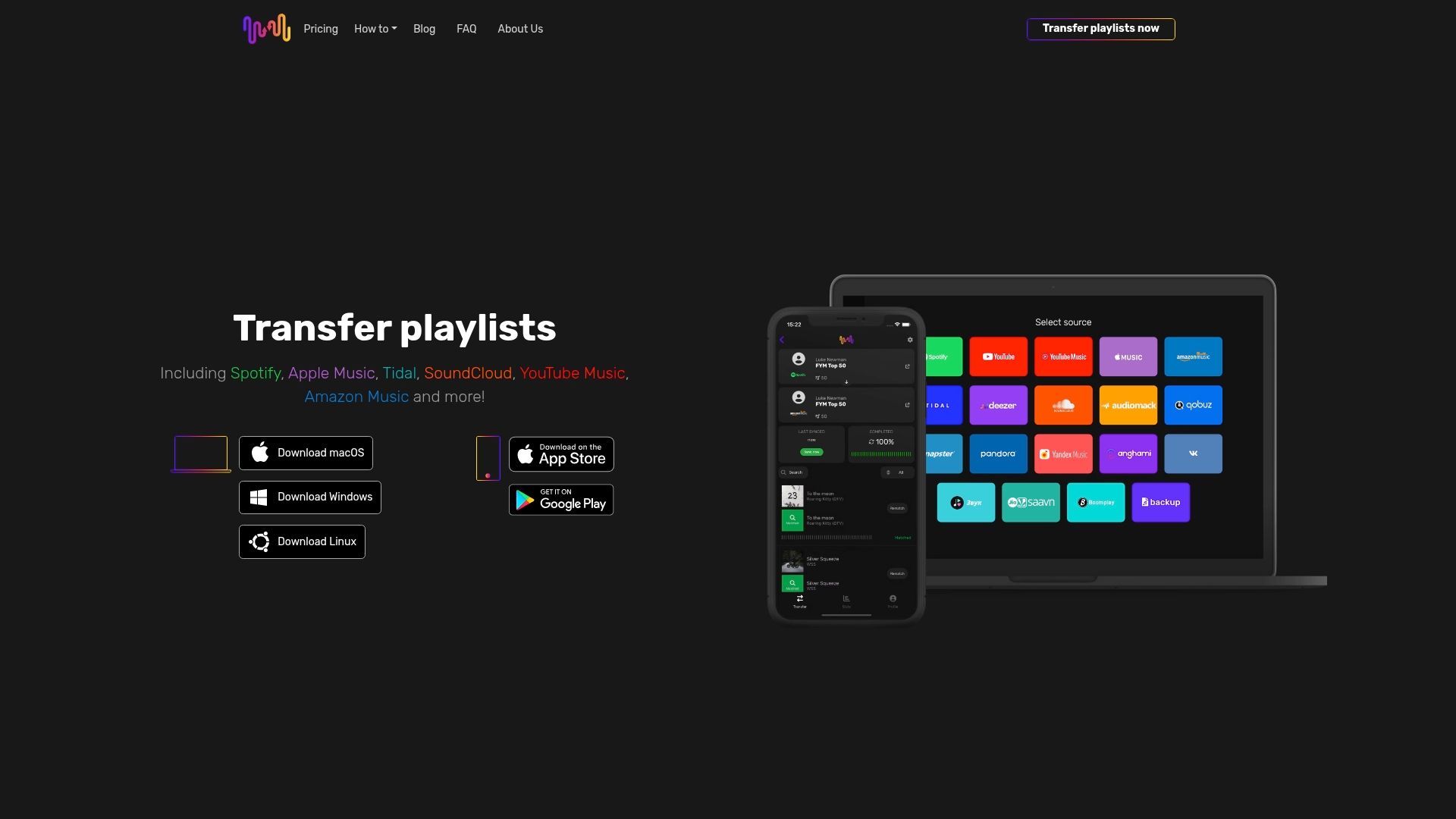
Our platform supports transfers between Spotify, Apple Music, Tidal, YouTube Music, Amazon Music, and dozens of other services while maintaining playlist structure, song order, and available metadata. Unlike generic tools that match only 70% of tracks, our intelligent matching algorithms achieve higher accuracy rates by understanding catalog variations and finding equivalent recordings when exact matches aren't available.
Whether you're moving a few playlists or your entire music library, Free Your Music handles the complexity. Transfer Audiomack playlists to backup files or transfer Excel playlists to Pandora with equal ease. Our service bridges the gaps created by catalog differences and regional restrictions, helping you maintain continuity in your listening experience.
Comprehensive customer support guides you through platform-specific challenges, while our transparent refund policy ensures you can try the service risk-free. Protect your musical investment and enjoy true platform freedom.
Frequently asked questions about preserving playlist data
What exactly is included in playlist data?
Playlist data includes song titles, artist names, album information, track ordering, and metadata like descriptions, cover artwork, creation dates, and modification history. Social elements such as follower counts, collaborative contributors, comments, and sharing history are also part of complete playlist data, though these elements often don't transfer between platforms.
Why do some songs go missing when transferring playlists?
Songs disappear during transfers due to catalog differences between streaming platforms, regional licensing restrictions, and artist availability variations. Platforms negotiate separate licensing agreements, meaning a song available on one service might not exist on another. Additionally, some artists or labels choose to distribute through specific platforms exclusively, creating permanent gaps in cross-platform transfers.
Can I preserve playlist order and metadata completely?
Preserving complete playlist order and metadata depends on the transfer method and platforms involved. Manual recreation maintains perfect order and allows you to add metadata, but specialized transfer services vary in metadata preservation capabilities. Most automated tools successfully maintain song order but lose descriptions, artwork, and social features that exist only within the original platform's ecosystem.
Are third-party playlist transfer tools reliable?
Third-party tools offer varying reliability levels, typically matching 70% to 90% of songs depending on catalog overlap and matching algorithms. Specialized music migration services generally outperform generic tools by understanding platform-specific catalog structures and employing intelligent matching for different recordings or versions. Reliability improves when transferring between platforms with similar catalog sizes and licensing agreements.
How does regional licensing affect playlist transfers?
Regional licensing restricts which songs appear in different geographic territories based on copyright agreements and distribution rights. When you transfer playlists between platforms or move to a new country, songs available in one region might be blocked in another. These restrictions apply even within the same streaming service, making geographic location a critical factor in playlist preservation success.
Recommended
Your playlists belong to you.
Stop rebuilding by hand. Move everything in minutes and take your music wherever you go.
Download free →SongsBrew — our free music newsletter
A free perk for FYM users. Tips, playlists, no spam.