Qobuz vs Spotify: welke muziekstreamingdienst is beter in 2026?
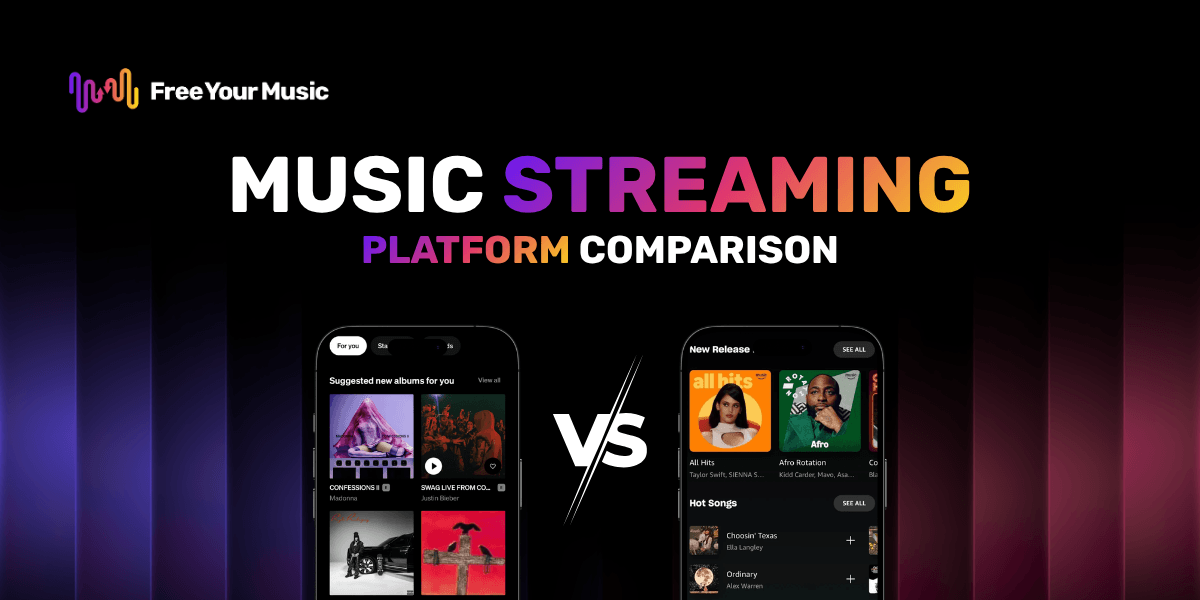
In deze gids lees je alles wat je moet weten over Qobuz vs Spotify in 2026, van geluidskwaliteit en prijzen tot muziekaanbod en functies. Zo kies je de dienst die bij jouw luistergewoonten past.
Wat is Qobuz? Een kort overzicht
Qobuz is een Franse muziekstreamingdienst voor luisteraars die geluidskwaliteit boven alles stellen. Het platform werd opgericht in 2007 en was een van de eerste diensten die echte hi-res audiostreaming aanbood, met nummers in het verliesvrije FLAC-formaat tot 24-bit/192 kHz.
Anders dan de meeste streamingplatforms is Qobuz ook een digitale muziekwinkel. Je kunt nummers streamen of albums in hi-res kwaliteit kopen. De dienst is populair onder audiofielen, vinylverzamelaars en iedereen die digitale muziek wil horen die de originele studiomaster zo dicht mogelijk benadert.
Qobuz is beschikbaar in meer dan 25 landen, met een sterke aanwezigheid in Europa, Noord-Amerika en delen van Latijns-Amerika en Azië.
Qobuz heeft net zijn grootste update in jaren gekregen
Heb je Qobuz een tijdje geleden geprobeerd en ben je afgehaakt? Dan is het de moeite waard om nog eens te kijken. De app is grondig vernieuwd en verhelpt een aantal problemen waar gebruikers al jaren over klagen.
De belangrijkste toevoeging: eindelijk songteksten. Ze lopen in realtime regel voor regel mee, met vertaling als je die nodig hebt. Dat klinkt misschien als iets kleins, totdat je bedenkt dat Qobuz dit simpelweg nog niet had. Alle andere grote streamingapps bieden al tijden gesynchroniseerde songteksten. Daarmee verdwijnt een tekortkoming die opvallend lang bleef bestaan bij een platform dat zo sterk inzet op de luisterervaring.
De rest van de update is vooral een opfrisbeurt. De speler neemt nu de kleuren over van de albumhoes die je bekijkt, er is een minispeler die zichtbaar blijft terwijl je door de app navigeert en je hebt meer controle over de wachtrij. Qobuz heeft ook een Explore-tabblad toegevoegd. Daar vind je vergelijkbare artiesten en albums op basis van wat je hebt afgespeeld, met de mogelijkheid om op genre of label te bladeren. Daarnaast is de pagina met credits vernieuwd en kun je daar artiesten en labels direct volgen. iPhone-gebruikers krijgen nu ook ondersteuning voor Siri.
Dit verandert niets aan de afweging tussen Qobuz en Spotify: Qobuz blijft de keuze voor audiofielen, Spotify wint nog steeds op muziekontdekking en beschikbaarheid. Maar Qobuz voelt hierdoor wel een stuk minder gedateerd aan dan een maand geleden.
Qobuz vs Spotify: de belangrijkste verschillen op een rij
Met zowel Qobuz als Spotify kun je miljoenen nummers afspelen wanneer je maar wilt, maar daar houden de overeenkomsten op. Hier zie je de belangrijkste functies naast elkaar:
| Functie | Qobuz | Spotify |
|---|---|---|
| Geluidskwaliteit | Tot 24-bit/192 kHz (Hi-Res FLAC) | Tot 320 kbps (OGG Vorbis) |
| Muziekaanbod | Meer dan 100 miljoen nummers | Meer dan 100 miljoen nummers |
| Gratis versie | Nee (alleen een gratis proefperiode) | Ja (met advertenties) |
| Offline luisteren | Ja (betaalde abonnementen) | Ja (alleen Premium) |
| Songteksten | Ja (in realtime, gesynchroniseerd, met vertaling — toegevoegd in juli 2026) | Ja |
| Prijs individueel abonnement | $12,99/maand | $11,99/maand |
| Gezinsabonnement | $21,90/maand (maximaal 6 personen) | $19,99/maand (maximaal 6 personen) |
| Studentenabonnement | Nee | $5,99/maand |
| Muziekwinkel | Ja (hi-res albums kopen) | Nee |
| Podcasts | Nee | Ja |
| Ondersteunde apparaten | Computer, mobiel, web, hifi-systemen | Computer, mobiel, web, slimme speakers, auto's, spelconsoles |
| Muziek ontdekken via algoritmen | In ontwikkeling (nieuwe Explore-sectie) | Toonaangevend |
| Beschikbaarheid | Meer dan 25 landen | Meer dan 180 landen |
Geluidskwaliteit: waar Qobuz echt in uitblinkt
Als geluidskwaliteit voor jou het belangrijkst is, is Qobuz moeilijk te verslaan. Op dit vlak verschillen de twee diensten het meest.
Hi-res audio van Qobuz vs het geluid van Spotify Premium
Qobuz streamt muziek in het verliesvrije FLAC-formaat, van cd-kwaliteit (16-bit/44,1 kHz) tot studiomasterkwaliteit (24-bit/192 kHz). Elk nummer op Qobuz is beschikbaar in minimaal cd-kwaliteit en een groot deel van de catalogus is ook in echte hi-res kwaliteit te beluisteren.
Spotify gebruikt daarentegen OGG Vorbis-compressie. Zelfs op de hoogste instelling (320 kbps met Premium) luister je naar audio met kwaliteitsverlies. Spotify kondigde in 2021 al "Spotify HiFi" aan, met de belofte van verliesvrije streaming, maar in 2026 is die functie voor de meeste gebruikers nog steeds niet beschikbaar.
Dit betekent dat in de praktijk:
- Qobuz: Verliesvrije en hi-res audio bij elk abonnement. Geen hoorbare compressieartefacten. Je hoort wat de artiest heeft opgenomen.
- Spotify: Gecomprimeerde audio die op de meeste apparaten goed klinkt, maar tekortschiet op hoogwaardige hoofdtelefoons en speakers.
Maakt hi-res audio echt verschil?
Dat hangt af van je apparatuur en je gehoor.
Als je luistert met eenvoudige oordopjes of via de speaker van je laptop, merk je waarschijnlijk geen verschil tussen de 320 kbps van Spotify en de verliesvrije streams van Qobuz. Gecomprimeerde audio klinkt prima op alledaagse apparatuur.
Maar met een goede hoofdtelefoon, zoals de Sennheiser HD 660S of Audeze LCD-X, of een losse DAC en versterker is het verschil wel degelijk hoorbaar. Hi-res audio biedt meer detail in de hoge tonen, een ruimtelijker geluidsbeeld en een duidelijkere scheiding tussen instrumenten. Vooral akoestische muziek, jazz en klassieke opnamen profiteren hiervan.
Qobuz is dus de moeite waard als je de apparatuur hebt om het verschil te horen. Luister je vooral onderweg met draadloze oordopjes, dan is de kwaliteit van Spotify ruim voldoende.
Muziekaanbod en nieuwe muziek ontdekken
Beide platforms geven je toegang tot meer dan 100 miljoen nummers, dus qua omvang is het aanbod ongeveer gelijk. Het echte verschil zit in de manier waarop elke dienst je helpt muziek te vinden en ervan te genieten.
De omvang van het muziekaanbod vergeleken
Qobuz en Spotify hebben allebei enorme catalogi, van mainstream en indie tot nichegenres. De meeste grote releases vind je op beide platforms.
Qobuz onderscheidt zich met uitgebreide redactionele informatie. De dienst biedt gedetailleerde albumtoelichtingen, albumrecensies en artiestenbiografieën, geschreven door muziekjournalisten. Lees je graag over de muziek waarnaar je luistert, dan voelt Qobuz meer als een platenzaak met een zorgvuldig samengesteld aanbod dan als een streamingapp.
Spotify heeft een lichte voorsprong op bepaalde gebieden, zoals regionale muziek, podcasts en luisterboeken. Spotify heeft ook exclusieve podcasts die je niet op Qobuz of de meeste andere streamingdiensten vindt.
Afspeellijsten, radio en aanbevelingen
Spotify wint dit onderdeel nog steeds met ruime voorsprong. Discover Weekly, Release Radar, de Daily Mixes en de AI DJ zijn allemaal gebaseerd op jaren aan machinelearning en miljarden luistersessies. En dat merk je. De meeste mensen hoeven op Spotify niet eens bewust naar nieuwe muziek te zoeken: die verschijnt vanzelf.
Qobuz vertrouwde voorheen volledig op menselijke redacteuren. Dat had zijn eigen charme, alsof je tips kreeg van iemand die in een platenzaak werkt. Dat is nog steeds zo. Maar met de update van juli kwam er ook een Explore-sectie die algoritmen gebruikt om vergelijkbare albums, artiesten en afspeellijsten aan te bevelen op basis van waar je naar hebt geluisterd. De functie is nieuw en heeft de voorsprong van ruim tien jaar van Spotify nog niet ingehaald. Toch is het niet meer terecht om de mogelijkheden om muziek te ontdekken op Qobuz "beperkt" te noemen. Ze moeten zich alleen nog verder ontwikkelen.
Draait het voor jou vooral om nieuwe muziek ontdekken, dan blijft Spotify de veiligste keuze. Wil je de smaak van redacteuren combineren met aanbevelingen van een algoritme, dan is Qobuz een stuk interessanter geworden.
Prijzen en abonnementen vergeleken
Beide diensten werken met maandabonnementen, maar hun prijsopbouw weerspiegelt hun verschillende prioriteiten.
| Abonnement | Qobuz | Spotify |
|---|---|---|
| Individueel | $12,99/maand | $11,99/maand |
| Gezin (maximaal 6 personen) | $21,90/maand | $19,99/maand |
| Student | Niet beschikbaar | $5,99/maand |
| Individueel jaarabonnement | $129,99/jaar (bespaar circa $26) | $119,99/jaar |
| Gratis versie | Nee | Ja (met advertenties, afspelen in willekeurige volgorde) |
Een individueel abonnement op Qobuz kost ongeveer een dollar meer per maand. Voor die extra dollar krijg je hi-res audio bij elk abonnement, zonder dat je hoeft te upgraden naar een apart "HiFi"-abonnement. Alle Qobuz-abonnementen bieden toegang tot de volledige hi-res catalogus.
De gratis versie van Spotify is een groot pluspunt voor wie af en toe luistert. Je krijgt toegang tot de volledige catalogus, met advertenties, alleen afspelen in willekeurige volgorde op mobiel en basisfuncties. Voor luisteraars met een beperkt budget of studenten die voordelig uit willen zijn, zijn de prijzen van Spotify moeilijk te verslaan.
Qobuz biedt geen studentenabonnement, wat voor jongere luisteraars een reden kan zijn om af te haken. Met een jaarabonnement bespaar je wel flink als je zeker weet dat je de dienst wilt blijven gebruiken.
Ondersteunde apparaten
Waar en hoe je luistert, is net zo belangrijk als waarnaar je luistert. Beide diensten werken op telefoons, tablets en computers, maar er zijn een paar belangrijke verschillen in de apparaten die ze ondersteunen.
Apparaten die Qobuz ondersteunt
Qobuz werkt op alle belangrijke platforms:
- Telefoons en tablets met iOS en Android
- Desktopapps voor Windows en macOS
- Webspeler (in de browser)
- Hifi-netwerkstreamers (Sonos, Bluesound, Cambridge Audio, NAD en meer)
- CarPlay en Android Auto
Qobuz legt sterk de nadruk op integratie met gespecialiseerde hifi-apparatuur. Heb je een netwerkstreamer of DAC, dan ondersteunt Qobuz waarschijnlijk rechtstreekse weergave via je apparatuur. Dat is een groot voordeel voor luisteraars die verliesvrije audio zonder extra stappen op hun hifi-systeem willen afspelen. Sinds de update van juli 2026 kunnen iOS-gebruikers de app ook met hun stem bedienen via Siri.
Apparaten die Spotify ondersteunt
Spotify werkt op vrijwel alles:
- Telefoons en tablets met iOS en Android
- Desktopapps voor Windows, macOS en Linux
- Webspeler (in de browser)
- Slimme speakers (Amazon Echo, Google Nest, Sonos)
- Smart-tv's en streamingsticks (Roku, Fire TV, Chromecast)
- Spelconsoles (PlayStation, Xbox)
- Auto's (ingebouwde integraties en CarPlay/Android Auto)
- Wearables (Apple Watch, Wear OS, Garmin)
Met Spotify Connect kun je de weergave bovendien soepel op verschillende apparaten bedienen. Start een nummer op je telefoon, schakel over naar je slimme speaker en luister daarna verder op je laptop zonder een noot te missen. Deze samenwerking tussen apparaten is een van de sterkste punten van Spotify.
Het oordeel over apparaatondersteuning
Spotify ondersteunt meer apparaten en maakt het met Spotify Connect makkelijker om ertussen te schakelen. Qobuz biedt de belangrijkste opties en blinkt uit met hifi-apparatuur. Luister je gedurende de dag op allerlei verschillende apparaten, dan is Spotify de flexibelere keuze.
Welke dienst past het best bij jou?
De beste streamingdienst hangt af van wat jij het belangrijkst vindt. Hier zie je welke dienst bij welk type luisteraar past:
Kies Qobuz als je:
- Een hoogwaardige hoofdtelefoon of een aparte audio-installatie hebt
- Veel waarde hecht aan geluidskwaliteit en verliesvrij of in hi-res wilt streamen
- De voorkeur geeft aan redactionele artikelen, albumtoelichtingen en albumrecensies
- Digitale hi-res albums wilt kopen en bezitten
- Vooral luistert naar akoestische muziek, jazz, klassiek of genres met zorgvuldig geproduceerde opnamen
Kies Spotify als je:
- De beste functies wilt om muziek te ontdekken, met gepersonaliseerde afspeellijsten
- Op verschillende apparaten luistert, zoals slimme speakers, autoradio's en spelconsoles
- Naast muziek ook graag podcasts en luisterboeken beluistert
- Een gratis versie of studentenabonnement nodig hebt
- Internationaal reist en een dienst nodig hebt die in meer dan 180 landen beschikbaar is
Allebei gebruiken? Veel audiofielen houden Spotify aan om muziek te ontdekken en gebruiken Qobuz om met volle aandacht naar de geluidskwaliteit te luisteren. Kies je hiervoor, dan wil je je afspeellijsten op beide platforms hebben.
Welke dienst je ook kiest, met Free Your Music stap je moeiteloos over. Zet je afspeellijsten in een paar minuten over tussen Qobuz, Spotify en meer dan 20 andere diensten.
Kun je overstappen tussen Qobuz en Spotify zonder je muziek kwijt te raken?
Ja, en het is makkelijker dan je denkt. De grootste zorg bij het overstappen naar een andere streamingdienst is dat je je zorgvuldig samengestelde afspeellijsten, gelikete nummers en albums kwijtraakt. Niemand wil helemaal opnieuw beginnen.
Free Your Music lost dit probleem op. De app zet je afspeellijsten, gelikete nummers en albums over tussen Qobuz, Spotify en meer dan 20 andere muziekdiensten. Het kost maar een paar minuten:
- Download Free Your Music op je telefoon of computer
- Koppel de dienst waarvan je muziek wilt overzetten, bijvoorbeeld Spotify
- Selecteer de afspeellijsten die je wilt overzetten
- Kies de doeldienst, bijvoorbeeld Qobuz
- Start de overdracht en klaar
Free Your Music vindt met hoge nauwkeurigheid dezelfde nummers op andere platforms, zodat je je favoriete muziek niet kwijtraakt. Je kunt de app ook gebruiken om twee diensten synchroon te houden als je besluit zowel Qobuz als Spotify te gebruiken.
Wil je weten wat je opties zijn? Bekijk alle beschikbare muziekdiensten die Free Your Music ondersteunt.
Veelgestelde vragen
Heeft Qobuz een betere geluidskwaliteit dan Spotify?
Ja. Qobuz streamt in verliesvrij FLAC tot 24-bit/192 kHz, terwijl Spotify maximaal 320 kbps OGG Vorbis biedt. Met een goede hoofdtelefoon of een hifi-systeem hoor je bij Qobuz een duidelijk verschil.
Heeft Qobuz een gratis versie?
Nee. Qobuz biedt alleen betaalde abonnementen, al kunnen nieuwe gebruikers wel gebruikmaken van een gratis proefperiode. Wil je gratis muziek streamen met advertenties, dan zijn de gratis versie van Spotify of andere opties voor gratis muziek een betere keuze.
Heeft Qobuz nu songteksten?
Ja, sinds eind juli 2026. De songteksten lopen regel voor regel mee met de muziek en er zijn vertalingen beschikbaar. Het was een van de laatste grote functies die Qobuz miste ten opzichte van Spotify, en dat verschil is nu weggewerkt.
Kan ik mijn Spotify-afspeellijsten overzetten naar Qobuz?
Zeker. Gebruik Free Your Music om je Spotify-afspeellijsten, gelikete nummers en albums in een paar minuten over te zetten naar Qobuz. De app zoekt automatisch de bijbehorende nummers op het andere platform.
Is Qobuz wereldwijd beschikbaar?
Nog niet. Qobuz is beschikbaar in meer dan 25 landen, vooral in Europa, Noord-Amerika en bepaalde regio's in Latijns-Amerika en Azië. Spotify is met meer dan 180 landen veel breder beschikbaar. Kijk op de website van Qobuz of de dienst in jouw land wordt aangeboden.
Welke dienst biedt meer mogelijkheden voor podcasts?
Spotify wint dit onderdeel met ruime voorsprong. De dienst biedt miljoenen podcasts, exclusieve shows en videopodcasts, allemaal rechtstreeks in de app. Qobuz ondersteunt helemaal geen podcasts en richt zich uitsluitend op muziek.
Kan ik Qobuz en Spotify naast elkaar gebruiken?
Ja. Veel luisteraars gebruiken Spotify om muziek te ontdekken en voor dagelijks gebruik, en schakelen over naar Qobuz om op betere apparatuur aandachtig te luisteren. Free Your Music kan je afspeellijsten op beide diensten gesynchroniseerd houden.
Is Qobuz de moeite waard als ik geen dure hoofdtelefoon heb?
Als je met eenvoudige oordopjes of via laptopspeakers luistert, hoor je waarschijnlijk geen groot verschil met Spotify. Qobuz komt het best tot zijn recht in combinatie met goede audioapparatuur. Voor wie gewoon lekker muziek wil luisteren, biedt Spotify meer waar voor je geld dankzij de functies om muziek te ontdekken en de lagere prijs.
Klaar om over te stappen? Zet je volledige bibliotheek over tussen Qobuz, Spotify en meer dan 20 andere diensten met Free Your Music. Probeer het gratis.
Jouw afspeellijsten zijn van jou.
Stop met handmatig opnieuw opbouwen. Verplaats alles in minuten en neem je muziek overal mee naartoe.
Gratis downloaden →SongsBrew — onze gratis muzieknieuwsbrief
Een gratis extraatje voor FYM-gebruikers. Tips, afspeellijsten, geen spam.