Så fungerar kompatibilitet mellan musikplattformar: byt tjänst smidigt

Att byta från Spotify till Apple Music eller använda en spellista på flera plattformar leder ofta till frustration när låtar inte går att spela och favoriter försvinner. För teknikvana musikälskare och spellistekuratorer världen över är det en verklig utmaning att bevara varje låt, spellistornas ordning och alla personliga preferenser. Genom att förstå kompatibilitet mellan musikplattformar och tekniken bakom smidig överföring av musikbibliotek kan du tryggt behålla hela din musikhistorik när du byter tjänst.
Innehållsförteckning
- Vad innebär kompatibilitet mellan musikplattformar?
- Så hanterar streamingtjänster spellistor
- Överföringsmetoder och standarder som stöds
- Vanliga hinder vid överföring av spellistor
- Så får du smidigare överföringar av spellistor
Viktigaste punkterna
| Punkt | Detaljer |
|---|---|
| Kompatibilitet mellan musikplattformar | Gör det möjligt att byta streamingtjänst smidigt och samtidigt bevara spellistor och låtarnas metadata. |
| Avancerad hantering av spellistor | Streamingtjänster använder både algoritmer och mänskligt urval för att skapa personliga lyssningsupplevelser. |
| Utmaningar vid överföring | Användare stöter på hinder som skillnader i metadata och licensbegränsningar när de flyttar spellistor. |
| Strategier för bättre överföringar | Att rensa bort dubbletter och använda tillförlitlig mappning av metadata kan ge bättre resultat vid överföringen. |
Vad innebär kompatibilitet mellan musikplattformar?
Kompatibilitet mellan musikplattformar handlar om olika digitala musiktjänsters tekniska och funktionella förmåga att kommunicera samt överföra och synkronisera musikbibliotek, spellistor och lyssningspreferenser mellan flera streamingplattformar. Att förstå hur digitala musikplattformar samverkar ger en inblick i det komplexa ekosystem som dagens musiklyssnande bygger på.
I grunden gör kompatibilitet mellan musikplattformar det möjligt att byta streamingtjänst smidigt utan att förlora sina omsorgsfullt sammanställda musiksamlingar. Det innebär att lyssnare kan flytta spellistor, bevara låtarnas metadata, behålla låtordningen och se till att rätt låtar matchas mellan olika plattformar. Målet är en friktionsfri upplevelse som tar hänsyn till användarnas preferenser och den tid och omsorg de lagt på sin musik.
Tekniskt sett bygger kompatibilitet på flera viktiga delar: tillförlitlig översättning av metadata, träffsäkra algoritmer för låtmatchning, bevarande av spellistornas struktur och dataformat som fungerar mellan olika system. Moderna musikplattformar måste hantera komplexa utmaningar som olika kodningsstandarder, licensbegränsningar och unika plattformsspecifika funktioner. I takt med att musikens ekosystem blivit allt mer plattformsbaserat har dessa tekniska anpassningar blivit mer avancerade och kräver genomtänkta integrationsstrategier.
Följande tabell sammanfattar de viktigaste tekniska delarna för smidig kompatibilitet mellan musikplattformar:
| Komponent | Roll för kompatibiliteten | Betydelse |
|---|---|---|
| Översättning av metadata | Säkerställer att låtinformation överförs korrekt | Förhindrar felmatchningar |
| Algoritmer för låtmatchning | Identifierar motsvarande låtar | Bevarar spellistan så troget som möjligt |
| Bevarande av låtordning | Håller låtarnas ordningsföljd intakt | Bevarar användarens avsikt |
| Dataformat som fungerar mellan system | Möjliggör kommunikation mellan plattformar | Gör överföringen smidig |
Proffstips: Kontrollera alltid det totala antalet låtar och skapa en säkerhetskopia innan du flyttar ditt musikbibliotek, så att inga musikminnen råkar gå förlorade när du byter plattform.
Så hanterar streamingtjänster spellistor
Streamingtjänster använder sofistikerade strategier för att hantera spellistor, med avancerade algoritmer och datadrivna metoder som skapar personliga musikupplevelser. När spellistor genereras analyseras användardata på djupet för att skapa dynamiska och engagerande lyssningsupplevelser som anpassas efter individuella preferenser.
Hanteringen av spellistor bygger främst på två metoder: algoritmiska rekommendationer och mänskligt urval. Algoritmiska spellistor bygger på maskininlärningsmodeller som analyserar användarens lyssningshistorik, genrepreferenser, tid på dygnet, humör och andra omständigheter för att skapa mycket personliga musiksamlingar. Dessa intelligenta system förfinar rekommendationerna löpande genom att följa användarnas interaktioner, hur ofta låtar hoppas över och hur användarna engagerar sig i olika låtar och genrer.
Plattformarnas strategier för att skapa spellistor omfattar även redaktionellt urval, där musikexperter och professionella spellisteskapare tar fram tematiska samlingar som introducerar nya artister och framväxande musiktrender. Dessa handplockade spellistor fyller flera syften: att hjälpa användare upptäcka ny musik, skapa lyssningsupplevelser för olika sinnesstämningar och hålla intresset vid liv med nytt och varierat innehåll.

Proffstips: Utforska olika typer av spellistor på flera streamingplattformar för att upptäcka mer musik och få en mer varierad lyssningsupplevelse.
Överföringsmetoder och standarder som stöds
Musikstreamingplattformar använder avancerade överföringsmetoder som ska göra det enkelt att flytta musiksamlingar mellan olika tjänster. Tekniken för överföring av spellistor har utvecklats för att hantera komplexa utmaningar, som att bevara metadata, matcha låtar och hålla spellistor intakta under överföringen.
De huvudsakliga överföringsmetoderna bygger på avancerade algoritmer som kombinerar flera matchningsstrategier. Hit hör exakt låtmatchning, där metadata som artistnamn, låttitel och albuminformation jämförs; akustiska fingeravtryck, där låtarnas faktiska ljudsignatur analyseras för att hitta motsvarigheter på andra plattformar; och sannolikhetsbaserad matchning, där maskininlärningsalgoritmer föreslår de mest sannolika motsvarigheterna när exakta träffar saknas.
Standarder för musiköverföring omfattar vanligtvis flera viktiga tekniska specifikationer. Bland dem finns standardiserade metadataformat som ID3-taggar, som lagrar grundläggande låtinformation, gemensamma protokoll för ljudkodning som säkerställer kompatibilitet mellan plattformar och robusta API-arkitekturer som möjliggör säker och effektiv dataöverföring. Avancerade överföringsmetoder omfattar också intelligent felhantering som kan hantera licensbegränsningar, regionala skillnader i tillgänglighet och plattformsspecifika innehållsbegränsningar.
Proffstips: Kontrollera alltid innehållet i spellistan direkt efter överföringen och skapa en säkerhetskopia av originalet, så att inga låtar oavsiktligt går förlorade när du flyttar den.
Vanliga hinder vid överföring av spellistor
Att flytta spellistor innebär flera tekniska och praktiska utmaningar som kan störa en smidig överföring av musiksamlingar mellan streamingplattformar. Analyser av hur väl spellistor hålls samman visar på komplexa hinder som påverkar användare när de försöker flytta sina omsorgsfullt sammanställda musikbibliotek mellan olika tjänster.
Ett av de största hindren är inkonsekventa metadata: låtinformationen varierar mellan plattformar, vilket kan leda till felmatchningar eller till att låtar försvinner vid överföringen. Licensbegränsningar skapar också betydande hinder, eftersom vissa låtar som finns på en tjänst kan saknas eller vara blockerade i vissa regioner på en annan. Gemensamma spellistor innebär ytterligare svårigheter, eftersom information om medverkande och funktioner för gemensam redigering ofta inte kan överföras direkt mellan olika streamingplattformar.
Tekniska utmaningar uppstår även genom skillnader i plattformsspecifika funktioner, som låtarnas kodning, inställningar för ljudkvalitet och hur spellistor organiseras. Vissa streamingtjänster använder egna system för taggning av spellistor, genreindelningar eller rekommendationsalgoritmer som inte kan överföras direkt. Dessa skillnader kan leda till att spellistor bara flyttas delvis, så att användarna får ofullständiga musiksamlingar och en sämre lyssningsupplevelse.
Här jämförs vanliga utmaningar vid överföring av spellistor och rekommenderade åtgärder för att minska problemen:
| Hinder vid överföring | Möjlig påverkan | Rekommenderad åtgärd |
|---|---|---|
| Inkonsekventa metadata | Låtar går förlorade eller saknar matchning | Dubbelkolla låtinformationen före överföringen |
| Licensbegränsningar | Låtar saknas eller är blockerade | Undersök låtarnas tillgänglighet i båda regionerna |
| Gemensamma spellistor | Information om medverkande går förlorad | Exportera listan över medverkande separat |
| Skillnader i kodning | Försämrad ljudkvalitet | Kontrollera vilka format som stöds innan du flyttar musiken |
| Plattformsspecifik taggning | Felaktig kategorisering | Standardisera taggar och genrer före överföringen |
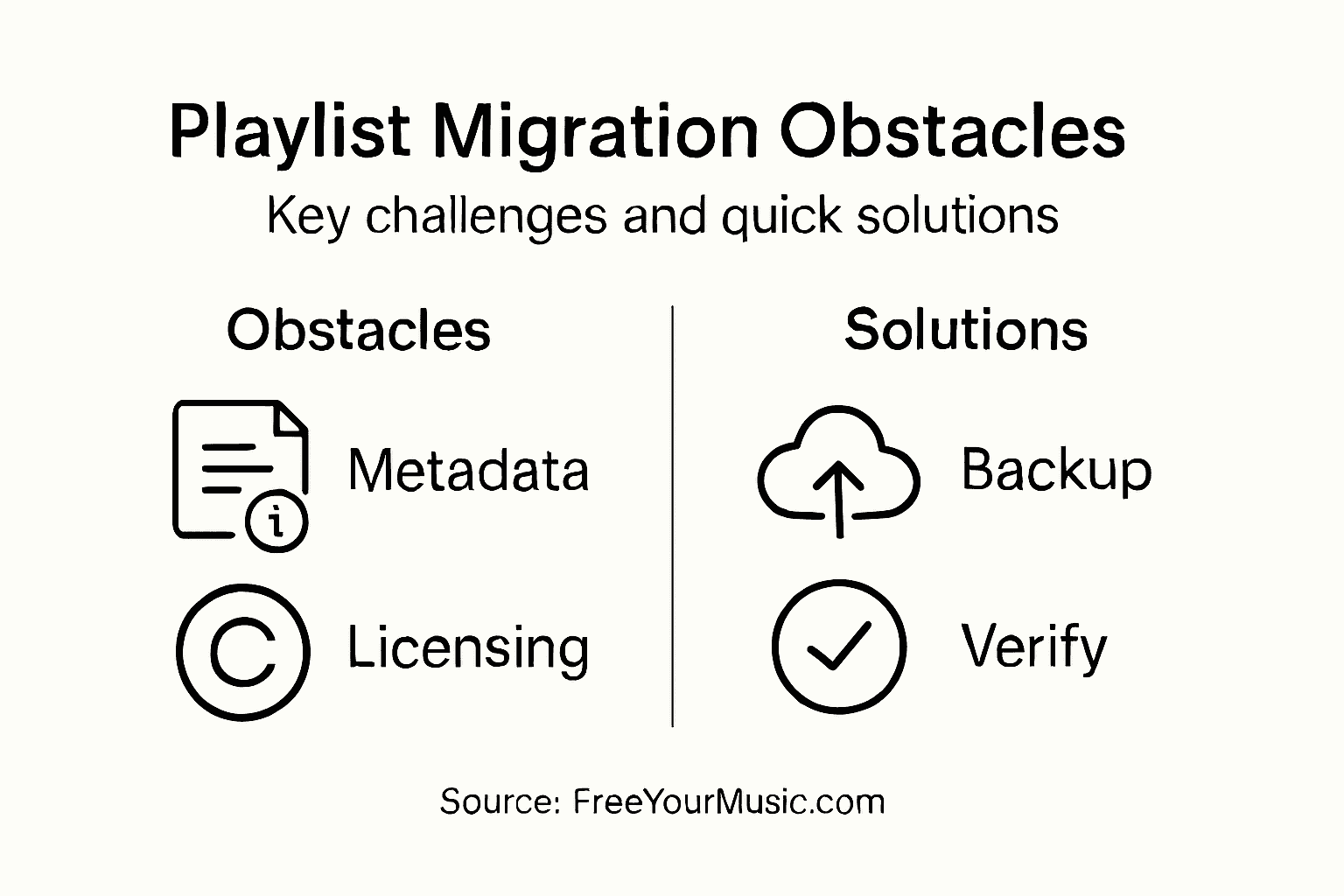
Proffstips: Skapa en fullständig säkerhetskopia av din ursprungliga spellista innan du påbörjar överföringen och jämför låtarna efteråt för att säkerställa att så mycket som möjligt har följt med.
Så får du smidigare överföringar av spellistor
För att optimera överföringar av spellistor behövs ett strategiskt arbetssätt som använder avancerade tekniska lösningar för att bevara så mycket data som möjligt och ge en sammanhängande användarupplevelse. Ramverk för automatisk utökning av spellistor visar hur avancerade maskininlärningstekniker kan förbättra träffsäkerheten och effektiviteten avsevärt när musikbibliotek flyttas.
En framgångsrik optimering av spellisteöverföringar bygger på flera tekniska strategier. Först och främst behövs tillförlitliga algoritmer för mappning av metadata som kan översätta låtinformation korrekt mellan olika plattformar. Algoritmerna måste ta hänsyn till variationer i artistnamn, låttitlar, albummetadata och eventuella regionala skillnader. Avancerade matchningsmetoder som akustiska fingeravtryck och sannolikhetsbaserad låtidentifiering hjälper till att hantera inkonsekventa metadata och gör överföringen mer träffsäker.
Användare kan också förbättra resultatet genom att förbereda sina spellistor inför flytten. Det innebär bland annat att rensa bort dubbletter, ta bort låtar som inte är tillgängliga och organisera spellistorna med enhetliga namn. Maskininlärningsmodeller kan förutse möjliga överföringsproblem genom att analysera spellistornas egenskaper, låtarnas tillgänglighet och data från tidigare överföringar. På så sätt kan användarna få rekommendationer i förväg för att förbättra resultatet.
Proffstips: Säkerhetskopiera spellistan i ett kalkylblad med detaljerad låtinformation innan du påbörjar en överföring. Då har du ett underlag att jämföra med och använda för att återställa innehåll.
Gör det enklare att byta musikplattform redan i dag
Om du någon gång har stött på frustrerande skillnader i metadata eller förlorat låtar när du flyttat en spellista är du inte ensam. Artikeln tar upp vanliga hinder som licensbegränsningar och plattformsspecifik taggning som försvårar smidiga överföringar av spellistor. När dina omsorgsfullt sammanställda musiksamlingar inte följer med vid bytet kan det kännas som att förlora en del av dina musikminnen.
På FreeYourMusic.com förstår vi hur viktigt det är att bevara dina spellistor intakta när du flyttar mellan streamingplattformar som Spotify, Apple Music eller YouTube Music. Vår lättanvända plattform löser centrala problem genom att matcha låtar korrekt, behålla låtordningen och säkerställa att metadata bevaras. Resultatet är ett smidigt byte som tar hänsyn till dina musikpreferenser och sparar både tid och arbete.
Flytta din musik utan stress med automatisk synkronisering, säkerhetskopior i molnet och stöd för flera konton, så att ditt musikbibliotek förblir tryggt och tillgängligt.
Ta kontroll över din musikresa nu och upptäck hur enkelt det kan vara att flytta spellistor.
Lösningar för kompatibilitet mellan musikplattformar
Flytta spellistor enkelt och smidigt
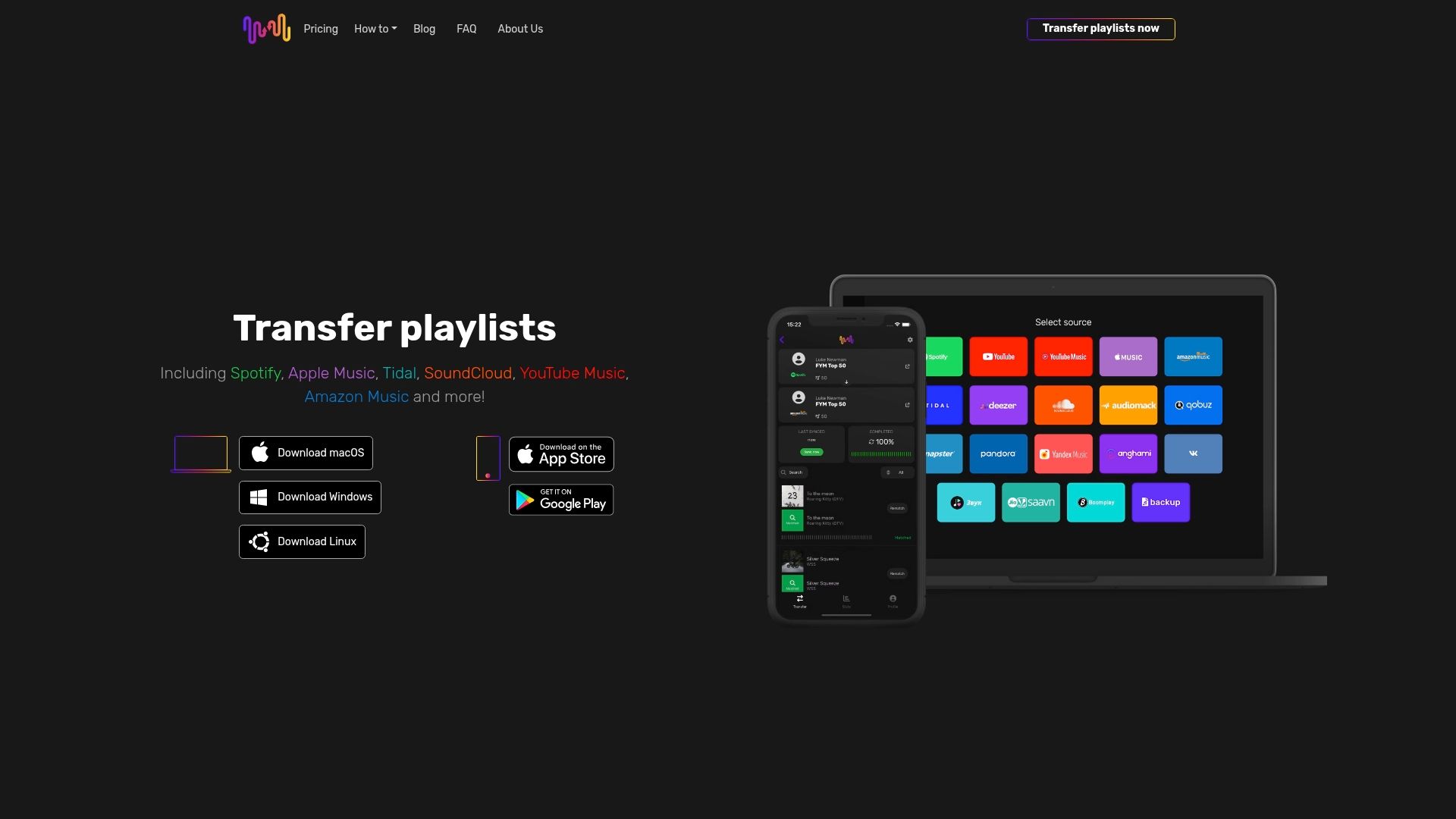
Låt inte kompatibilitetsproblem begränsa din musikupplevelse. Besök FreeYourMusic.com och börja flytta dina spellistor i dag. Din musik förtjänar att följa med utan avbrott, var du än lyssnar.
Vanliga frågor
Vad innebär kompatibilitet mellan musikplattformar?
Kompatibilitet mellan musikplattformar innebär att olika digitala musiktjänster kan kommunicera och synkronisera musikbibliotek, spellistor och lyssningspreferenser mellan flera streamingplattformar.
Hur hanterar streamingtjänster spellistor effektivt?
Streamingtjänster använder avancerade algoritmer och mänskligt urval för att skapa personliga spellistor. De analyserar användardata, som lyssningshistorik och genrepreferenser, för att skapa skräddarsydda musiksamlingar.
Vilka är de vanligaste hindren när man flyttar spellistor mellan plattformar?
Vanliga hinder är inkonsekventa metadata, licensbegränsningar, utmaningar med gemensamma spellistor och plattformsspecifika skillnader i funktioner som inställningar för ljudkvalitet och organisering av spellistor.
Hur kan användare optimera överföringen av sina spellistor?
Användare kan optimera överföringen genom att använda tillförlitlig mappning av metadata, rensa bort dubbletter och organisera spellistorna genomtänkt före flytten. Förberedelser kan göra överföringen mer träffsäker och hjälpa till att bevara innehållet.
Rekommenderad läsning
- Free Your Music – Vad innebär smidig överföring av spellistor? En komplett översikt
- Free Your Music – Komplett guide till musikstreamingplattformar
- Free Your Music – 7 viktiga funktioner för musikstreaming du behöver
- Free Your Music – Så fungerar synkronisering av musikbibliotek: smidig överföring av spellistor
Dina spellistor tillhör dig.
Sluta bygga om för hand. Flytta allt på några minuter och ta med dig musiken vart du vill.
Ladda ner gratis →SongsBrew — vårt gratis musiknyhetsbrev
En gratis förmån för FYM-användare. Tips, spellistor, ingen spam.