Effective music management tips for large playlists in 2026

Managing playlists across multiple streaming platforms presents unique challenges for music enthusiasts and professionals alike. With the average user juggling three or more services, maintaining playlist coherence, preserving track order, and transferring collections without loss becomes increasingly complex. Whether you're a DJ curating sets, a music supervisor organizing soundtracks, or simply someone with thousands of carefully selected tracks, understanding effective management strategies is essential. This article delivers actionable tips to streamline your music management workflow, optimize playlist structure, and navigate cross-platform transfers successfully in 2026.
Table of Contents
- Key Criteria For Managing Large Playlists
- Top Strategies For Playlist Order And Flow
- Common Challenges And Solutions Transferring Playlists
- Leveraging Recommendations And User Behavior In Playlist Creation
- Streamline Your Music Management With Free Your Music
Key takeaways
| Point | Details |
|---|---|
| Playlist coherence matters | Longer playlists generally show higher coherence, but adding popular tracks can reduce overall thematic consistency |
| Order impacts experience | Strategic sequencing by energy, key compatibility, and BPM proximity creates smoother listening flows and better algorithmic recognition |
| Transfer challenges exist | Expect 5-15% of tracks to fail during platform transfers due to licensing restrictions, requiring manual replacement |
| Recommendations influence creation | About 67% of users incorporate algorithmic suggestions during playlist building, though personal curation remains essential |
| Metadata preservation is critical | Maintaining track order and metadata during transfers helps streaming algorithms understand your playlist style and purpose |
Key criteria for managing large playlists
Effective playlist management starts with understanding the factors that influence coherence and usability across platforms. Analysis of 650,000+ playlists shows coherence related to playlist length and edits, revealing that longer collections typically maintain better thematic consistency. However, adding highly popular tracks often dilutes this coherence, creating tension between mainstream appeal and artistic vision.
Playlist structure directly affects both user experience and how streaming algorithms interpret your collection. When platforms analyze your playlists, they look for patterns in genre, tempo, mood, and listening context. Preserving these patterns during transfers or edits helps maintain algorithmic understanding, which influences recommendation accuracy and playlist visibility.
Before transferring playlists between services, audit your collection thoroughly. Check for duplicate entries that bloat playlist length without adding value. Identify broken links or unavailable tracks that will fail during migration. Verify that metadata like artist names, album titles, and release years are accurate and consistent. This preparation saves significant time during the actual transfer process.
Playlist length deserves careful consideration. While streaming platforms technically allow unlimited tracks, practical engagement drops significantly beyond certain thresholds. Most listeners prefer focused collections around 20 tracks or 90 minutes. This duration maintains attention without overwhelming choice, though context matters. Workout playlists might extend longer, while mood-specific collections work best when concise.
Understanding licensing and regional restrictions is crucial for cross-platform sharing. A track available on Spotify in the United States might be unavailable on Apple Music in Europe due to distribution agreements. These geographical limitations affect transfer success rates and require strategic workarounds. Research how to playlist management techniques that account for these variables before initiating large-scale migrations.
Top strategies for playlist order and flow
Track sequencing transforms good playlists into exceptional listening experiences. Ordering by energy creates natural momentum, starting moderate, building to peaks, and resolving smoothly. This arc keeps listeners engaged throughout the entire playlist rather than skipping tracks that feel jarring or misplaced.

Harmonic compatibility between consecutive tracks produces professional-level flow. DJ Studio recommends using energy curves and harmonic matching for playlist flow, emphasizing key signature relationships and BPM proximity. Tracks in compatible keys blend seamlessly, while BPM differences under 10 beats per minute feel natural to most listeners. Larger tempo jumps create noticeable disruption unless intentionally designed for dramatic effect.
Implementing these ordering principles requires systematic approach:
- Map the energy profile of your entire playlist using listening analysis or audio feature data
- Group tracks by key signature and identify harmonic relationships between songs
- Arrange sequences where keys are compatible or related through the circle of fifths
- Check BPM transitions to ensure gradual changes rather than abrupt shifts
- Test the full playlist flow and adjust based on how transitions actually feel
Playlist length caps around 20 tracks align with listener attention spans and consumption patterns. Shorter, focused collections receive more complete plays, which signals quality to streaming algorithms. This metric influences playlist promotion and recommendation eligibility on most platforms.
Pro Tip: Use harmonic mixing tools that automatically suggest compatible track pairings based on key and tempo. These applications save hours of manual analysis while producing professional results. Many integrate directly with streaming platforms, allowing real-time optimization as you build playlists.
Regularly reviewing playlist performance provides insights for refinement. Monitor skip rates, completion percentages, and listener feedback. High skip rates on specific transitions indicate problematic sequencing. Low completion rates suggest the playlist loses momentum or extends too long. Adjust ordering based on these behavioral signals to continuously improve what is playlist ordering effectiveness.
Common challenges and solutions transferring playlists
Playlist transfers between streaming platforms rarely achieve 100% success rates. Challenges in transferring playlists caused by licensing and regional differences mean that 5-15% of tracks typically fail to migrate. Distribution agreements vary by platform, label, and geographic region, creating gaps in catalog availability that affect transfer completeness.
Manual replacement of unavailable tracks improves post-transfer playlist quality significantly. When automated tools flag missing songs, search for alternative versions, live recordings, or cover versions available on the destination platform. Sometimes the same recording exists under slightly different metadata, requiring manual matching to complete the transfer.
Pre-transfer auditing prevents many common issues:
- Remove duplicate tracks that create confusion during automated matching
- Fix inconsistent metadata like misspelled artist names or incorrect album attributions
- Identify tracks only available in specific regions and prepare alternatives
- Export playlist data as backup before initiating transfers
- Verify that collaborative playlists have proper ownership permissions
Maintaining playlist metadata and order critical for successful transfers ensures streaming algorithms on the destination platform understand your collection's purpose and style. Track order communicates listening intent, whether chronological, thematic, or energy-based. Metadata like descriptions, cover images, and playlist names provide context that influences algorithmic classification and recommendation eligibility.
Pro Tip: Document your playlist structure before transfers using spreadsheets or notes. Record the original track count, key transitions, and any special sequencing logic. This documentation helps verify transfer accuracy and guides manual corrections for failed tracks.
Specialized playlist transfer tools dramatically increase success rates compared to manual recreation. These services maintain sophisticated matching algorithms that account for metadata variations, regional differences, and catalog updates. They preserve track order automatically and provide detailed reports on failed matches requiring manual intervention.
| Challenge | Impact | Solution |
|---|---|---|
| Licensing restrictions | 5-15% track loss | Manual replacement with alternatives |
| Metadata inconsistencies | Failed automated matching | Pre-transfer audit and cleanup |
| Regional availability | Geographic transfer failures | Research catalog differences beforehand |
| Order preservation | Loss of sequencing logic | Use specialized transfer tools |
| Duplicate detection | Inflated playlist length | Remove duplicates before migration |
Understanding understanding playlist transfer best practices and implementing 7 tips playlist management strategies minimizes transfer friction and maintains playlist integrity across platforms.
Leveraging recommendations and user behavior in playlist creation
Algorithmic recommendations significantly influence modern playlist creation workflows. User adoption of playlist recommendations impacts final selection, with 67% of users incorporating suggested tracks during the building process. This statistic reveals how streaming intelligence shapes musical discovery and collection curation, though personal taste remains the ultimate filter.
Balancing recommendations with authentic personal preferences prevents playlists from becoming generic or algorithm-driven. Accept suggestions that genuinely fit your vision, but maintain creative control over final selections. Streaming platforms optimize recommendations for engagement metrics, which don't always align with artistic coherence or specific listening contexts.
Users frequently adopt recommendations initially but replace tracks during refinement phases. This iterative process combines algorithmic efficiency with human judgment. Recommendations provide starting points and fill gaps, while manual curation ensures thematic consistency and personal connection to the music.
Strategic recommendation use increases playlist discoverability and engagement:
- Include some popular recommended tracks to signal mainstream appeal to algorithms
- Balance familiar suggestions with deeper catalog selections for authenticity
- Test recommended tracks in context before committing to playlist inclusion
- Monitor how recommendations affect overall playlist coherence and flow
- Use recommendations to discover artists outside your usual listening patterns
Comparing personal curation versus algorithmic recommendations highlights distinct strengths. Human curation excels at emotional resonance, contextual appropriateness, and creative sequencing. Algorithmic recommendations provide data-driven matching, catalog breadth, and pattern recognition across millions of listening sessions. The most effective playlists combine both approaches strategically.
| Approach | Strengths | Limitations |
|---|---|---|
| Personal curation | Emotional connection, creative vision, contextual awareness | Time-intensive, limited catalog knowledge, potential bias |
| Algorithmic recommendations | Data-driven accuracy, catalog breadth, efficiency | Generic results, lacks context, prioritizes engagement over artistry |
| Hybrid strategy | Combines human creativity with machine efficiency | Requires active management and refinement |
Exploring how to make money making playlists reveals how professional curators balance these approaches for commercial success. Studying 7 examples for playlist management provides practical models for implementing recommendation strategies effectively.
Streamline your music management with Free Your Music
Managing large playlists across multiple streaming platforms demands tools designed specifically for this challenge. Free Your Music simplifies cross-platform transfers while preserving the track order and metadata that make your collections valuable. Whether you're migrating from Spotify to Apple Music, consolidating libraries from multiple services, or maintaining synchronized playlists across platforms, the service handles technical complexities automatically.
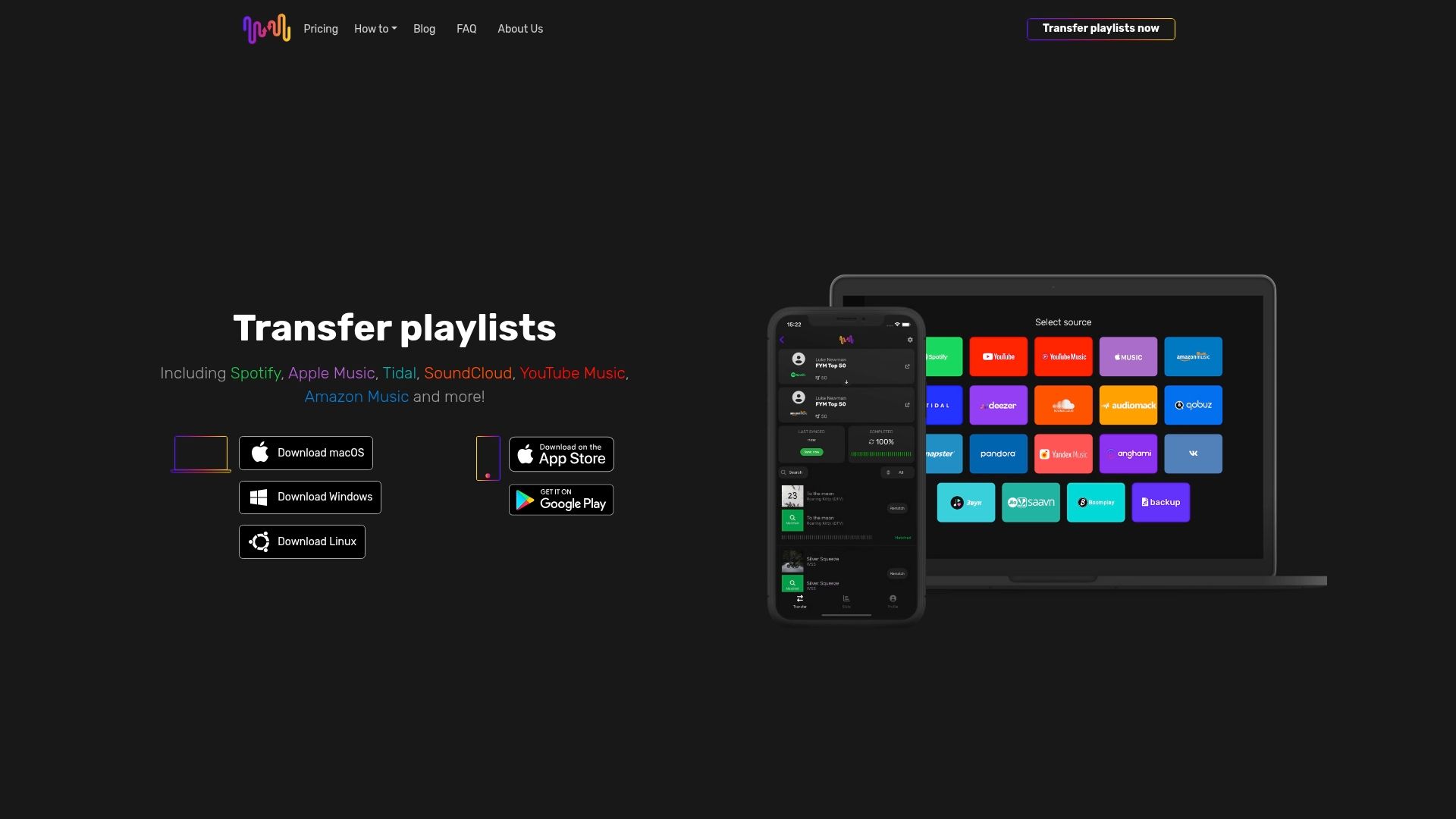
The platform supports unlimited playlist transfers with accurate song matching across major streaming services. You maintain complete control over your music collections without manual rebuilding or risking data loss. Expert support helps troubleshoot transfer issues and optimize your workflow for efficiency. Implementing the 7 tips playlist management strategies discussed in this article becomes straightforward with the right tools supporting your process.
Explore Free Your Music to experience seamless playlist migration and management. The service offers transparent pricing and a clear refund policy for peace of mind as you optimize your music management workflow in 2026.
FAQ
What are the best music management tips for large playlists?
Focus on maintaining playlist coherence by organizing tracks thematically and limiting length to 20 tracks or 90 minutes for optimal engagement. Order songs by energy curves, key compatibility, and BPM proximity to create smooth listening flows. Audit metadata regularly to remove duplicates, fix inconsistencies, and prepare for successful platform transfers. Use specialized transfer tools rather than manual recreation to preserve track order and minimize data loss.
How can I ensure my playlists transfer correctly between streaming platforms?
Audit your playlists thoroughly before initiating transfers by checking for duplicate tracks, broken links, and metadata inconsistencies. Expect 5-15% of tracks to fail due to licensing or regional restrictions, and prepare to manually replace these with alternative versions or similar recordings. Use dedicated playlist transfer services that maintain sophisticated matching algorithms and preserve track order automatically. Document your playlist structure beforehand to verify transfer accuracy and guide manual corrections.
Are playlist recommendations reliable for creating great playlists?
Recommendations influence playlist creation significantly, with 67% of users incorporating algorithmic suggestions during the building process. However, they should balance with your personal taste and creative vision to maintain authenticity. Use recommendations strategically to discover new artists and fill gaps, but retain final curation control to ensure thematic coherence. The most effective playlists combine algorithmic efficiency with human judgment for both discoverability and artistic integrity.
Why does playlist length matter for listener engagement?
Playlists around 20 tracks or 90 minutes align with typical listener attention spans and receive higher completion rates. Shorter, focused collections signal quality to streaming algorithms, which influences promotion and recommendation eligibility. Excessively long playlists often see increased skip rates and lower engagement metrics, though context matters for specific use cases like background music or extended workout sessions.
How do licensing restrictions affect playlist transfers?
Distribution agreements vary by streaming platform, record label, and geographic region, creating catalog availability differences that cause 5-15% of tracks to fail during transfers. A song available on one service in your country might be unavailable on another platform or restricted in different regions. Understanding these limitations helps you prepare alternative tracks and set realistic expectations for transfer success rates.
Recommended
Your playlists belong to you.
Stop rebuilding by hand. Move everything in minutes and take your music wherever you go.
Download free →SongsBrew — our free music newsletter
A free perk for FYM users. Tips, playlists, no spam.