Playlist Interoperability Explained: Why It Matters

Transferring playlists between Spotify, Apple Music, and Tidal can feel frustrating when every platform speaks its own language. Tech-savvy music enthusiasts and DJs understand how critical efficient playlist migration is for managing extensive libraries and preparing for performances. By exploring playlist interoperability standards, you will discover practical solutions that overcome fragmented systems, preserve your musical narratives, and unlock new creative possibilities.
Table of Contents
- Core Concepts Of Playlist Interoperability
- Types Of Playlist Interoperability Solutions
- Key Technologies And Standards Used
- How Playlist Transfer Processes Work
- Privacy, Security, And Legal Risks
- Major Benefits For Enthusiasts And Djs
Key Takeaways
| Point | Details |
|---|---|
| Playlist Interoperability | Enables seamless transfer of music collections across platforms, overcoming proprietary barriers that hinder user experience. |
| Types of Solutions | Various interoperability solutions exist, including metadata matching, direct transfer tools, and cloud-based synchronization, each with unique advantages and limitations. |
| Key Technologies | Application Programming Interfaces (APIs) and standardized protocols are critical in facilitating secure and efficient playlist transfers among different streaming services. |
| Benefits for Users | Music enthusiasts and DJs gain improved flexibility and creative freedom, allowing for easier navigation across platforms without losing curated playlists. |
Core Concepts of Playlist Interoperability
Playlist interoperability represents a critical technological capability enabling music enthusiasts to seamlessly transfer their curated collections across different streaming platforms. At its core, this concept addresses the fundamental challenge of platform-specific music libraries by creating standardized methods for transferring playlists while preserving their original structure and integrity.
The evolution of playlist interoperability stems from the increasing fragmentation of digital music ecosystems. Streaming services like Spotify, Apple Music, and Tidal each maintain proprietary systems that traditionally prevented users from easily migrating their carefully crafted playlists. Interoperability standards have emerged to solve these complex technological barriers, focusing on creating universal protocols for music metadata transfer.
Key components of playlist interoperability include:
- Metadata matching across platforms
- Preservation of playlist ordering and structure
- Handling differences in music catalog availability
- Supporting multiple streaming service connections
- Maintaining user-created playlist annotations and metadata
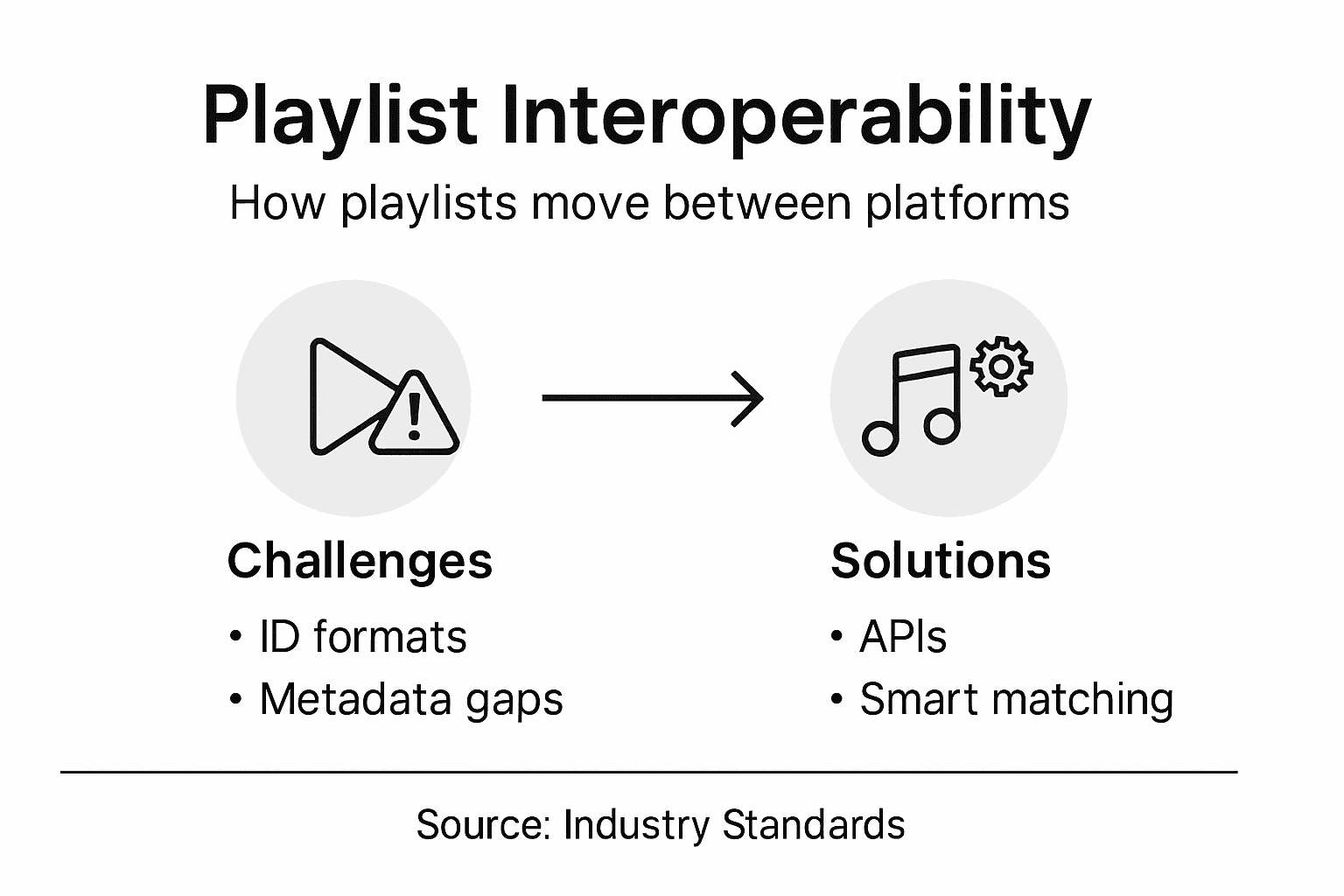
The technical challenges of playlist interoperability are significant. Different streaming platforms use unique identifiers for tracks, have varying music catalog sizes, and implement different metadata storage mechanisms. Successful interoperability requires sophisticated matching algorithms that can recognize songs across platforms, even when exact track details might differ slightly.
Pro tip: Always maintain a backup of your original playlist before attempting any cross-platform transfer to ensure you don't lose your carefully curated music collection.
Types of Playlist Interoperability Solutions
Playlist interoperability solutions have evolved significantly to address the complex challenges of music ecosystem fragmentation. Multiple interoperability types have emerged, categorized across technical, semantic, organizational, and social dimensions, each addressing different aspects of cross-platform music library transfer.
The primary types of playlist interoperability solutions include:
- Metadata Matching Solutions: Algorithms that compare track metadata across platforms
- Direct Transfer Tools: Software enabling one-click playlist migration
- Hybrid Synchronization Systems: Combining manual and automated transfer methods
- Cloud-Based Synchronization: Maintaining playlist consistency through cloud infrastructure
- API-Driven Transfer Mechanisms: Leveraging streaming platforms' application programming interfaces
Technical interoperability solutions focus on creating standardized protocols for music data exchange. These solutions address critical challenges like handling different track identifiers, managing variations in music catalog availability, and preserving playlist metadata during transfer. Comprehensive playlist transfer guides reveal that successful interoperability requires sophisticated matching technologies that can recognize songs across diverse streaming platforms.
Organizational and semantic interoperability solutions go beyond technical mechanics, ensuring that playlist structures, user annotations, and musical context remain intact during migration. This approach recognizes that playlists are more than simple track collections—they represent personal musical narratives and carefully curated experiences.

Here's a quick comparison of playlist interoperability solution categories and their primary strengths:
| Solution Type | Typical Use Case | Main Advantage | Notable Limitation |
|---|---|---|---|
| Metadata Matching | Migrating between platforms | High accuracy | May miss rare tracks |
| Direct Transfer Tools | Fast playlist migration | Speed and efficiency | Limited customization |
| Hybrid Sync Systems | Manual and automated migration | Customizable process | Requires user input |
| Cloud-Based Sync | Keeping playlists consistent | Real-time updates | Reliant on cloud stability |
| API-Driven Mechanisms | Advanced bulk operations | Enhanced flexibility | Needs platform permissions |
Pro tip: Always verify your playlist's complete transfer by cross-checking track counts and reviewing transferred playlists immediately after migration.
Key Technologies and Standards Used
Application Programming Interfaces (APIs) form the backbone of modern playlist interoperability, enabling communication between different music streaming platforms. Interoperability standards highlight the critical role of these technological frameworks in facilitating seamless data transfer and communication across diverse music ecosystems.
The key technologies driving playlist interoperability include:
- Metadata Standardization Protocols: Ensuring consistent track information across platforms
- RESTful API Frameworks: Enabling structured data exchange
- OAuth Authentication: Securing cross-platform data transfers
- JSON/XML Data Formats: Supporting structured music library information
- Fingerprinting Technologies: Identifying and matching tracks across different platforms
Technical interoperability relies on sophisticated matching mechanisms that go beyond simple metadata comparison. Advanced algorithms analyze multiple track attributes, including acoustic fingerprints, artist metadata, album information, and user listening patterns to ensure accurate song identification across different streaming platforms.
The most advanced interoperability solutions implement multi-layered authentication and secure data transfer protocols to protect user music libraries during migration. These technologies ensure not just technical compatibility, but also data security and user privacy, creating a robust ecosystem for music library management.
Pro tip: Always review the specific API documentation for each music streaming platform to understand their unique data transfer capabilities and potential limitations.
How Playlist Transfer Processes Work
Playlist transfer processes are sophisticated technological workflows that enable seamless music library migration between different streaming platforms. Playlist transfer best practices emphasize the importance of understanding each platform's unique data handling mechanisms and potential compatibility challenges.
The typical playlist transfer process involves several critical stages:
- Initial Authentication: Connecting user accounts across platforms
- Metadata Extraction: Identifying and collecting playlist track information
- Track Matching: Locating equivalent tracks on destination platform
- Playlist Reconstruction: Rebuilding playlist structure and order
- Verification: Confirming transfer accuracy and completeness
Most transfer processes utilize advanced matching algorithms that analyze multiple track attributes simultaneously. These sophisticated systems compare song titles, artist names, album information, and acoustic fingerprints to ensure maximum track preservation during migration. When exact matches are unavailable, these algorithms provide closest available alternatives, minimizing potential music library disruption.
Successful playlist transfers require complex technical negotiations between different streaming platforms' unique infrastructures. The process involves negotiating authentication protocols, managing different metadata standards, and handling variations in music catalog availability—all while maintaining the original playlist's creative intent and musical flow.
To better understand playlist transfer complexity, review the role of each transfer stage:
| Stage | Purpose | Typical Challenge |
|---|---|---|
| Authentication | Link accounts across services | Platform-specific protocols |
| Metadata Extraction | Gather playlist info | Inconsistent data formats |
| Track Matching | Find equivalents on destination | Catalog gaps, duplicates |
| Reconstruction | Restore playlist order | Lost annotations, ordering |
| Verification | Confirm migration accuracy | Missed or mismatched tracks |
Pro tip: Always maintain a local backup of your playlist before initiating any cross-platform transfer to protect against potential data loss.
Privacy, Security, and Legal Risks
Playlist interoperability introduces complex privacy and security challenges that require careful navigation. Data protection frameworks highlight the critical need for robust security measures during music library transfers.
Key privacy and security risks in playlist transfer processes include:
- Unauthorized Data Access: Potential exposure of personal listening histories
- Authentication Vulnerabilities: Risks associated with cross-platform account linking
- Metadata Leakage: Potential disclosure of personal musical preferences
- Third-Party Data Sharing: Risks of unintended information distribution
- Compliance Challenges: Navigating varying international data protection regulations
Advanced playlist transfer platforms must implement comprehensive security protocols to mitigate these risks. Multi-factor authentication, end-to-end encryption, and strict data minimization techniques are essential for protecting user information during the transfer process. These technologies ensure that personal musical libraries remain confidential and secure across different streaming platforms.
Legal considerations surrounding playlist interoperability are increasingly complex. Different jurisdictions have varying regulations concerning digital data transfer, requiring sophisticated approaches to user consent, data protection, and information privacy. Music enthusiasts must carefully review terms of service and understand the potential legal implications of cross-platform playlist migration.
Pro tip: Always use platforms with transparent privacy policies and verify their data protection certifications before transferring your music library.
Major Benefits for Enthusiasts and DJs
Playlist interoperability transforms how music professionals and enthusiasts manage their digital music collections, offering unprecedented flexibility and creative freedom. Understanding music library migration reveals the profound advantages for DJs, collectors, and music lovers seeking seamless platform transitions.
Key benefits for music professionals and enthusiasts include:
- Expanded Music Discovery: Access to broader music catalogs across platforms
- Flexible Library Management: Unrestricted movement between streaming services
- Performance Optimization: Simplified playlist preparation for live events
- Archival Preservation: Protecting curated music collections
- Cost-Effective Exploration: Easier comparison of streaming platform features
For professional DJs, playlist interoperability represents a game-changing technological advancement. The ability to transfer meticulously crafted playlists across platforms eliminates traditional barriers, enabling more dynamic performance preparation and reducing time spent manually rebuilding song collections. These tools transform complex music library management into a streamlined, efficient process.
Music enthusiasts benefit from enhanced creative control and reduced platform lock-in. The technology empowers users to explore different streaming services without fear of losing their carefully curated playlists, effectively democratizing music consumption and supporting more personalized listening experiences.
Pro tip: Always maintain a backup of your original playlists and verify track compatibility before final migration to preserve your musical journey.
Take Control of Your Music with Effortless Playlist Interoperability
The challenge of transferring playlists across multiple streaming platforms can be overwhelming. From dealing with metadata mismatches to preserving playlist order and annotations, the complexity often leads to frustration and lost music memories. If you want to avoid losing your carefully curated playlists when switching services, it is essential to use a reliable tool that understands these technical hurdles and provides a seamless experience.
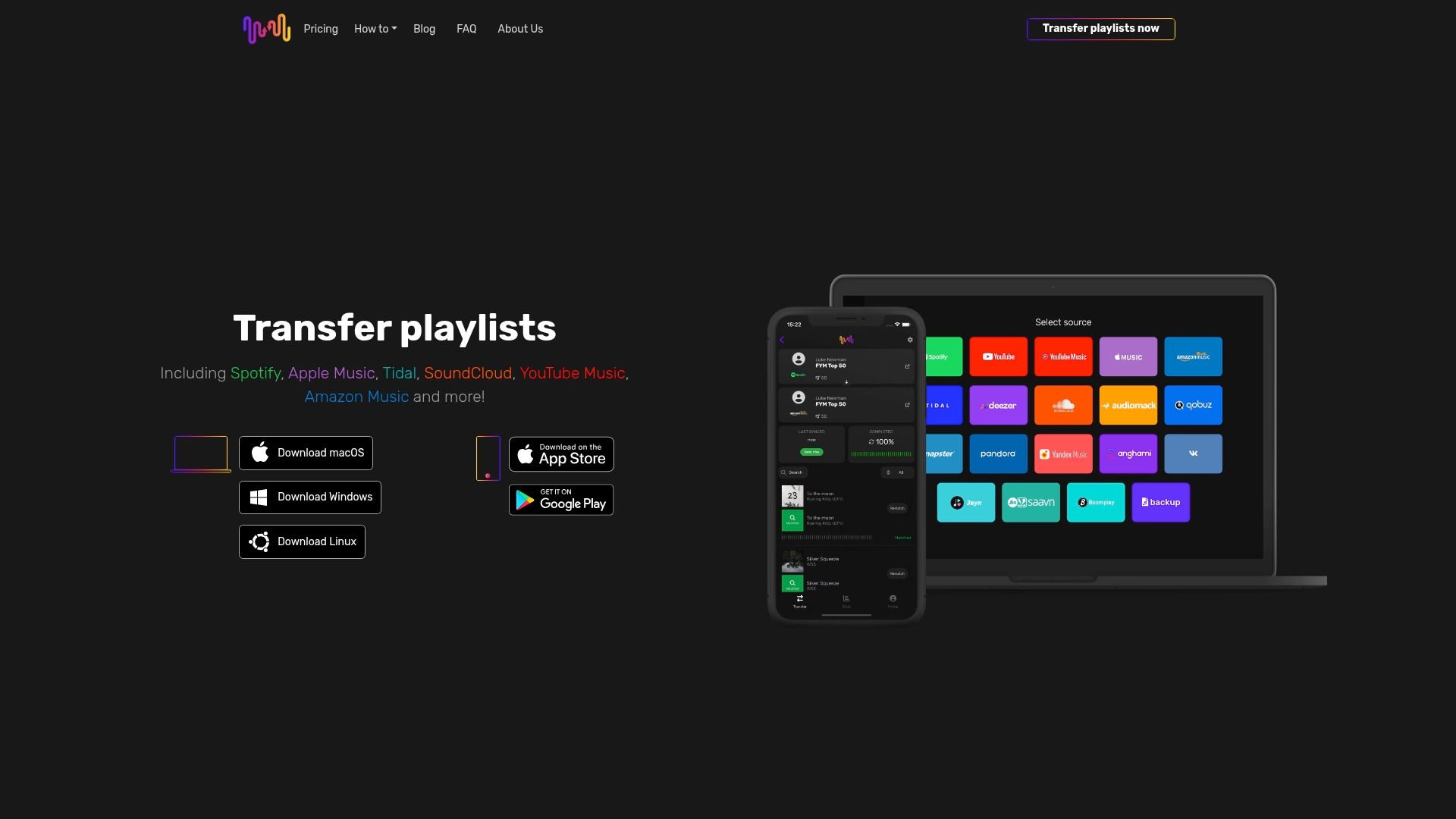
At FreeYourMusic.com, we specialize in simplifying playlist interoperability. Our platform supports accurate song matching, preserves playlist structure, and transfers your music collections quickly across Spotify, Apple Music, Tidal, and other major services. Whether you are a music enthusiast or a professional DJ, our easy-to-use application with multi-account support and cloud backup ensures your playlists stay secure and intact. Experience the freedom to move your music library without worry or manual rebuilding.
Don’t let playlist transfer challenges hold back your music journey. Visit FreeYourMusic.com now and discover how effortless migrating your playlists can be. Start protecting your musical stories today and enjoy uninterrupted listening no matter which streaming service you choose.
Frequently Asked Questions
What is playlist interoperability?
Playlist interoperability allows users to transfer their playlists seamlessly between different music streaming platforms, preserving the original structure and track information.
Why is playlist interoperability important for music enthusiasts?
It enables music enthusiasts to access their curated collections across various platforms, reducing the hassle of starting over when switching services and enhancing music discovery.
What are the main challenges in achieving playlist interoperability?
The main challenges include differences in track identifiers, varying music catalog sizes, and the need for sophisticated matching algorithms to identify songs across different platforms accurately.
How do I ensure my playlists are transferred accurately between platforms?
Always verify the complete transfer by cross-checking track counts and reviewing the transferred playlists immediately after migration to ensure accuracy.
Recommended


Your playlists belong to you.
Stop rebuilding by hand. Move everything in minutes and take your music wherever you go.
Download free →SongsBrew — our free music newsletter
A free perk for FYM users. Tips, playlists, no spam.