Music Library Organization Explained: Streamline Playlists
Switching between streaming services can leave even skilled DJs and music enthusiasts wrestling with scattered playlists and inconsistent track organization. As digital music libraries have evolved into complex systems spanning personal devices and global platforms, the challenge of maintaining efficient music library organization has grown more urgent. This guide untangles the critical features and pitfalls of modern music library management, empowering you to keep every playlist precise, accessible, and ready for your next mix—wherever your musical journey leads.
Table of Contents
- Defining Music Library Organization Today
- Types of Music Libraries and Collections
- Essential Features for Efficient Organization
- How Playlist Migration and Sync Work
- Risks, Mistakes, and How to Avoid Them
Key Takeaways
| Point | Details |
|---|---|
| Modern Music Libraries | Today’s music library organization requires advanced strategies that incorporate metadata management, intelligent categorization, and cross-platform integration. |
| Diverse Library Types | Various types of music libraries serve specific audiences, including personal collections, institutional archives, and commercial repositories, each offering unique benefits. |
| Key Organizational Features | Efficient music library management hinges on features like flexible categorization, comprehensive metadata, and robust search capabilities for easy navigation. |
| Risks in Migration | Playlist migration presents several risks such as metadata mismatches and data loss, emphasizing the need for careful planning and multiple backups to ensure a smooth transition. |
Defining Music Library Organization Today
Music library organization has transformed dramatically in recent years, evolving from traditional physical collections to complex digital ecosystems that support global music enthusiasts. Comprehensive music library management now requires sophisticated strategies beyond simple file sorting.
At its core, modern music library organization encompasses several critical dimensions that go far beyond basic playlist creation. These include:
- Comprehensive metadata management
- Cross-platform synchronization capabilities
- Intelligent categorization systems
- Automated tagging and classification
- Preservation of original playlist structures
Today's music libraries are not just storage repositories but intelligent systems that understand musical context, user preferences, and intricate relationships between tracks. Digital media format adaptation has become crucial, allowing seamless integration across streaming platforms and personal collections.
Professional music curators and enthusiasts now require advanced organizational tools that can handle massive libraries with precision. The goal is no longer just storing music, but creating intuitive, easily navigable collections that reflect individual musical journeys and tastes.
Pro tip: Invest time in developing a consistent naming and tagging convention for your music files to simplify long-term library management.
Types of Music Libraries and Collections
Music libraries have dramatically evolved, presenting diverse collection types that cater to different user needs and musical exploration strategies. Academic music collections represent a sophisticated ecosystem of musical resources spanning multiple formats and purposes.
The primary types of music libraries include:
- Personal Collections: Individual curated music libraries
- Institutional Collections: University and research-based archives
- Commercial Libraries: Professional music repositories for industry use
- Streaming Platform Libraries: Digital collections managed by music services
- Archival Collections: Historical and specialized musical recordings
Each library type serves unique functions, from supporting academic research to enabling personal musical discovery. Specialized music collections often focus on specific genres, cultural expressions, or historical periods, providing nuanced perspectives on musical heritage.
Modern music libraries transcend traditional boundaries, integrating digital technologies that allow seamless access, preservation, and exploration of musical content across multiple platforms and user contexts.
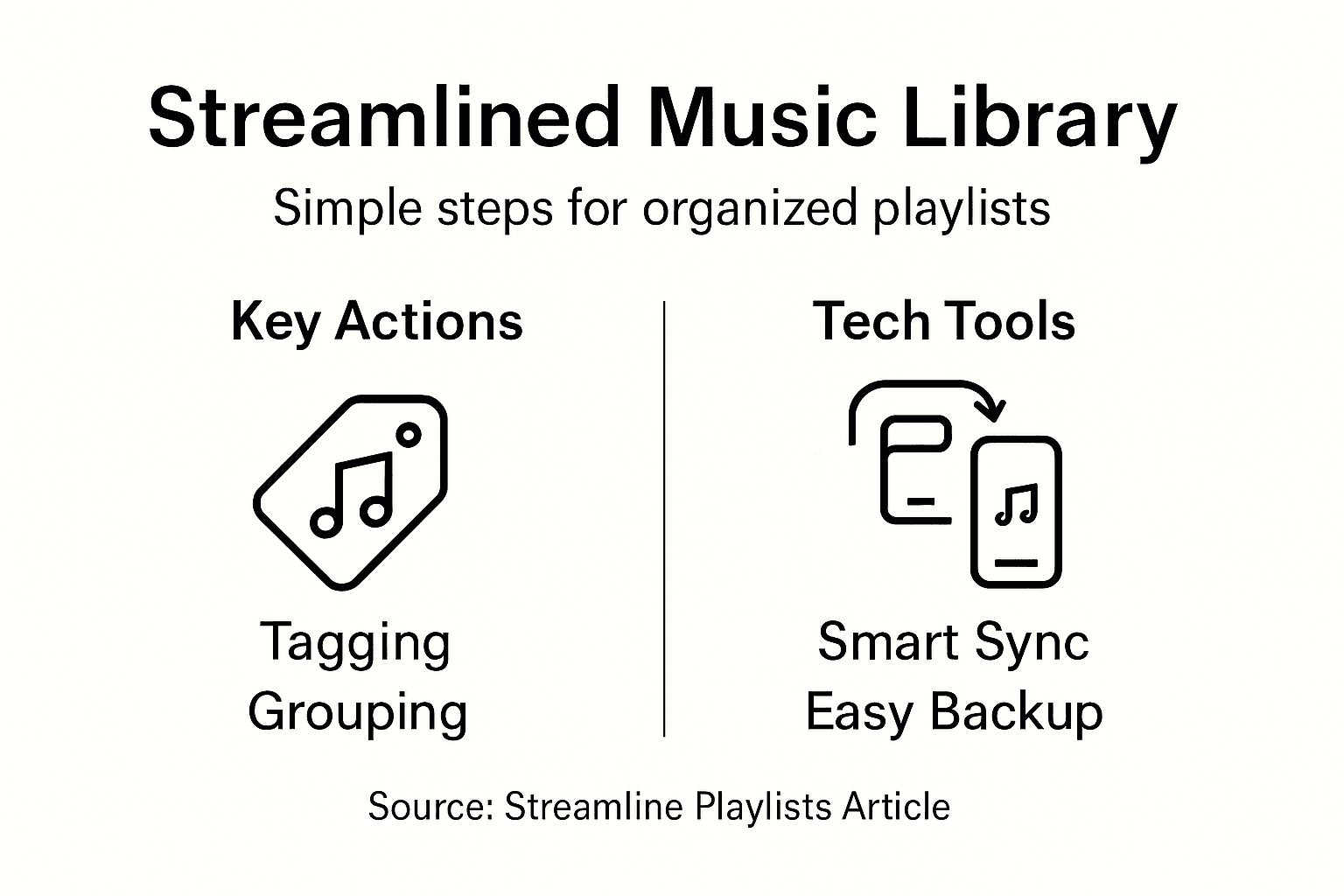
Here's an overview of how different music library types serve user needs:
| Library Type | Core User Group | Key Benefit | Typical Platform |
|---|---|---|---|
| Personal Collection | Individual enthusiasts | Tailored music discovery | Local drive or cloud |
| Institutional Library | Researchers, academics | Access to rare archives | University databases |
| Commercial Repository | Music professionals | Licensing and distribution | Industry networks |
| Streaming Services | General consumers | Instant access, curation | Apps/web platforms |
| Archival Collection | Historians, curators | Preservation of heritage | National archives |
Pro tip: Develop a systematic approach to categorizing your music library that allows for flexible organization and easy future expansion.
Essential Features for Efficient Organization
Music library organization requires strategic approaches that balance technological capabilities with user-centered design. Robust cataloging standards form the foundation of effective music collection management, enabling seamless navigation and accessibility.
Key essential features for efficient music library organization include:
- Metadata Management: Comprehensive tagging and labeling systems
- Flexible Categorization: Multiple sorting options across genres, eras, and moods
- Search Functionality: Advanced filtering and quick retrieval capabilities
- Cross-Platform Compatibility: Seamless integration across different devices
- Backup and Preservation: Automated cloud storage and synchronization
Physical and digital music libraries demand nuanced organizational strategies. Music sheet storage solutions highlight the importance of strategic shelving and digital cataloging to prevent damage and ensure efficient access.

Modern music library organization transcends traditional boundaries, incorporating intelligent technologies that adapt to individual user preferences while maintaining systematic structure and ease of navigation.
Pro tip: Implement a consistent naming convention for your music files that includes artist, album, year, and genre to simplify future organization and searching.
How Playlist Migration and Sync Work
Playlist migration represents a complex technological process that enables music enthusiasts to transfer their curated collections across different streaming platforms. Music library synchronization involves intricate mapping and matching algorithms that preserve the integrity of user-created playlists.
The core mechanics of playlist migration include several critical steps:
- Track Identification: Scanning and matching songs across platforms
- Metadata Comparison: Analyzing song attributes and versions
- Licensing Verification: Checking availability of tracks on destination platforms
- Playlist Reconstruction: Rebuilding playlists with maximum track retention
- Handling Unmatched Tracks: Providing alternative suggestions or skipping unavailable songs
Modern migration technologies employ sophisticated approaches to minimize disruption during playlist transfers. Advanced systems utilize machine learning and comprehensive music databases to ensure the highest possible match rates, creating a seamless transition between different streaming services.
The ultimate goal of playlist migration is to provide users with a frictionless experience, maintaining the emotional and musical journey captured in their original playlists while adapting to technological constraints and platform differences.
Pro tip: Always maintain a local backup of your playlist data before initiating any large-scale music library migration to prevent potential loss of curated collections.
Risks, Mistakes, and How to Avoid Them
Music library migration involves complex challenges that can potentially compromise your carefully curated collections. Operational library management risks encompass multiple potential pitfalls that require strategic anticipation and proactive planning.
Common risks and mistakes in playlist migration include:
- Metadata Mismatches: Incorrect song versions or editions
- Incomplete Track Transfers: Partial playlist reconstruction
- Duplicate Song Entries: Unintentional playlist redundancies
- Licensing Restrictions: Platform-specific track unavailability
- Unintentional Data Loss: Permanent deletion of original playlists
Collection development strategies suggest that understanding potential errors helps music enthusiasts develop more resilient migration approaches. Professional music librarians recommend comprehensive pre-migration assessments and maintaining multiple backup strategies to mitigate potential data risks.
Successful playlist migration requires a combination of technological understanding, careful planning, and adaptive problem-solving. Users must remain flexible and prepared for potential complications during the transfer process, recognizing that no migration is guaranteed to be 100% perfect.
To help avoid common migration pitfalls, consider these strategies:
| Migration Risk | Prevention Strategy | Outcome if Managed Well |
|---|---|---|
| Metadata mismatches | Standardize file tags | Fewer track errors, better playlist flow |
| Duplicate entries | Use de-duplication tools | Cleaner, streamlined playlists |
| Unmatched tracks | Manual review and alternative picks | Preserved listening experience |
| Licensing restrictions | Verify platform library beforehand | Higher playlist retention rates |
| Data loss | Maintain multi-location backups | Secure and recoverable music collections |
Pro tip: Create a comprehensive spreadsheet tracking your playlist contents before migration to help quickly identify any tracks that might not transfer successfully.
Take Control of Your Music Library Organization Today
Struggling with complex playlist migration and the risks of losing your carefully crafted music collections is a common challenge among music enthusiasts and professionals alike. The article highlights the critical importance of metadata management, playlist synchronization, and avoiding errors such as duplicate entries or missing tracks during transfers between streaming platforms. If you want to eliminate the frustration of manual rebuilding and ensure perfect preservation of your playlists' structure and order, a reliable solution is within reach.
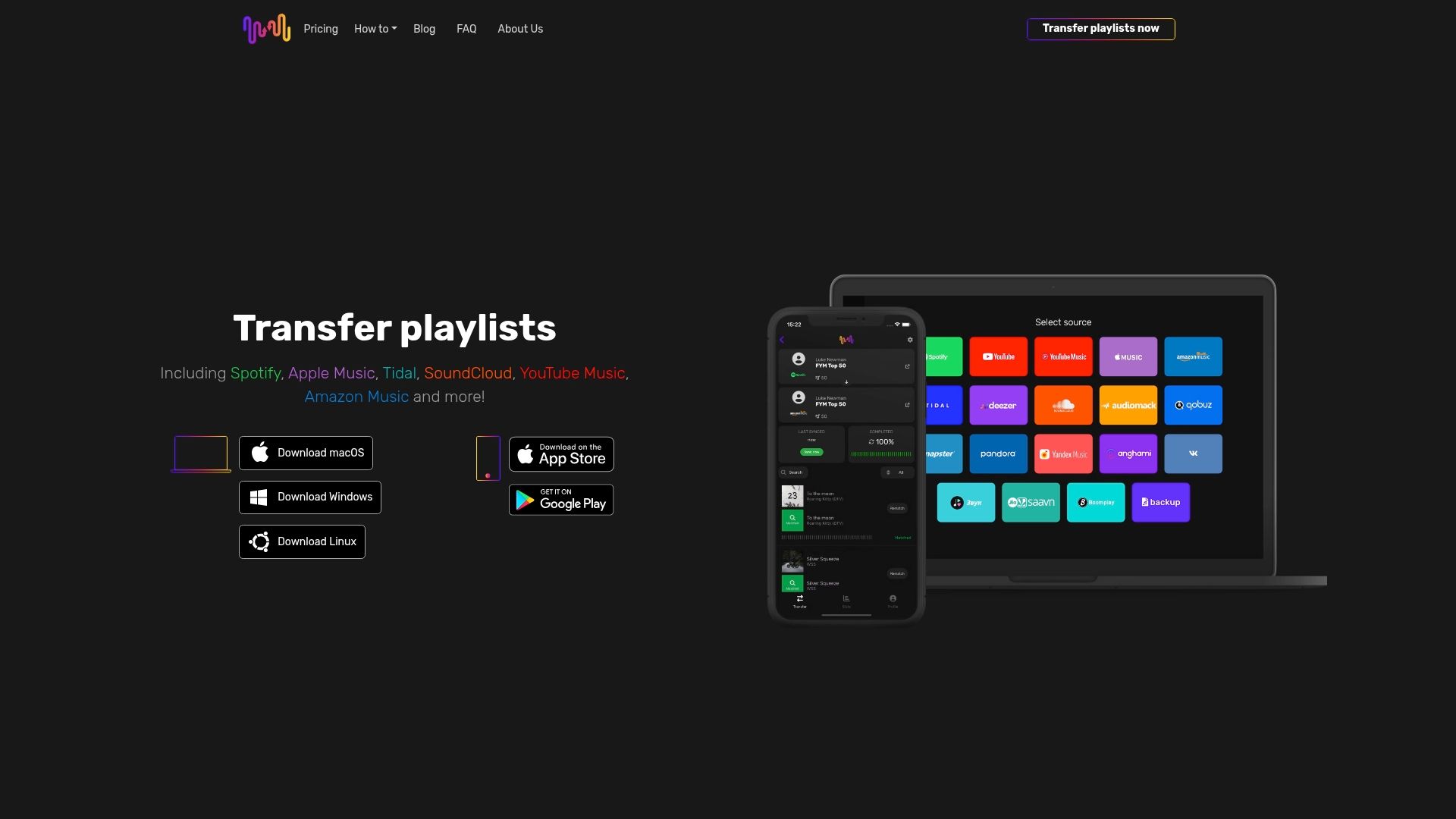
Discover how FreeYourMusic.com empowers you to effortlessly migrate and sync your music libraries across popular streaming services like Spotify, Apple Music, and Amazon Music. Designed for seamless cross-platform compatibility and enhanced by automated backup and accurate song matching, it transforms the complex task of playlist migration into a smooth experience. Don’t let the fear of data loss or mismatched tracks hold you back. Visit FreeYourMusic.com now to safeguard your music journey and enjoy stress-free playlist transfers.
Frequently Asked Questions
What is the importance of metadata management in music library organization?
Metadata management is crucial as it ensures comprehensive tagging and labeling systems that enhance navigation and accessibility within your music library.
How can I effectively sync my playlists across different streaming platforms?
To effectively sync playlists, utilize advanced migration tools that match and verify track availability, while ensuring that metadata is compared to preserve the integrity of your playlists.
What common mistakes should I avoid during music library migration?
Common mistakes include metadata mismatches, incomplete track transfers, duplicate entries, licensing restrictions, and unintentional data loss. Developing a pre-migration assessment and maintaining backups can help mitigate these risks.
What are the benefits of categorizing my music collection?
Categorizing your music collection allows for flexible organization across genres, eras, and moods, enhancing your overall music discovery experience and making navigation easier.
Recommended
- Free Your Music - How to Organize Your Music + Build Better Playlists
- Free Your Music - Understanding Music Playlist Structure Definition for Users
- Free Your Music - Effective music organization 2025
- Free Your Music - What is Playlist Management? Understanding Its Role
- Spotify Playlist & Music Planning Form | Fresh Entertainments
Your playlists belong to you.
Stop rebuilding by hand. Move everything in minutes and take your music wherever you go.
Download free →SongsBrew — our free music newsletter
A free perk for FYM users. Tips, playlists, no spam.