Music Playlist Preservation: Why It Matters Most

Most American music lovers do not realize their playlists are at real risk every time a streaming service updates or shuts down. With over 84 percent of Americans relying on digital platforms for their favorite songs, losing access means losing years of memories and carefully built collections. Keeping your playlists safe is no longer an optional hobby but a vital part of protecting your digital life. Learn how advanced preservation and transfer strategies can keep your personal music history secure in a fast-changing world.
Table of Contents
- Defining Music Playlist Preservation Today
- How Playlist Migration Across Services Works
- Types of Playlist Data: Songs, Metadata, And Order
- Common Preservation Challenges And How They Occur
- Data Security And Privacy During Transfers
- Best Practices For Reliable Playlist Protection
Key Takeaways
| Point | Details |
|---|---|
| Importance of Preservation | Music playlist preservation safeguards emotional and cultural contexts, emphasizing the need for comprehensive backups and metadata retention. |
| Migration Complexity | Playlist migration across platforms involves technical precision, ensuring track identification and preserving original structures, which requires advanced tools. |
| Data Security | Protecting user data during transfers is crucial, utilizing methods such as encryption and authentication to maintain privacy. |
| Best Practices | Regular backups, meticulous metadata documentation, and cross-platform synchronization are essential for reliable playlist protection. |
Defining Music Playlist Preservation Today
Music playlist preservation has transformed from a niche concern into a critical digital archiving practice. As streaming services proliferate and personal music collections become increasingly digital, protecting these curated musical journeys has never been more important. The concept goes far beyond simply saving song lists — it's about maintaining the emotional and cultural context of our musical experiences.
In the context of digital music, preservation means creating comprehensive backups of playlists that capture not just song titles, but their specific order, metadata, and personal annotations. The National Recording Preservation Plan underscores the significance of protecting audio heritage, a principle that extends directly to individual playlist collections. This isn't just about preventing data loss — it's about safeguarding personal musical narratives that represent individual taste, memories, and cultural moments.
Modern playlist preservation encompasses several key strategies:
- Comprehensive Backup: Creating complete copies of playlist data across multiple platforms
- Metadata Retention: Preserving song ratings, play counts, and user-added notes
- Cross-Platform Compatibility: Ensuring playlists can be transferred between different streaming services
Projects like Unlocking Our Sound Heritage demonstrate that preserving audio collections isn't just a personal endeavor, but a broader cultural imperative. For music enthusiasts, playlist management represents more than technical data transfer — it's about maintaining a personal soundtrack that chronicles our musical journey.
How Playlist Migration Across Services Works
Playlist migration represents a complex technological process that enables music enthusiasts to seamlessly transfer their carefully curated song collections between different streaming platforms. This intricate procedure involves multiple technical steps designed to preserve the integrity and structure of personal music libraries while navigating the unique ecosystems of various streaming services.
The migration process typically involves several critical stages. First, the source platform's playlist data must be extracted, including track metadata, playlist order, and any custom annotations. Comprehensive transfer instructions outline the technical prerequisites for successful playlist migration. Advanced migration tools analyze each track's unique identifier, matching songs across different platforms to ensure maximum playlist preservation.
Key technical considerations during playlist migration include:
- Metadata Matching: Ensuring precise song identification across different platforms
- Playlist Structure Preservation: Maintaining original track ordering and sequence
- Metadata Retention: Transferring additional information like play counts and personal ratings
- Platform Compatibility: Managing differences in music library architectures
Users can leverage migration best practices to streamline their music library transitions, minimizing potential data loss or disruption. Modern migration technologies have transformed what was once a manual, time-consuming process into a seamless, automated experience that respects the personal musical narratives embedded within individual playlists.
Types of Playlist Data: Songs, Metadata, And Order
Playlist data represents a complex ecosystem of musical information that goes far beyond simple song lists. Advanced research on music playlist structures reveals the intricate layers of information embedded within each playlist, demonstrating that these digital collections are sophisticated representations of musical taste and personal narrative.
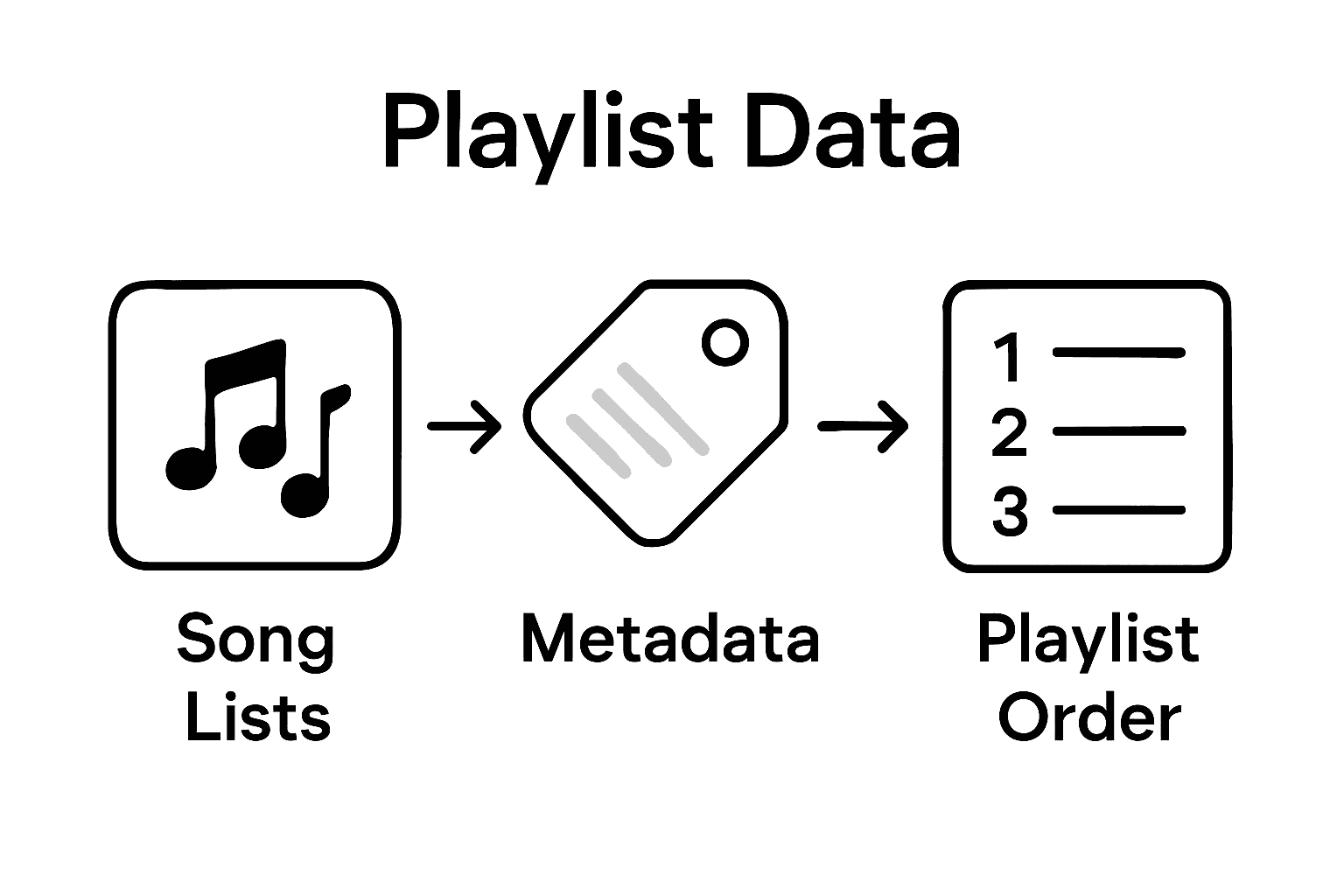
At the core of playlist data are three fundamental components: songs, metadata, and sequence order. Songs represent the individual tracks that form the playlist's foundation. Metadata encompasses additional information about each track, including artist details, release year, genre, play count, and user-generated annotations. The order of songs is perhaps the most nuanced element, reflecting the creator's deliberate musical journey and emotional progression.
Key types of playlist data include:
- Track Identifiers: Unique codes that precisely map individual songs
- Audio Characteristics: Tempo, key, energy level, and musical attributes
- User Interactions: Play counts, skip rates, and personal ratings
- Contextual Markers: Mood tags, playlist purpose, and emotional themes
Scalable playlist continuation frameworks demonstrate how sophisticated algorithms can now analyze these complex data structures, understanding not just the songs themselves but the intricate relationships between them. The depth of music playlist data reveals that playlists are far more than simple song collections — they are intricate musical narratives that capture personal experiences, emotional landscapes, and cultural moments.
Common Preservation Challenges And How They Occur
Playlist preservation is fraught with complex technological and systemic challenges that threaten the long-term integrity of digital music collections. The National Recording Preservation Plan highlights the critical vulnerabilities inherent in digital audio archiving, revealing how quickly music collections can become compromised without strategic intervention.

Format Obsolescence represents the most significant threat to playlist preservation. Streaming platforms frequently update their technologies, creating compatibility issues that can rapidly render existing music libraries inaccessible. This challenge stems from multiple interconnected factors: proprietary platform architectures, rapidly evolving digital music standards, and the continuous transformation of streaming service ecosystems. Each platform maintains unique metadata structures, track identification systems, and playlist encoding methods, making cross-platform migration extraordinarily complex.
Key preservation challenges include:
- Platform Discontinuation: Risk of entire music libraries becoming inaccessible
- Metadata Corruption: Potential loss of song ratings, play history, and annotations
- Encoding Incompatibility: Differences in audio file formats and quality standards
- Licensing Restrictions: Dynamic music rights that impact track availability
Comprehensive sound heritage preservation efforts underscore the urgent need for proactive digital archiving strategies. As streaming platforms evolve, music enthusiasts must adopt sophisticated preservation techniques that go beyond simple backup, focusing instead on maintaining the rich contextual ecosystem surrounding their personal music collections.
Data Security And Privacy During Transfers
Digital music playlist transfers involve complex data protection protocols that safeguard user information throughout the migration process. Secure transfer instructions emphasize the critical importance of maintaining user privacy and preventing unauthorized data access during playlist migrations across different streaming platforms.
Data Encryption emerges as the primary mechanism for protecting user information during playlist transfers. Modern transfer technologies implement multiple layers of security, including end-to-end encryption, tokenized authentication, and temporary access credentials. These sophisticated protection strategies ensure that personal listening history, playlist metadata, and user preferences remain confidential throughout the entire migration process.
Key data security considerations include:
- Authentication Protocols: Verifying user identity through multi-factor authentication
- Temporary Access Tokens: Limiting data exposure during transfer windows
- Minimal Data Exposure: Transferring only essential playlist information
- Encrypted Communication Channels: Preventing potential intercepting of data streams
Privacy-conscious users can further enhance their data protection by understanding playlist transfer best practices, which recommend selecting platforms with robust security infrastructures. The goal extends beyond simple data transfer — it's about maintaining the integrity and confidentiality of personal musical collections while enabling seamless platform transitions.
Best Practices For Reliable Playlist Protection
The National Recording Preservation Plan establishes a comprehensive framework for protecting digital music collections, emphasizing the critical importance of systematic preservation strategies. Playlist protection goes beyond simple backup — it requires a holistic approach that addresses technological, organizational, and strategic challenges in maintaining musical archives.
Metadata Management stands as the cornerstone of effective playlist preservation. This involves creating comprehensive documentation that captures not just song details, but the contextual nuances of each playlist. Advanced preservation techniques include maintaining detailed records of playlist creation dates, original platform sources, and personal annotations that provide deeper meaning to music collections.
Key best practices for playlist protection include:
- Regular Automated Backups: Creating multiple redundant copies across different platforms
- Comprehensive Metadata Documentation: Recording detailed playlist history and context
- Cross-Platform Synchronization: Ensuring playlist compatibility across multiple services
- Periodic Integrity Checks: Verifying data completeness and accuracy
Music sharing methods demonstrate that modern preservation is about creating living, adaptable archives. As digital music ecosystems continue to evolve, users must adopt flexible strategies that protect not just the songs themselves, but the rich personal narratives embedded within each carefully curated playlist.
Preserve Your Music Legacy with Easy Playlist Migration
The article underscores the challenges of preserving your playlists through platform changes and format obsolescence. Your playlists are more than collections of songs they carry metadata, structure, and personal memories that are hard to replace. Don't risk losing years of carefully curated music journeys due to incompatible services or technical roadblocks. With FreeYourMusic.com, you gain a reliable partner that handles all aspects of playlist preservation including order integrity, metadata retention, and cross-platform compatibility.
Take control of your music library today by using Free Your Music's seamless, automated playlist transfer tools. Whether you are moving between Spotify, Apple Music, or any supported service, our multi-platform app ensures your playlists remain intact. Act now to secure your personal soundtrack and avoid the frustration of starting from scratch. Explore how playlist management, data security during transfers, and smart music sharing methods can help you maintain your audio heritage with confidence. Visit FreeYourMusic.com and preserve your music collection with ease.
Frequently Asked Questions
What is music playlist preservation and why is it important?
Music playlist preservation refers to the practices that ensure the integrity and continuity of digital music collections, capturing not only song titles but also metadata and the emotional context behind playlists. It is important because it safeguards personal musical narratives and ensures access to curated music collections across different platforms.
How does playlist migration work across different streaming platforms?
Playlist migration involves extracting playlist data from a source platform, including metadata and song order, and then transferring it to another service. Advanced tools facilitate this process by matching track identifiers and preserving the original playlist structure, ensuring a seamless transition without data loss.
What are the key challenges faced during playlist preservation?
Key challenges include format obsolescence, where platforms are updated and become incompatible; metadata corruption; encoding incompatibility; and licensing restrictions, all of which can compromise the accessibility and integrity of music libraries.
How can I ensure data security and privacy during playlist transfers?
To ensure data security during playlist transfers, users should opt for platforms that utilize data encryption, implement robust authentication protocols, and limit data exposure. Following best practices for playlist transfer can further enhance user privacy and protect personal music collections.
Recommended
Your playlists belong to you.
Stop rebuilding by hand. Move everything in minutes and take your music wherever you go.
Download free →SongsBrew — our free music newsletter
A free perk for FYM users. Tips, playlists, no spam.